
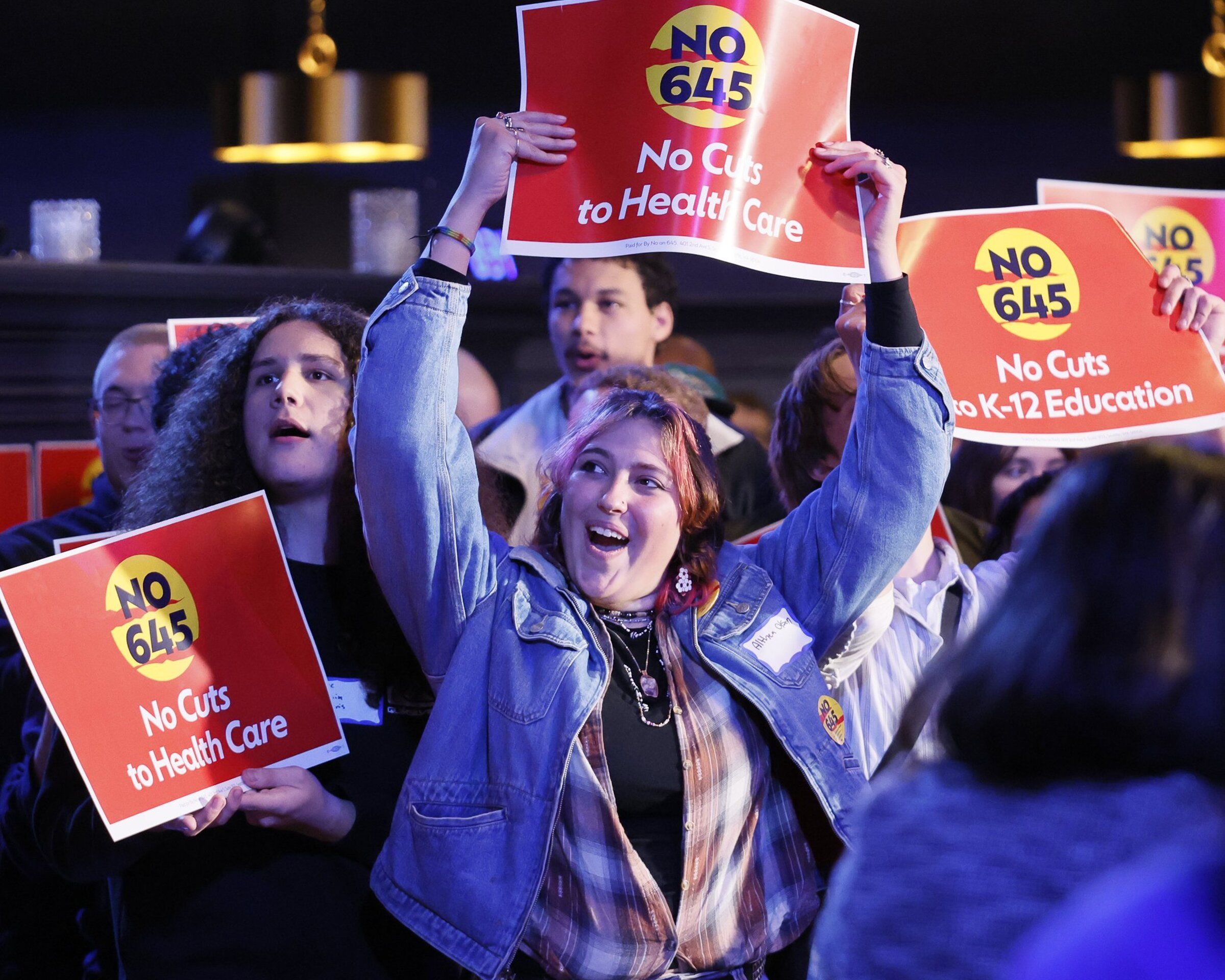
Washington voters rejected Initiative 645, which sought to repeal the new 9.9% tax on annual income above $1 million and block the state and local governments from imposing personal income taxes in the future. By the evening of November 5, about 57.6% of voters had opposed repeal. The campaign’s supporters conceded defeat, although the results have yet to be officially certified. The law, passed by the legislature in the spring, is scheduled to take practical effect on January 1, 2028, with the first payments expected in 2029—unless the state Supreme Court blocks it.
In Washington, which has had no tax on earnings for decades, this vote was about more than a tax rate for the very wealthy. The state relies primarily on sales, excise, and business taxes—sources that weigh more heavily on the household budgets of people with ordinary salaries than on those of people who earn millions. The Democratic majority in Olympia presented the new tax as an effort to make the system slightly more equitable without affecting the vast majority of residents.
ESSB 6346 was approved by the legislature in March and signed by Governor Bob Ferguson on March 30. The tax applies not to all income, but to the amount above the $1 million threshold, which is to be indexed to inflation over time. The rate is 9.9%. The tax base starts with federal adjusted gross income, but the law provides for special adjustments, deductions, and credits, including a credit for Washington’s capital gains tax already paid.
The revenue was expected to fund both new tax benefits and public spending. The law directs the proceeds to the general fund, for K–12 schools, health care, higher education, social services, and an expanded tax credit for working families. It also provides for repealing the sales tax on certain essentials, including diapers, nonprescription medicines, and personal care products, as well as several business tax relief measures. Five percent of annual revenue is to go to the Fair Start for Kids program, which funds affordable child care.
According to the Department of Revenue, the new tax itself is expected to generate nearly $2.7 billion in the 2027–29 budget cycle and about $6.9 billion in 2029–31. Those figures do not represent a net increase in revenue: the law also cuts other taxes. The official fiscal estimate put the state’s overall net gain from the package of measures at about $2.3 billion over its first two years. For opponents, this was proof that Olympia was creating another permanent source of revenue; for supporters, it showed that the new tax would pay for tangible tax relief for other residents.
Initiative 645, sponsored by the conservative group Let’s Go Washington, funded by hedge fund manager Brian Heywood, proposed more than just repealing the new tax. It would have barred the state and local governments from taxing personal income, the receipt of income itself, or using income as a measure for taxation. The initiative defined income very broadly—as a financial benefit received from capital, labor, property, or any other source. This broad language gave the campaign significance beyond the tax on millionaires.
Opponents of the law first tried to put it to a referendum. But on May 4, the state Supreme Court rejected the effort, ruling that the tax law was necessary to support the existing institutions of government and therefore fell under a constitutional exception to the referendum process. Organizers then turned to the more difficult route of a citizen initiative, gathered signatures, and secured a place for the measure on the November 3 ballot. In the battle over campaign spending, opponents of repeal had a decisive advantage: the No on 645 committee spent more than $12.6 million, while Let’s Go Washington spent about $4.2 million.
However, a victory at the ballot box does not resolve the central legal question. A lawsuit challenging the tax’s constitutionality was filed on April 9; it is being pursued by former state Attorney General Rob McKenna and former state Supreme Court Justice Phil Talmadge. In the past, the state court has treated an income tax as a property tax, for which the constitution requires a uniform rate—a precedent that led supporters of the current law to knowingly seek judicial review. The voters’ decision has kept the law in place on paper and on the calendar, but the final word on its fate will likely still come from the judges.


Based on: WA ‘millionaires tax’ is upheld as Initiative 645 fails