
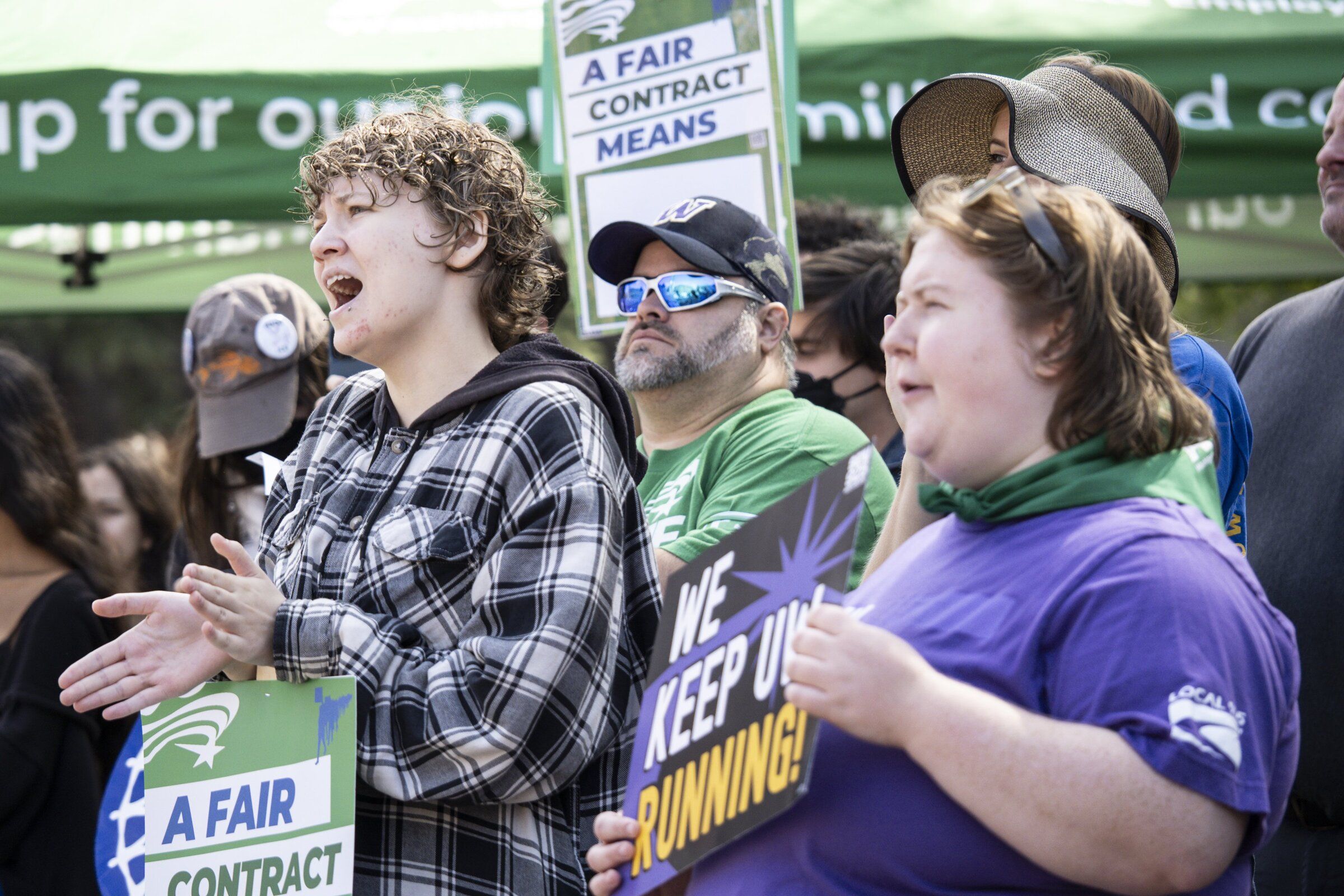
Thousands of Washington state workers held brief protests at more than 100 worksites Monday. Members of the Washington Federation of State Employees (WFSE) opposed what they called inadequate pay-raise proposals from Gov. Bob Ferguson and demanded a “fair contract.”
Unions and state representatives are currently negotiating wages, benefits, working conditions and staffing levels. However, any agreements require budget funding: They effectively become binding only after the Legislature and governor approve the related spending. If the money is not allocated, raises and other terms could be delayed or renegotiated.
WFSE said employees face unsustainable workloads in critical positions, including protecting vulnerable children and caring for people with disabilities. Union President Mike Yestramski linked the situation to the state’s record payouts in lawsuits, which reached $614 million over the past year, primarily in cases involving child abuse and inadequate care.
Yestramski said state officials would rather spend money dealing in court with the consequences of preventable tragedies than invest in social-service employees beforehand. The union represents more than 50,000 workers at state agencies and other public institutions.
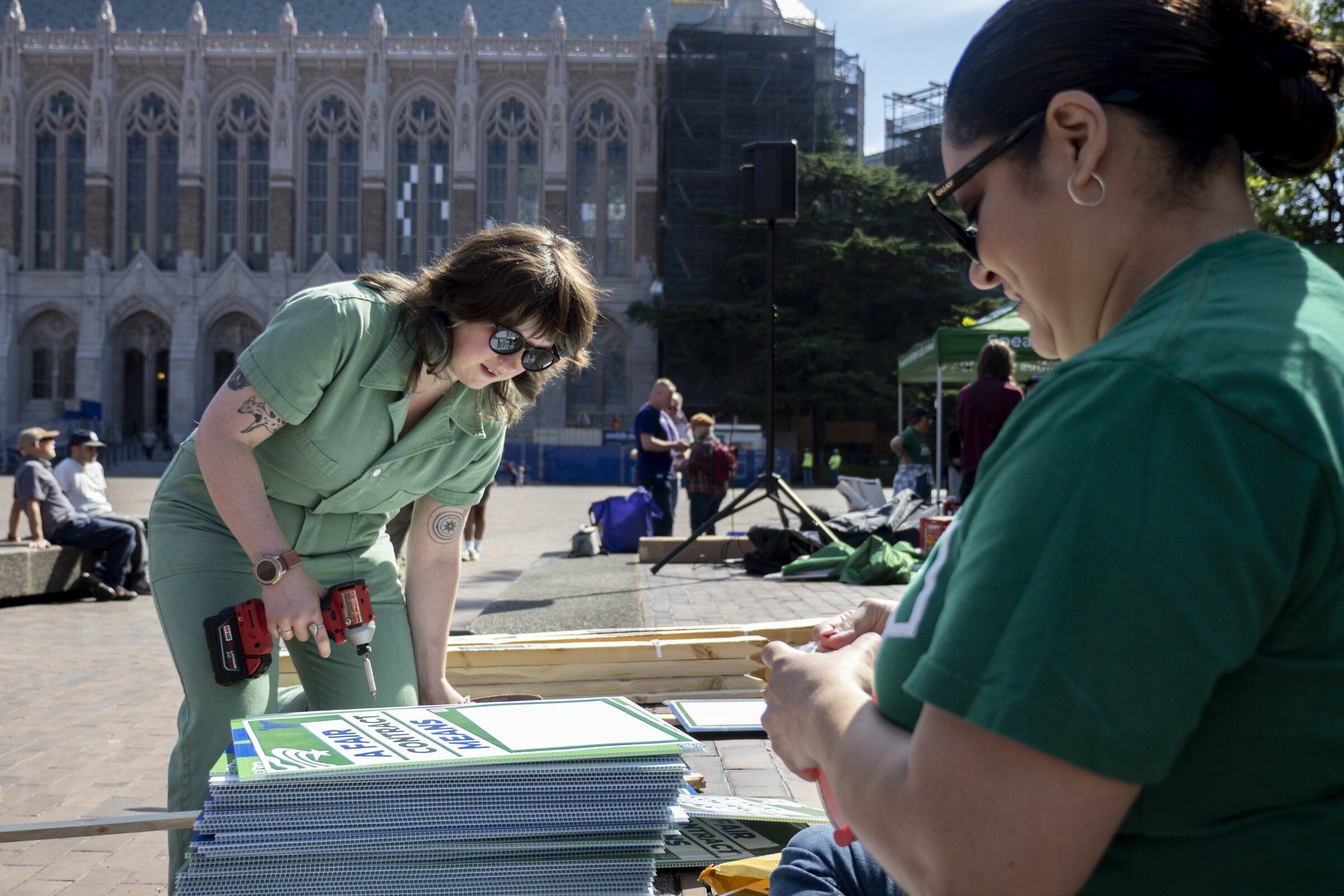
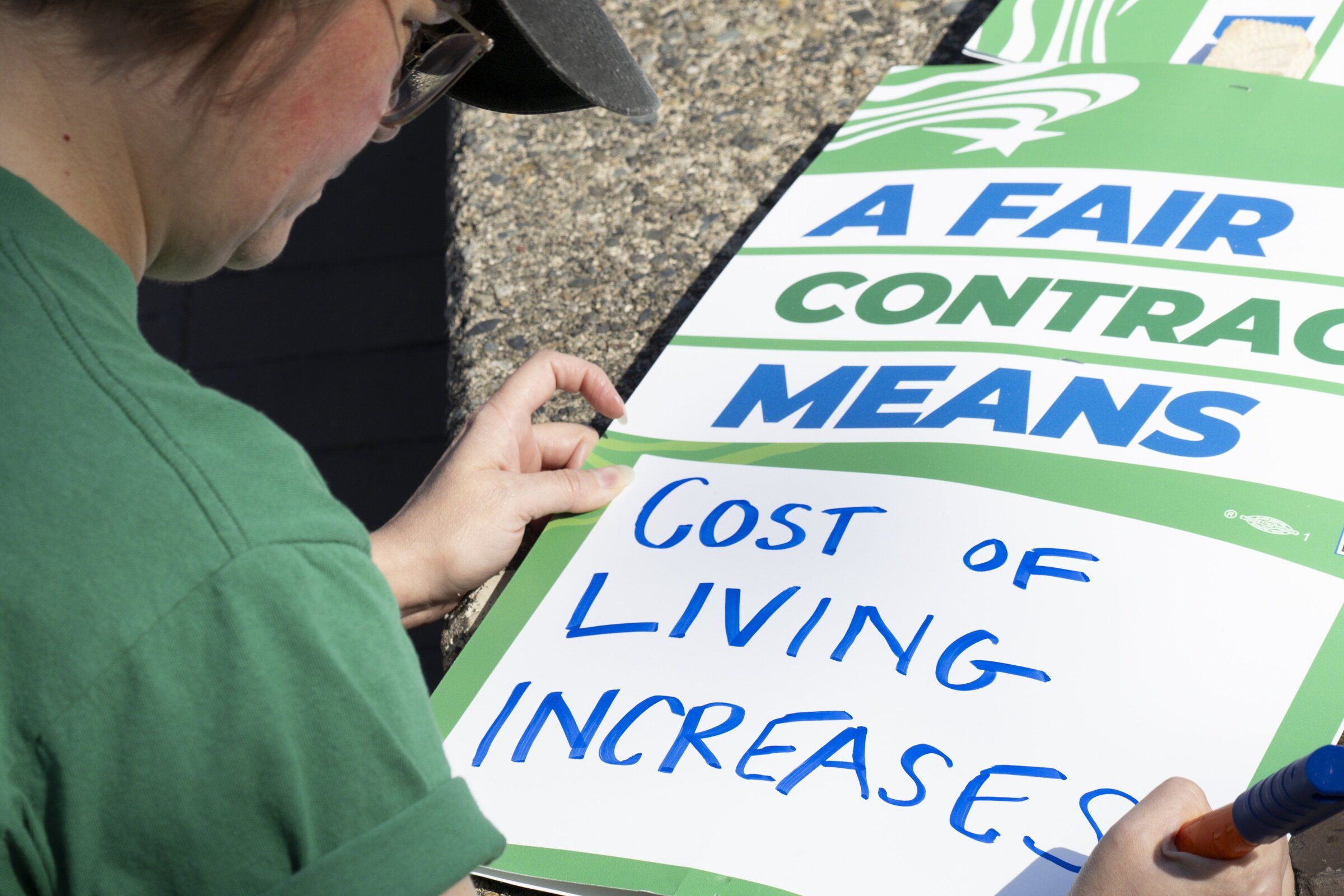
At the University of Washington, about 100 people gathered on Red Square, the central campus plaza in Seattle known for its brick paving and long tradition of public demonstrations. Library technician Natalie Brown held a sign saying that a fair contract should provide stability in unstable times. Workers demanded, at minimum, raises in line with inflation and described the difficulties they face.
Brown, 26, lives with friends in Kirkland and sometimes has to rely on housemates who earn more to pay for groceries and other expenses. She called a possible zero-percent raise insulting and said employees do not feel secure or financially stable.
Another demonstrator, 75-year-old painter Tom Morse, has worked in the university’s facilities and construction department for 30 years. He said he barely made ends meet before beginning to receive Social Security benefits at age 66, so he understands the situation of colleagues who lack an additional source of income.
Employees at the University of Washington, Harborview Medical Center and Western State Hospital took part in the same WFSE action, although the institutions fall under different governing structures. The university has its own governing system, Harborview is a King County hospital affiliated with the university, and Western State Hospital is a state psychiatric facility operated by Washington’s Department of Social and Health Services. The employees share a union and labor demands, while budgetary and legal decisions are made by different authorities.
Ferguson spokesperson Brionna Aho said the governor respects workers but that the state is facing serious budget problems. She said officials have already made billions of dollars in cuts, while Donald Trump’s federal administration has taken additional steps, including ending medical coverage for thousands of Washington residents.
Cuts to federal Medicaid funding and other programs could force the state to increase its own spending, reduce services or change eligibility rules. Hospitals and social-service agencies could see more uninsured residents, delayed payments and increased demand for medical and social assistance. This could further strain public employees and increase pressure in negotiations over wages, hiring and staffing levels.
The negotiations are taking place behind closed doors, so the exact gap between the union’s demands and the state’s proposals is unknown. The action was not a strike: Participants were allowed to use scheduled breaks or available leave. Demonstrations also took place in Olympia, at Harborview Medical Center, Western State Hospital and Fircrest School.
As the state faces an expected budget deficit and rising prices — consumer prices in the Seattle area rose 4.5% over the past year — the parties continue negotiating. Under the previous 2025–27 contract, employees received a 5% cost-of-living increase over two years, along with separate bonuses and additional benefits.

Based on: WA state workers stage walkout to protest pay proposals from Ferguson