
Leaders of the Washington State Senate transportation committee, Democrat Marko Liias and Republican Curtis King, unveiled a joint bipartisan proposal to provide an additional $1.5 billion for transportation needs. The new budget, covering through 2031, prioritizes roadway safety, infrastructure repair and maintenance, and the creation of tens of thousands of jobs. Lawmakers emphasized that their plan does not raise taxes for state residents.
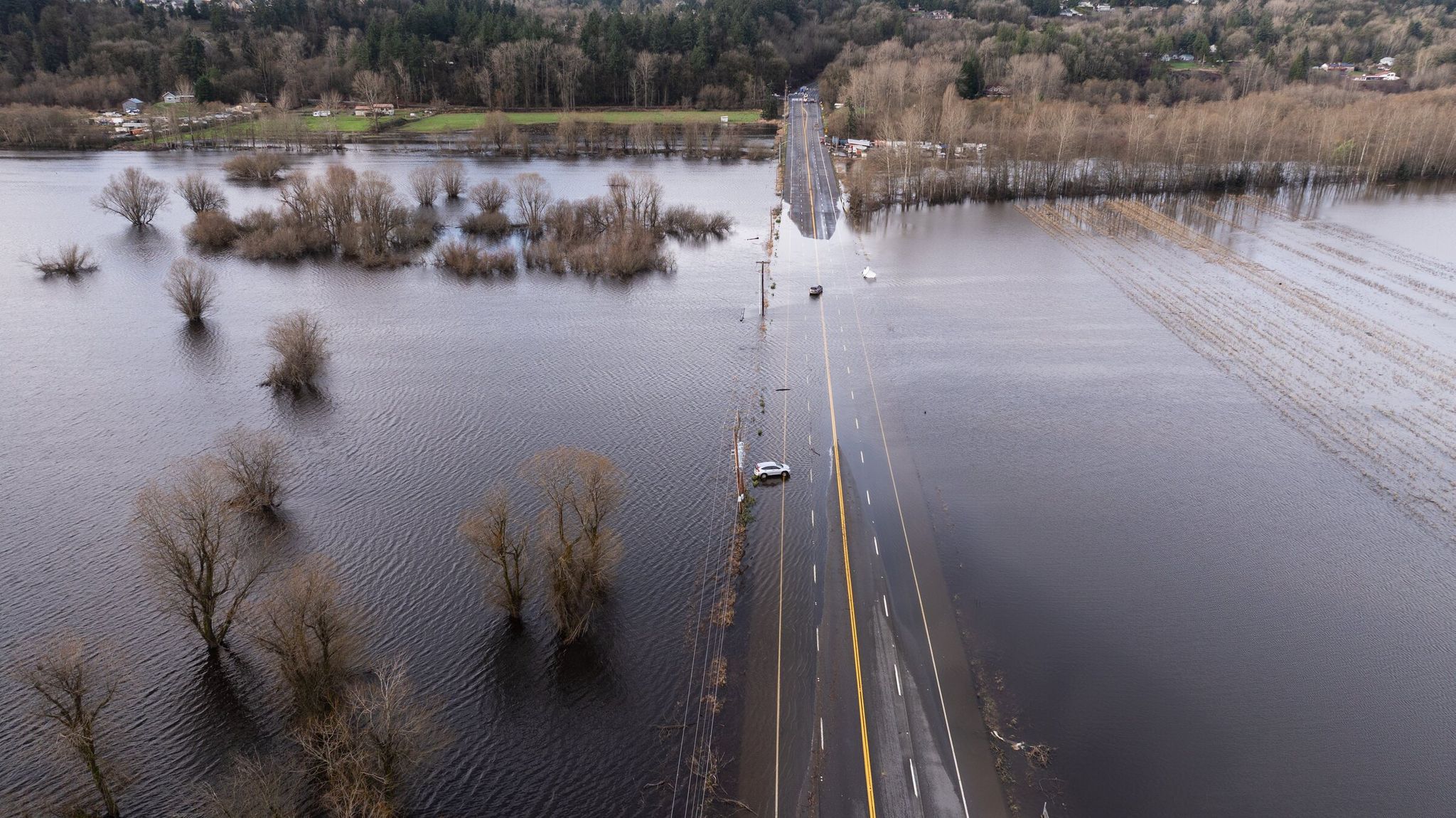
Most of the funding would come from issuing $1.1 billion in bonds. The bulk of the new money — $1.38 billion over six years — would go toward preserving and repairing highways and restoring damage from the destructive December floods. Senator Liias said the state cannot wait for federal aid to begin these repairs and must act immediately.
A significant portion of the budget, $100 million, is allocated to the state ferry system. Those funds would pay for hiring additional staff, expanding repair capacity on Bainbridge Island, and upgrading terminals to improve their earthquake resilience. Bainbridge Island, located in Puget Sound near Seattle, is a key hub of the state’s ferry system. Its ship-repair facilities are strategically important for servicing and repairing the ferries that connect numerous islands and peninsulas in the sound to the mainland, which is critical to keeping one of the largest ferry fleets in the U.S. running. Another roughly $60 million would be invested to accelerate delivery of new hybrid-electric vessels by 2031. At the same time, conversion of existing ferries to hybrid propulsion is postponed at least until that timeline because of problems and cost overruns in a previous similar project.
The proposal also includes funding for other priorities: $2.7 million to fill vacancies in the state patrol to bolster speed enforcement, $30 million in grants for electric vehicle charging stations, and $300,000 to develop a network of bike routes connecting cities across the state. In addition, a separate $1 million grant program would be created to improve pedestrian crossing lighting in cities.
At the same time, the plan pushes back completion schedules for several megaprojects. Those include replacement of the I-5 bridge over the Columbia River, widening of I-405, and finishing the multi-year north–south freeway project in Spokane. The I-405 widening is considered a megaproject because of its massive scale, multi-billion-dollar price tag and multiyear timeline. That corridor runs through Seattle’s eastern suburbs, home to major corporate headquarters, and is intended to ease chronic congestion on one of the country’s busiest roads. The Spokane north–south freeway project is a large-scale construction of a new limited-access highway to improve connectivity for the state’s second-largest city. It is especially important to eastern Washington because Spokane is the region’s economic and logistics center; the new highway is expected to reduce congestion and spur economic development. Those decisions reflect the need to concentrate resources on more urgent maintenance and repair needs.
This Senate proposal is only the first step in the legislative process. The state House must now produce its own version of the transportation budget. Leaders of both chambers must reach a compromise and agree on a final plan before the 60-day legislative session ends on March 12, after which the budget will go to Governor Bob Ferguson for approval.
Overall, the budget represents an adjustment to the large $15.5 billion plan passed last year. Its defining features are bipartisan support, a rejection of tax increases, and a shift in emphasis from launching new grand projects to maintaining and securing Washington’s existing transportation system.
Based on: WA Senate leaders propose $1.5 billion for transportation work