
The Washington State Treasury, led by the popularly elected treasurer responsible for managing state finances and ensuring oversight, sold $62 million in corporate bonds issued by Caterpillar. Activists opposing Israel’s military actions in Gaza greeted the move with approval, seeing it as a step toward divesting from companies tied to the conflict. But State Treasurer Mike Pellicciotti insists the sale was driven solely by financial risk considerations, not an ethical choice.
Officially, the decision is explained as investment portfolio management. Pellicciotti said his team, after reviewing Caterpillar bonds, identified risk in those holdings. He said that risk became apparent after several other large investors, including Norway’s sovereign wealth fund and the Dutch pension fund, divested from Caterpillar assets. “We want to have as little risk as possible,” he explained, stressing that this was not political divestment but a routine financial action. Day-to-day management of the state’s largest pension funds is carried out by the independent Washington State Investment Board (WSIB), of which the treasurer is one of 15 members.
Washington’s sale of its bond holdings is part of a broader international trend. In recent months, a number of government and pension funds in Europe and the U.S. have moved to exit Caterpillar assets worth billions of dollars. They cite concerns that the company’s machinery is used in conflict zones and may contribute to human rights violations. The Trump administration, however, criticized Norway’s decision, calling it based on “illegitimate claims.”
For Palestinian rights advocates and their allies, the treasury’s decision is a significant victory. Activists such as Diana Fahouri of the Washington for Peace and Justice coalition, founded in Seattle in 2002, say it is the result of their “Cut Ties with Genocide” campaign. The group, which organized mass demonstrations and lobbied lawmakers, helped generate public debate and calls on public institutions to withdraw investments from companies accused of supporting the “illegal occupation of Palestinian lands.” They hope the Investment Board will follow suit.
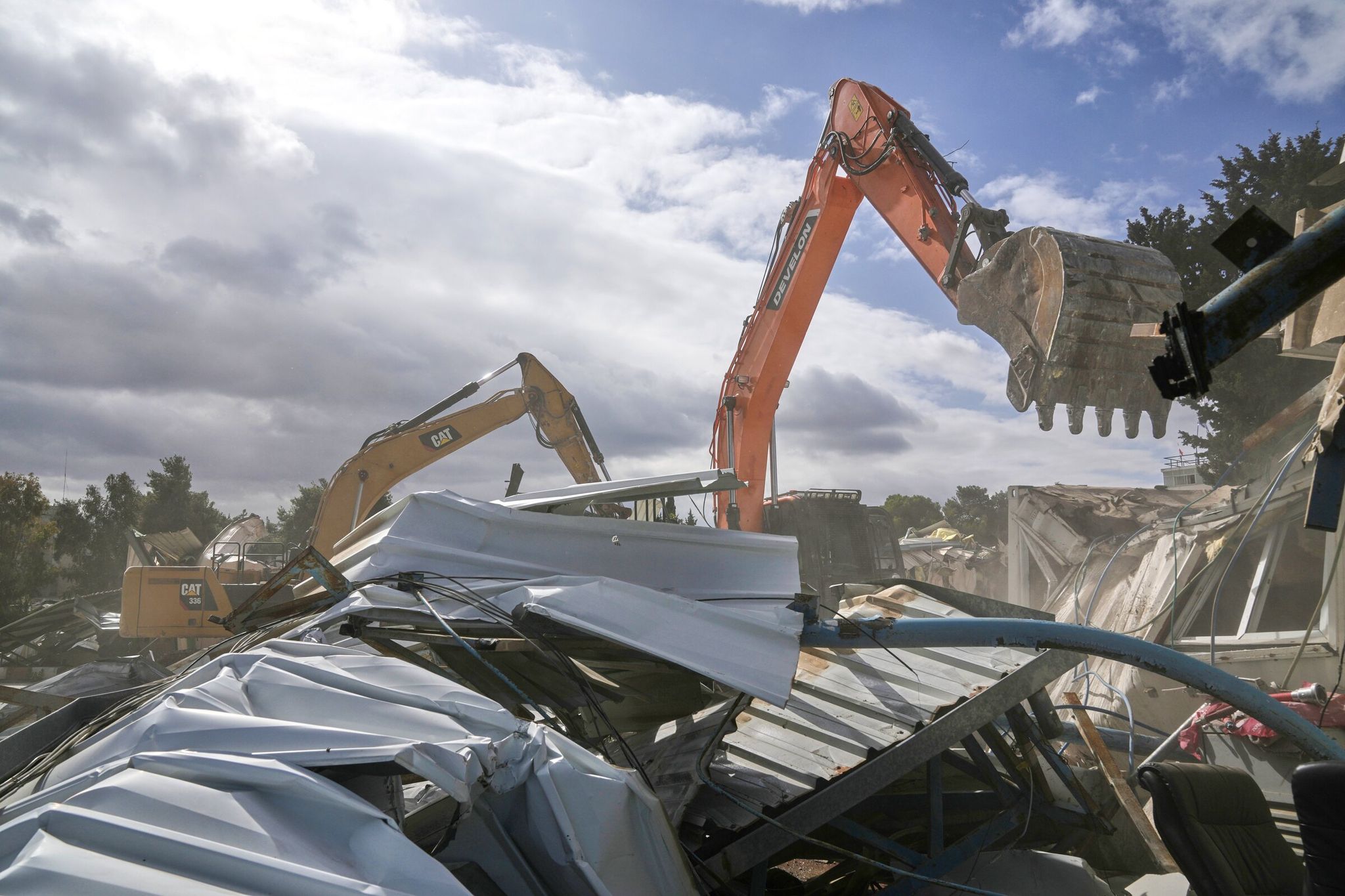
The decision holds special emotional significance for Craig and Cindy Corrie, the parents of American activist Rachel Corrie. In 2003, 23-year-old Rachel, a Washington resident, was killed after being run over by a Caterpillar military bulldozer while protesting the demolition of Palestinian homes in Gaza. Her parents, who founded the Rachel Corrie Foundation for Peace and Justice in Olympia, said they were “encouraged” by the state’s decision. The foundation, which does educational work and supports social justice programs both in the state and abroad, has repeatedly sought to hold Caterpillar’s leadership accountable, to no avail.
The state treasury uses an ESG approach when making investment decisions, assessing environmental, social, and governance risks. In November and December 2024, following such an analysis, the treasurer’s office sold all Caterpillar bonds, some of which were nearing maturity. An official memorandum emphasizes that this is not a ban on investing in particular sectors but rather risk management.
Despite the official framing, activists are celebrating the outcome. “It’s painful to see my taxes funding Caterpillar equipment and war crimes. It’s encouraging to know our efforts are bearing fruit,” they say.
Based on: Advocates praise WA for selling off $62M in Caterpillar bonds