
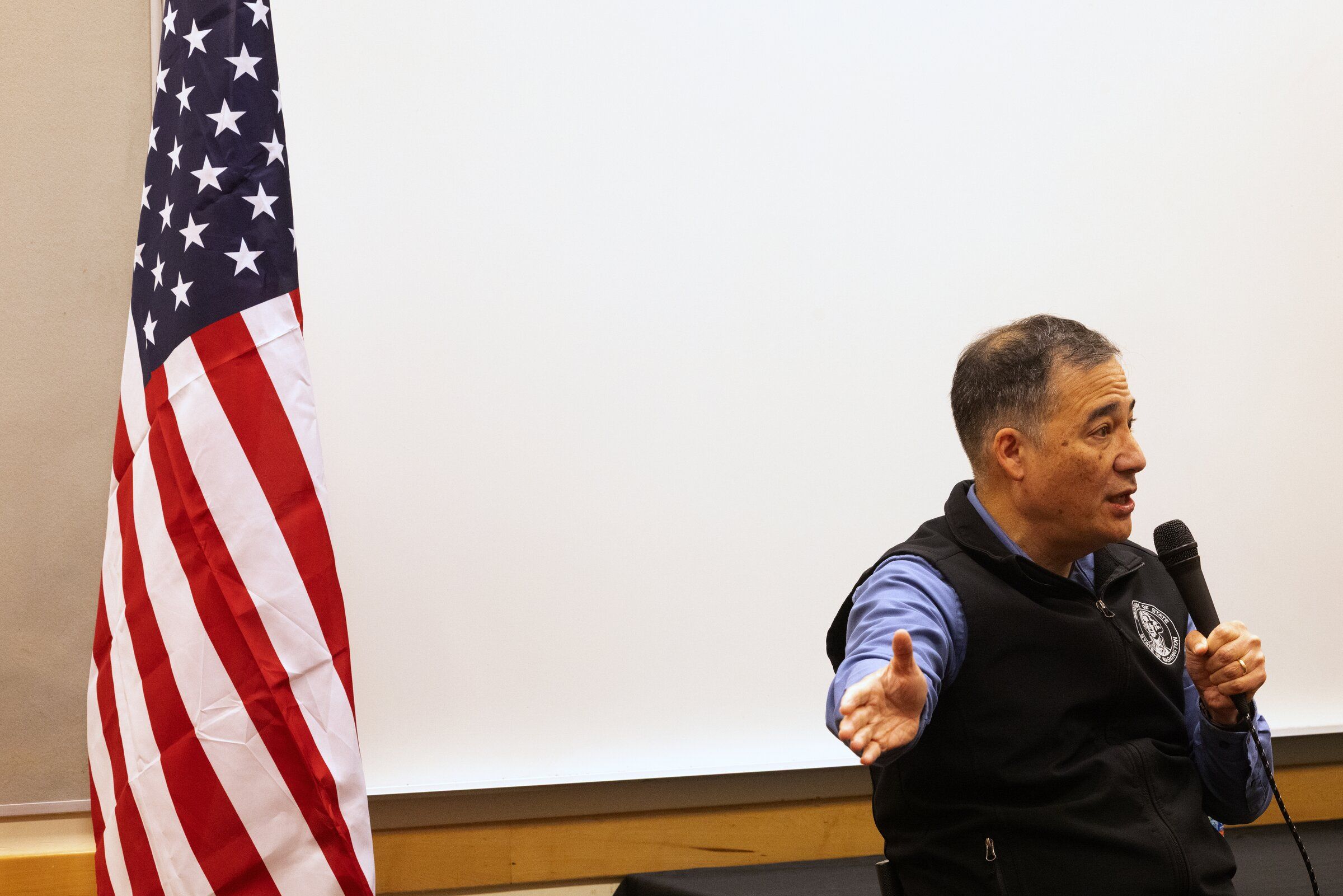
Days before the November 3 general election, a dispute over several hundred names became a dispute over who has the right to decide the fate of a ballot already mailed in. The U.S. Department of Justice demanded that Washington state not count votes cast by 405 people whom federal authorities consider noncitizens. Secretary of State Steve Hobbs replied that the list was “deeply flawed”: an initial review found U.S. citizens, people without active voter registrations, and voters with inactive accounts on it.
The request came on Monday, October 26, from Neil Floyd, acting U.S. attorney for the Western District of Washington, and his colleagues in the Eastern District. The DOJ said that the 405 people it identified had cast more than 1,500 ballots in previous years. The department claims that many of those named are U.S. permanent residents—green-card holders who are allowed to live and work in the country but not vote in federal elections.
Federal prosecutors are asking county election officials to set those ballots aside until the senders’ citizenship is confirmed. Floyd called the cases identified “the tip of the iceberg” and said the investigation would continue. The DOJ also warned that knowingly lying about citizenship when registering to vote could lead to criminal charges and complicate subsequent naturalization.
But the letter to Washington arrived after voting had already begun: the state conducts elections almost entirely by mail and sends ballots to all registered voters. As Hobbs’s office noted, the DOJ list includes someone whose last vote was in 1994. In the decades since then, the state has processed more than 113 million ballots in primary and general elections.
In a response sent on Wednesday, October 28, Hobbs stressed that officials cannot refuse to count a registered voter’s ballot without individualized and reliable evidence that the person is ineligible. Doing so, he said, would be not only irresponsible but illegal. The format of the data provided also poses a particular problem: according to state officials, it lacked some basic information that would allow them to quickly and confidently match a person on the federal list to a specific voter registration record.
Washington requires applicants to attest under oath when registering that they are U.S. citizens and eligible to vote; voters affirm this again when signing the envelope used to return their ballot. The signature is then compared with the sample on file before the ballot is separated from the envelope and sent for counting. This system does not answer every possible question about citizenship, but it explains why the state is unwilling to turn an unverified federal list into an automatic ban on voting.
The latest clash continues a broader conflict between Donald Trump’s administration and state authorities over voter rolls. In September, a federal court in Seattle rejected a DOJ lawsuit seeking access to unredacted data on all registered Washington voters, including confidential personal information. In California, the DOJ recently sought to have ballots set aside for about 20,000 suspected noncitizens; a federal judge rejected the emergency request, warning it could throw the election into chaos.
The DOJ said it would review Hobbs’s response and had previously announced plans to send the state additional names before Election Day. For now, Olympia is promising neither to seize ballots nor to ignore a reliably established violation. The state’s position comes down to a narrower but important principle: suspicion can be the start of an investigation, but it should not, by itself, become a verdict against a vote.


Based on: WA fires back at DOJ demands, calls voter list ‘deeply flawed’