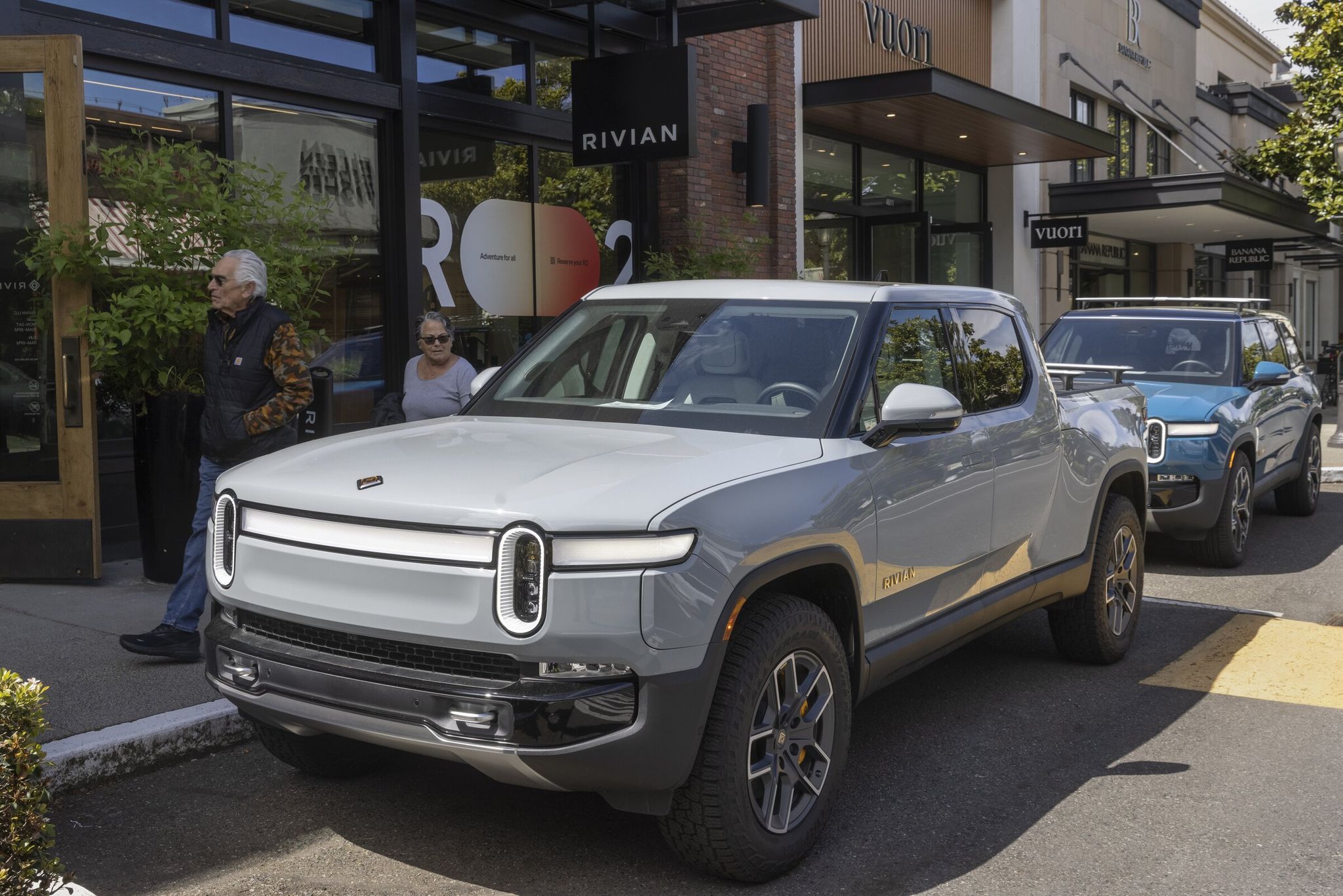
State lawmakers in Washington have passed a law that strips Tesla of the exclusive right to sell electric vehicles directly to consumers. The change opens the local market to other makers that produce only electric vehicles — Rivian and Lucid. These brands will now be able, like Tesla, to open their own showrooms where customers can test-drive cars, negotiate price and complete purchases on the spot.
Until now, Washington residents who wanted to buy a Rivian or Lucid had to resort to workarounds: ordering the car online with subsequent delivery and complicated re-registration in the state, or driving to another state — such as neighboring Oregon, California or Idaho — where such direct sales are already permitted. The obstacle was the state’s old laws governing relationships between automakers and dealers, which for decades prohibited direct sales. Tesla received an exemption back in 2009.
The legislative change is the result of years of effort by electric vehicle makers and environmental activists, who faced stiff resistance from franchised dealer associations. The turning point came this year when Rivian threatened to put the issue to a referendum, committing $4.6 million to the campaign. That threat forced dealers to sit down with lawmakers before the official session began. A significant role in advancing the state’s climate legislation was played by the nonprofit Climate Solutions, which actively lobbies for such initiatives by bringing together business, community groups and government.
The new law, which takes effect in June, does not name Rivian and Lucid explicitly but sets clear criteria. To obtain a direct-sales license, a manufacturer must be an American company, make only electric vehicles, have never previously had agreements with franchised dealers, and have at least one service center and 300 registered vehicles in the state. The law also increases the vehicle registration fee by $25.
As of the end of 2024, about 20% of new registrations in Washington were electric vehicles. Tesla remains the leader with 41% of the fleet, while Rivian accounts for about 3%. The bill won support from Climate Solutions and some dealers, but met opposition from Honda representatives and the automakers’ association. The bill’s sponsor, Democratic Sen. Marco Liias, said the law strikes a balance between expanding access to “green” technology and protecting existing dealer networks.
Passage of the law is especially important in the wake of the repeal of federal EV tax incentives, since the state is behind on its goal to transition all vehicle sales to electric propulsion by 2035. This lag is due not only to legal barriers like the ban on direct sales, but also to other problems: outdated zoning rules for charging infrastructure, insufficient funding of state-level buyer incentive programs, and permitting hurdles for building charging stations. In addition, the transition is hampered by the slow rollout of public charging stations, especially in rural areas and multifamily housing, the high cost of EVs for many residents, and delays in upgrading the power grid to support widespread charging.
For Rivian this win set a precedent: the company used the referendum threat as leverage for the first time and is now considering using a similar strategy in other states such as Ohio, Nebraska and Arkansas.