
Washington state officials have reversed course and partially rolled back last year’s steep increase in the tax on large estates that had made the rate the highest in the nation. The move comes amid concerns that an overly heavy tax burden could drive the wealthiest residents to other states. Meanwhile, Democrats who control the legislature are also advancing a new law to impose an additional tax on incomes above $1 million a year. The state’s long-standing lack of an income tax has made it reliant on sales taxes, property taxes and a business gross receipts tax, which periodically fuels sharp debates about the fairness of the tax system because indirect taxes hit lower-income families harder.
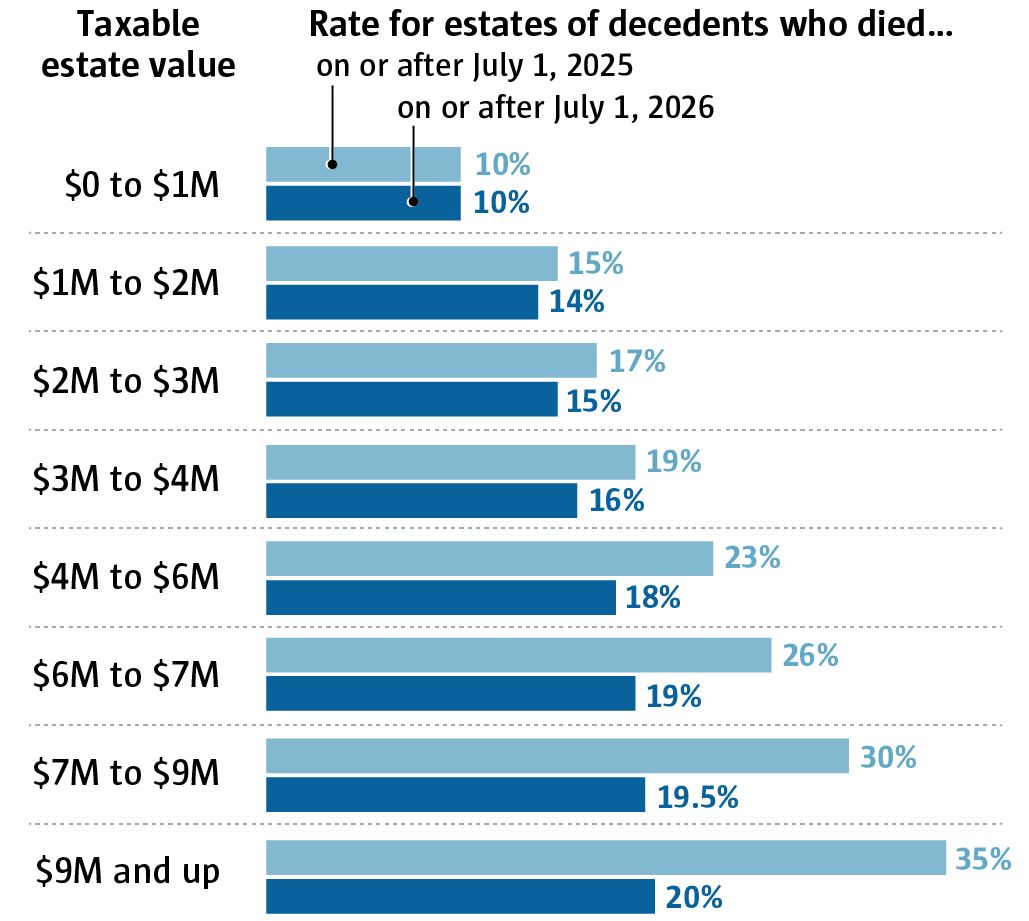
Specifically, the change reduces the top estate tax rate from 35% back to its previous level. The increase to 35%, which took effect in June of last year, made Washington stand out nationally: the next-highest rate, in Hawaii, is about 20%. The new rate would apply to estates opened after July 1, 2026, if Governor Bob Ferguson signs the bill.
These tax maneuvers illustrate the tricky balance local Democrats are trying to strike. On one hand, they seek to boost revenue from the wealthiest citizens; on the other, they must respond to criticism and concerns that one of their recent tax measures went too far. They defend the proposed “millionaires’ tax” as a more common approach, noting that most states have an income tax while only 17 levy an estate tax.
The main argument for lowering the estate tax was fear of a “wealth exodus.” Lawmakers cite anecdotal reports — unverified accounts — that some very wealthy people are considering relocating. The situation was intensified by news that multibillionaire and former Starbucks CEO Howard Schultz plans to move to Florida, although he has not publicly tied the decision to tax policy. Figures like Schultz, and Starbucks itself as Seattle’s largest employer and an international brand, have traditionally wielded significant influence in the state’s public and political life, speaking out on social issues and engaging in active lobbying.
However, the rate cut has powerful opponents. Progressive activists and experts, such as Rian Watt of the Economic Opportunity Institute, point out that the estate tax remains one of the few progressive elements in the state’s tax system, where the bulk of the burden falls on low- and middle-income families. They also note that revenues from the tax — about $535 million a year — are unstable because they depend on the timing of large inheritances.
The legislative session in Olympia is winding down, and lawmakers have little time left to pass the full tax package and a balanced budget. Thus, undoing the record estate tax rate became part of this “final sprint,” reflecting political compromises on taxation and social spending. The distance between the capital, Olympia, and the state’s largest economic center, Seattle, creates a certain split between economic and political power that sometimes leads to tension in the legislative process but also helps balance interests across the state.
Based on: WA estate tax: Lawmakers roll back rate increase, fearing wealth exodus