
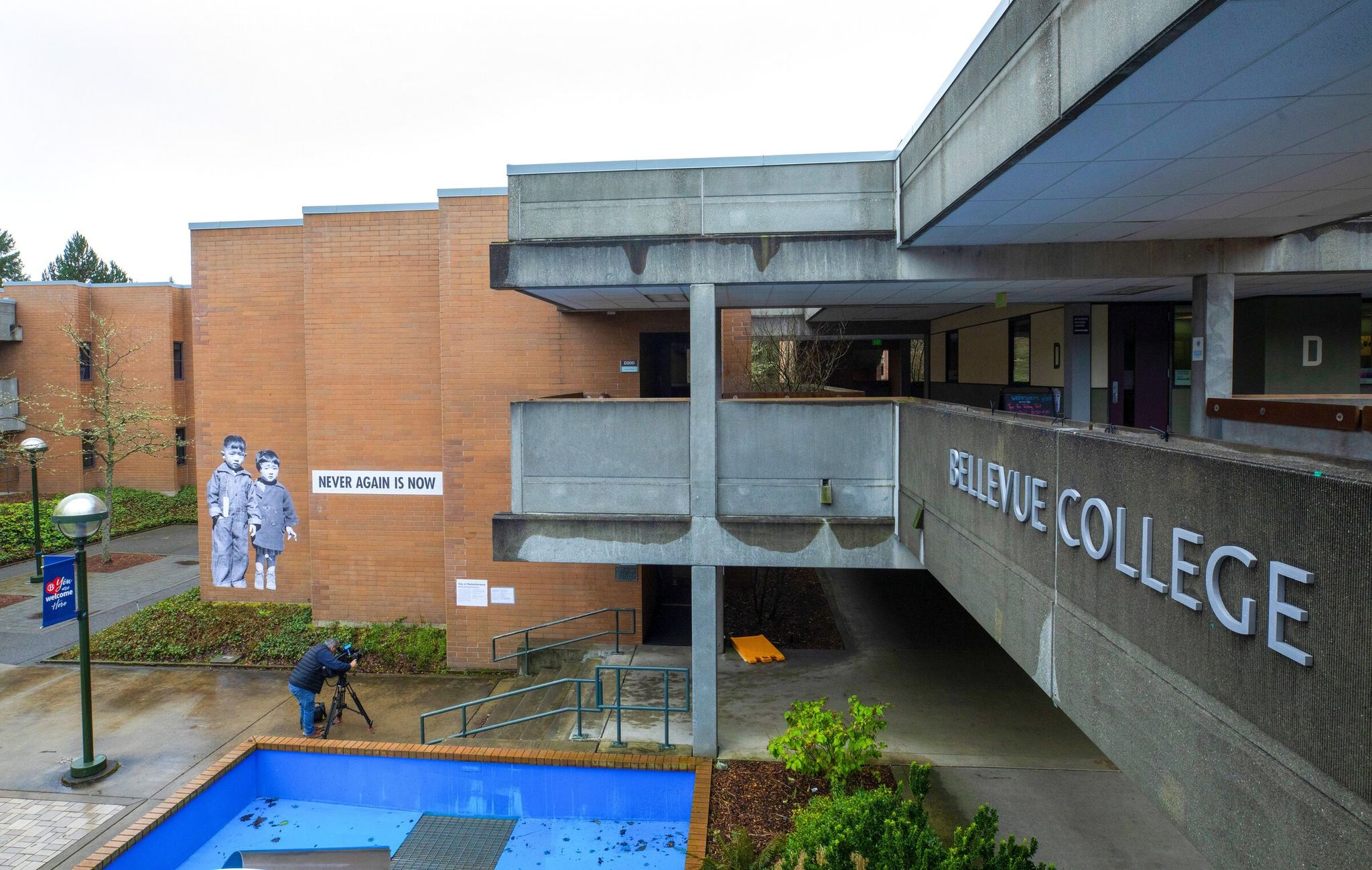
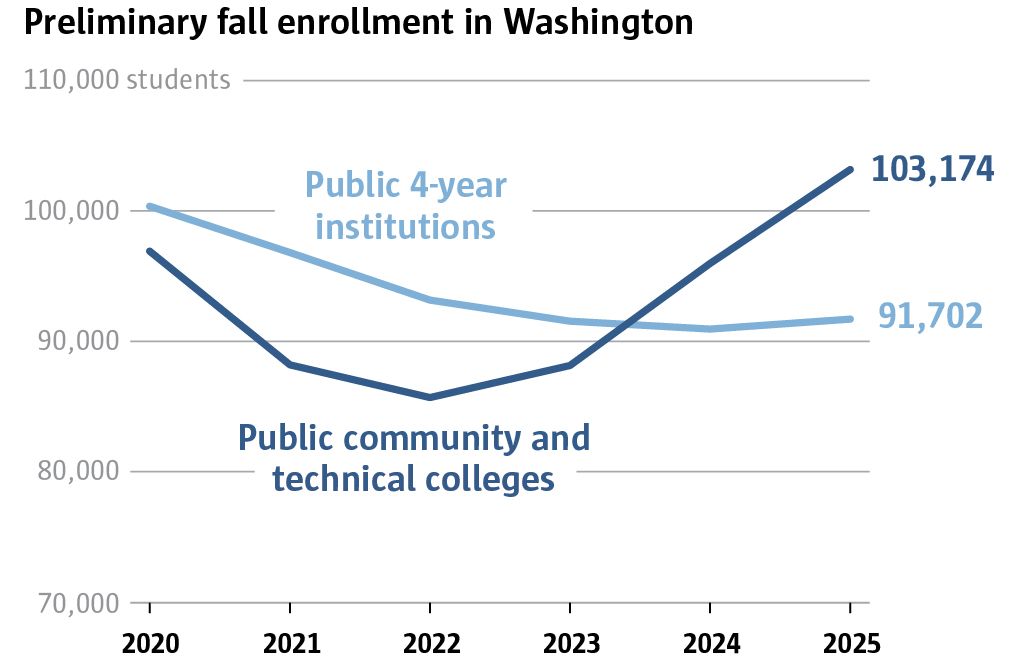
Enrollment at Washington’s community colleges has fully rebounded from the pandemic, showing significant growth, while enrollment at the state’s public four-year universities remains largely unchanged. Preliminary data show the number of students seeking a degree or certificate at colleges rose 7.5% in a single year, from 2024 to 2025. The most notable enrollment increases occurred at colleges located in densely populated urban and suburban areas, such as Seattle Central College (part of the Seattle Colleges system) and Bellevue College. Their convenient locations in major economic centers, where students can combine study with work, and the popularity of programs in information technology, health care and workforce training—such as cybersecurity or nursing—align with local labor-market needs and attract students seeking practical skills for quick employment.
At the same time, undergraduate enrollment at four-year institutions increased only slightly, and the number of first-time freshmen actually fell by 7.5%. State policy may have influenced students’ decisions, in particular the Washington College Grant, which covers up to 100% of tuition at community colleges for low- and middle-income families, substantially lowering financial barriers. Initiatives such as tuition waivers for certain students—for example, the Washington State Opportunity Scholarship for technical fields—also encourage the choice of short-term programs that allow faster entry into the workforce. In high-cost cities like Seattle, these measures help students save on education without accumulating large debt, making community colleges a more accessible alternative to universities.
This trend comes at a challenging time for higher education, especially for community colleges. Unlike universities, they do not have large endowments and rely heavily on state funding, which has already been reduced. Because budgets and tuition revenue are directly tied to enrollment numbers, even small fluctuations in enrollment can have serious financial consequences. At the same time, policymakers continue to emphasize that postsecondary education is a key factor for earnings and competitiveness in the labor market.
Experts suggest the growth may be an early sign that more students are choosing a “mixed route”: starting at a more affordable community college and then transferring to a university to complete a degree. The increase is concentrated among students pursuing degrees or certificates, which is somewhat surprising given the popularity of dual-enrollment programs for high school students. It’s possible that the trend toward studying closer to home, which emerged during COVID-19, still persists.
The situation is complicated by demographics. Washington’s high school graduating class this year was the largest in five years, yet that increase did not translate into a corresponding rise in university freshmen. That worries officials, since university enrollment typically correlates with the number and geographic distribution of graduates. It’s possible that the increase in 12th-grade graduates is concentrated in regions where students have historically been less likely to enroll immediately in four-year universities.
Despite the encouraging college numbers, state officials caution against drawing hasty conclusions from a single year of data. Experts stress that two to three years of data are needed to identify sustained trends and form a clear picture. For now, the observed changes are only a potential signal of shifting student preferences in higher education.
Based on: WA community colleges are bouncing back from the pandemic