
Hearings were held Tuesday in federal court in Seattle on a lawsuit by the U.S. Department of Justice against officials in the state of Washington. The department is seeking the unredacted voter lists, including driver’s license numbers and partial Social Security numbers. By this point, the Justice Department had already lost 20 similar cases around the country, and Judge Kimberly Evanson showed no signs of breaking that pattern.
Justice Department attorney Raymond Young conceded that the arguments he is making in Seattle have already been rejected by all other courts. He said they “misread” the federal government’s authority under civil rights law. Tera Heinz, representing Washington Secretary of State Steve Hobbs, replied that the courts correctly condemned the Justice Department’s “illegal attempts” to take control of voter data away from the states and called the request for confidential information “unprecedented and dangerous.” The requirement is especially sensitive because Washington has automatic voter registration: when a resident gets or updates a driver’s license at the Department of Licensing, their information is automatically sent to the registration system unless they opt out. The driver’s license number is used as a unique identifier to verify identity and link records across agencies—so it ends up on voter lists as a direct result of the state’s integration of its transportation and election systems.
The Justice Department filed suit against Hobbs in December, arguing that the federal government has “broad authority” to request data to verify whether ineligible people are being removed from voter rolls. Hobbs’s lawyers in May filed a motion to dismiss the case, calling the lawsuit an “unlawful demand,” and voter-rights organizations backed the state. Judge Evanson has not yet issued a ruling, but indicated she sees no grounds to grant the Justice Department’s request.
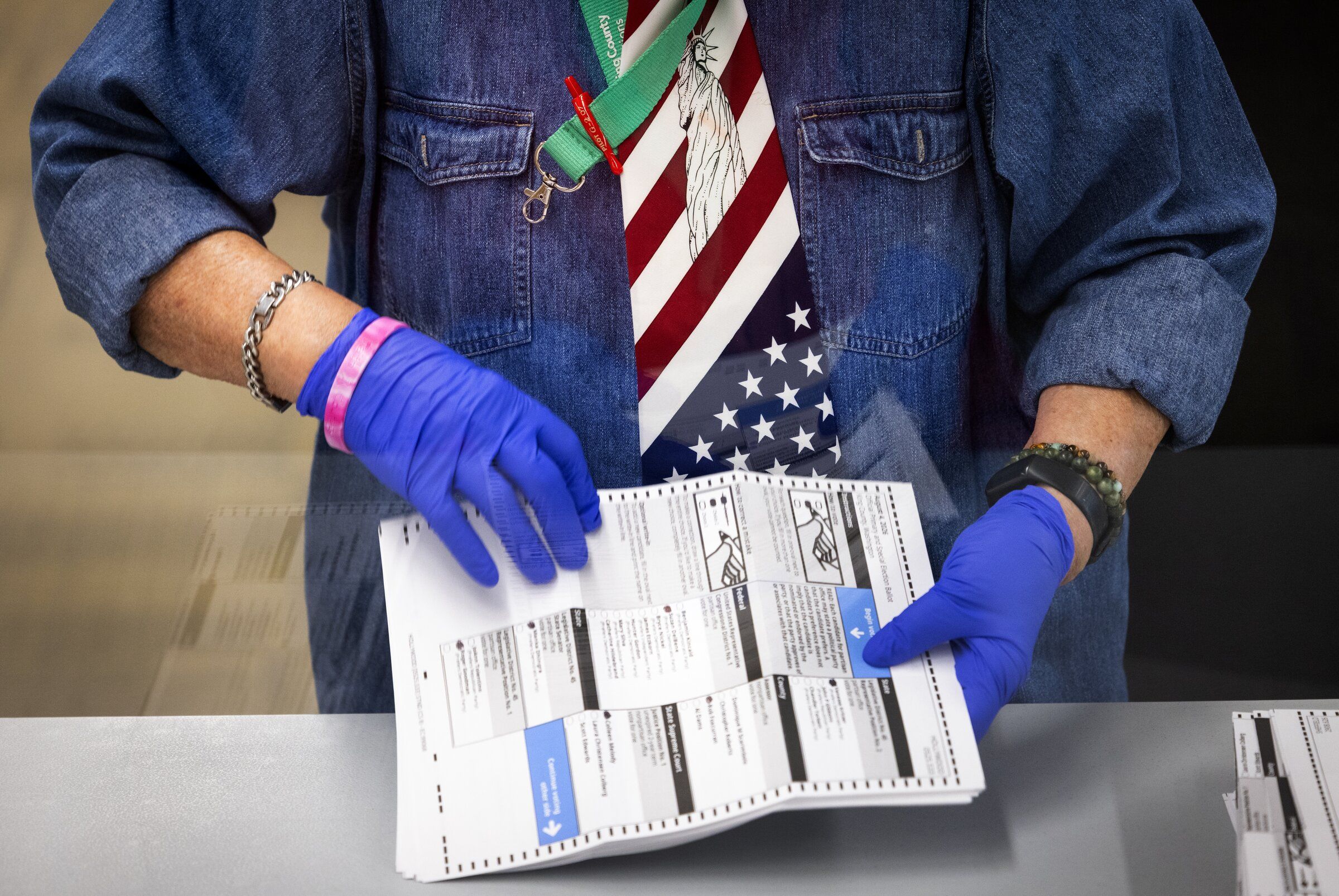
In Washington, nearly all elections are conducted by mail: every registered voter receives a ballot at their home address. If voter lists containing addresses and personal information become publicly accessible, it would allow bad actors to learn who is voting and where—and it would also create opportunities for interference, including intercepting or swapping ballots. Publishing such information can lead to pressure on voters or their intimidation. That is why the state imposes strict limits on access to voter lists and protects them as confidential information, and violating that protection is considered a serious offense.
This wave of lawsuits is part of a broader effort by the Trump administration to create a nationwide voter list and sow doubts about election results. Trump continues, without evidence, to claim that the 2020 presidential election—one he lost—was tainted by widespread fraud. Federal courts rejected those arguments immediately after the election and are now similarly rejecting lawsuits seeking the transfer of election data. Last week, a court in Illinois ruled that the state is not required to turn over voter data—marking the Justice Department’s 19th straight loss. On Monday, a judge in Colorado delivered the 20th. Despite that, according to the Brennan Center, at least 16 Republican-led states have voluntarily handed their voter lists to the Justice Department. Judge Evanson said she will try to issue a written decision in the Washington case as soon as possible.
Based on: WA lawyers seek to hand Trump administration 21st loss in voter roll lawsuits