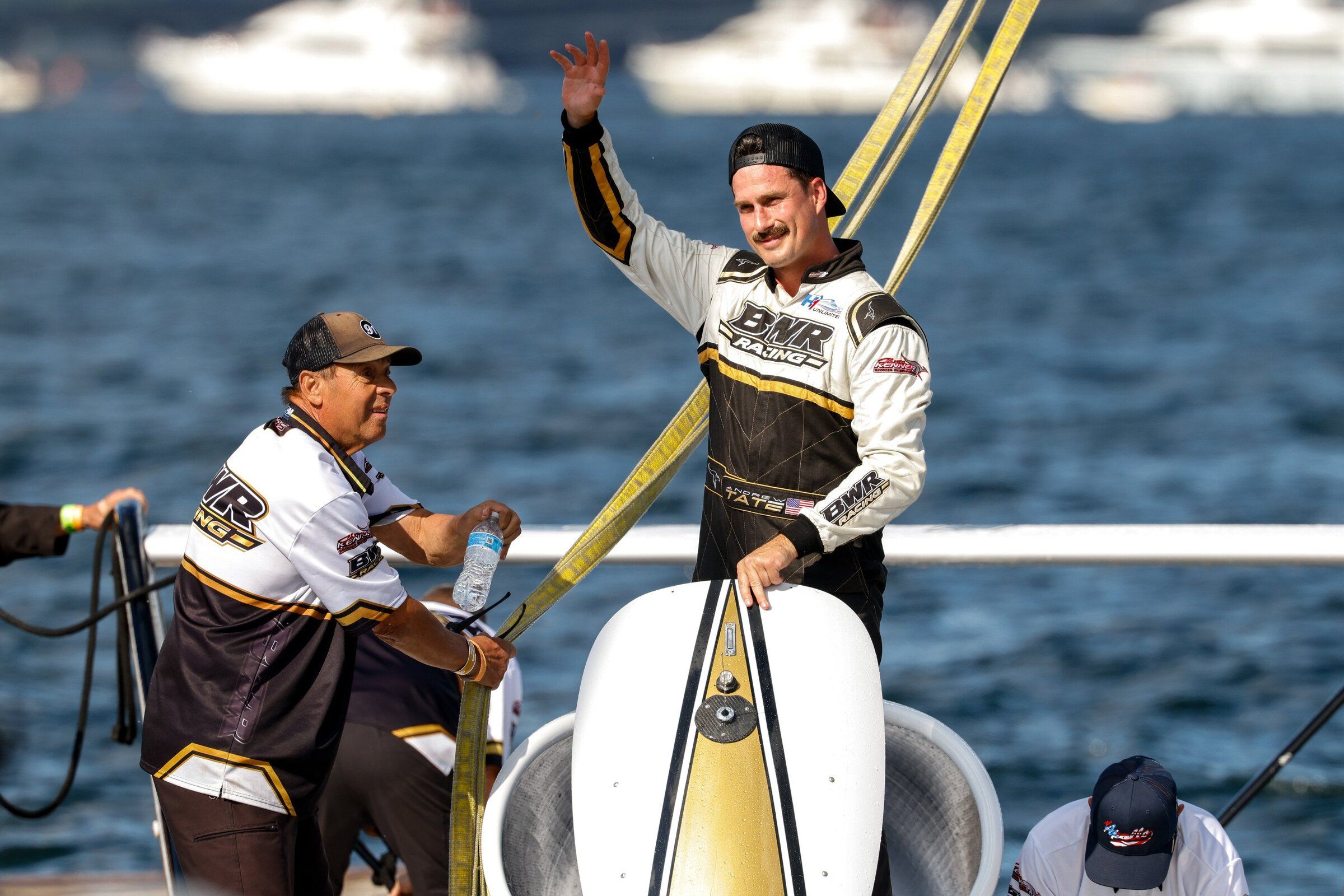
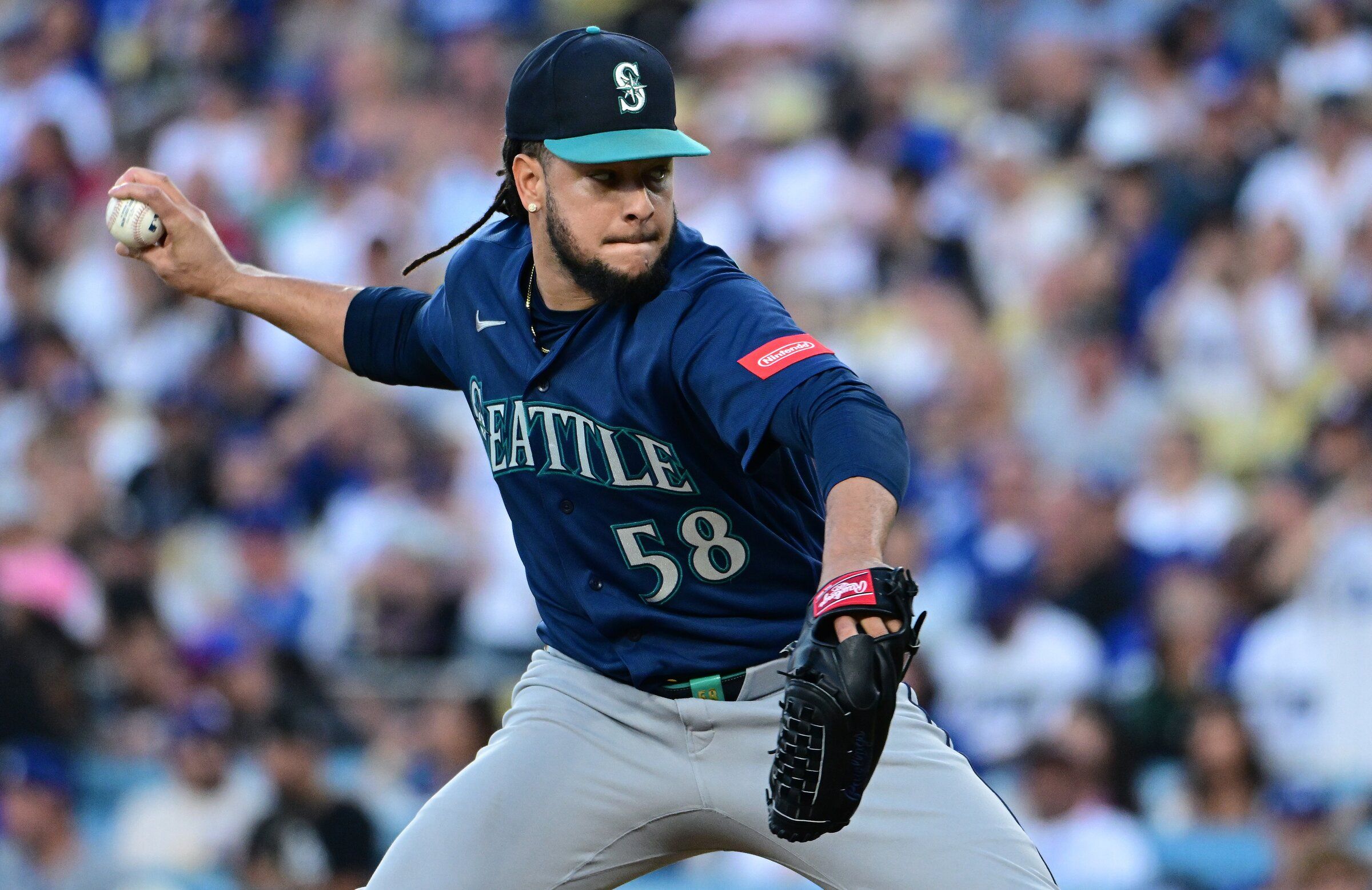
Andrew Tate won the hydroplane race at Seafair, Washington veterans opened their doors to wildfire victims, and the Mariners traded Luis Castillo to the White Sox.
Andrew Tate wins again at Seafair: a teammates duel heads into the home stretch
Hydroplane racing is a discipline where speed, tactics, and engineering excellence come together—and this season is proving it in full. BWR Racing has been dominating all year, but the intrigue in the individual standings is only growing. Over the weekend in Seattle, at the famed Seafair festival and the Apollo Mechanical Cup, Andrew Tate confirmed his status by winning again and repeating last year’s result. Notably, the fight for first place played out within a single team: Tate in the U-1 BWR Racing boat edged out his teammate, Andrew Shain, who was piloting the U-27 Apollo Mechanical.
For Tate, this win became his first of the current season, adding extra weight to it. The reason is simple: Shain had won the first two events, returning to the sport after a four-year layoff and immediately reminding everyone who the driving force in this category was before he left. Now Tate answered his teammate’s challenge, and the standings have turned fiercely contested. Heading into the final event next month in San Diego, both drivers were essentially tied in the battle for the National High Points Championship. For Tate, it’s an opportunity to secure a third consecutive title, while Shain is clearly aiming for a triumphant comeback.
The Seattle race itself was difficult not only because of the competition on the water. The final had to be delayed by a full hour: the event was running behind schedule, and organizers had to wait for the end of the Blue Angels air show, which is an integral part of the celebration. The pilots were already seated in their boats on the water when they were told they’d have to wait. Despite the pause, Tate’s focus and mindset didn’t slip—he carried the race to victory, strengthening his team’s lead in the team standings.
For those unfamiliar with the sport, it’s worth explaining that unlimited hydroplanes are a racing class built around very powerful aircraft engines, capable of achieving tremendous speed on water and literally “flying” above the surface thanks to a special hull design. Seafair in Seattle is one of the most prestigious stops on the calendar, while the National High Points Championship is the season’s main trophy, awarded based on results across all races. The fact that two drivers from the same team are battling so closely makes the season’s finish especially thrilling.
Tate’s win at Seafair adds points to his personal tally and underscores the strength and engineering potential of BWR Racing, which looks a cut above the competition this season. That said, all attention now turns to San Diego: the outcome of the championship race between two teammates will be decided head-to-head. As the Seattle Times reports, this story will continue, leaving fans to wonder whether Shain can prove his early victories weren’t just luck—or whether Tate will once again confirm his status as the sport’s best driver today.
Fire doesn’t ask who you are: Washington veterans open their doors to wildfire victims
While eastern and central Washington is choking on smoke and flames that have swept across more than 250,000 acres of land, help is coming from those who are used to acting when everything around them is burning. The Veterans of Foreign Wars (VFW) Department of Washington announced a mobilization of its regional network: about ninety local posts and twenty thousand members opened their facilities to anyone fleeing the danger. As reported by FOX 13 Seattle, this isn’t just for service members—any resident in need of a safe place away from heavy smoke can get shelter, as well as hot meals and overnight accommodations at any time of day.
VFW public relations specialist Paul Herrera explained the impulse plainly and in military fashion: “When we serve in the military, we follow the principle of ‘service above self,’ so it’s only natural for veterans to help other veterans.” In this case, though, the help goes far beyond the military brotherhood—any person who has lost housing or simply can’t breathe clean air can walk into the smoke-filled halls of local posts. This grassroots initiative becomes especially valuable as official rescue services are operating at their limits, and the weather—heat and wind—only fuels the spread of the fire.
However, leaders of the organization stress that the hardest part will begin after the fire is contained. Families who have lost their homes will face a long recovery process, and for those who have lost everything, support will be needed for many more months. Herrera expressed sympathy for those affected, noting that losing a home is always a tragedy, but it’s especially painful when irreplaceable keepsakes are wiped out in the blaze—family photographs, awards, and military pictures that represent a lifetime for veterans. “Our hearts are with the families and veterans, especially those who have just lost their homes. This will be absolutely devastating,” he said.
The VFW, on its own, is more than a hobby club—it’s a powerful veteran organization that traditionally plays an important role in American community life. In this situation, its network has become an improvised aid hub, where a principle of mutual help—familiar to anyone who has worn a uniform—takes center stage. For those in the Spokane area, the local post’s contact phone number is 509-680-0418. But it’s not just about one specific number: the VFW example shows how horizontal connections between people can help fill gaps in the official disaster response system. While authorities are assessing damage and firefighters fight new pockets of blazes, organizations like the VFW are the ones taking care of the person—his fear, the smoke in his lungs, and the ash left where a family home once stood.
The Mariners trade Luis Castillo to the White Sox: the start of a bigger sell-off before the deadline
Seattle finally made its first truly big move on the summer trade market: veteran right-hander Luis Castillo is headed to Chicago. The decision looks both expected and symbolic—the club has long signaled it’s willing to part with someone from its crowded starting rotation, and Castillo, the team’s oldest and most expensive pitcher, has always been the most obvious candidate to go. Now the Mariners got back three players, including experienced reliever Seranthony Dominguez, and cleared a major contract from their payroll. But, judging by the situation, this is only the beginning: the trade deadline is days away, and interest in other Mariners players continues to rise.
As reported by the Seattle Times, the deal was confirmed on Saturday by a source familiar with the situation. The Chicago club will pick up the remainder of Castillo’s contract—approximately $30 million through the end of the 2027 season. In addition, the 33-year-old right-hander has a $25 million vesting option for 2028, which becomes active if he reaches 180 innings on the field in the next season. For the Mariners, that matters twice: they not only get rid of their current payments, but also reduce the risk of a future obligation. In return, Seattle receives right-handed reliever Seranthony Dominguez, outfielder Nolan Jones, and a catcher from the Double-A level, Boston Smith, plus some cash compensation.
Mariners president Jerry Dipoto, in an official statement, called Castillo an essential part of the club’s history. “ ‘Rock’ was a key element of this era in our organization’s story,” Dipoto said. “His arrival and then his play in 2022 set the tone for the fantastic stretch we enjoyed in Seattle. We value everything he did and wish him continued success.” Those words reflect the club’s double position: parting with one of the heroes of the recent past isn’t happening because it’s convenient—it’s happening because his output has sharply declined.
Four years ago, Castillo was nearly the Mariners’ best deadline acquisition in the franchise’s history. He came from Cincinnati in a five-player deal, immediately signed a five-year, $108 million extension, and played a key role in Seattle ending a 21-year playoff drought in 2022. For three full seasons, he was a model of stability: in his first 106 starts for the Mariners, his ERA was 3.46, and he recorded 633 strikeouts in 618 innings. In 2023, he was selected to the All-Star Game held right there at the Mariners’ home ballpark—T-Mobile Park—and finished the season with a 14-9 record, a 3.34 ERA, and 219 strikeouts in 197 innings.
But this year, everything changed. In April and May, his numbers dropped noticeably, and despite being the team’s highest-paid player, he effectively slid to sixth in a rotation of six pitchers. For the club, that was a signal: Castillo’s contract no longer matches his contribution on the field. The fact that the White Sox agreed to assume all of the financial obligations is a separate win for Seattle, since just a week earlier it wasn’t clear whether anyone would be willing to pay that kind of money for a pitcher whose performance was falling.
Now Castillo will slot into the middle of the young Chicago club’s rotation as it fights to win its division. As for the Mariners, they won’t stop there. According to a source, the club will continue talks about other starting pitchers—George Kirby and Emerson Hancock. Interest is also expected to build around left fielder Randy Arozarena, who is set to become a free agent soon. That means the Castillo deal is likely just the first step in a larger roster reshaping before Monday’s deadline.
Of the players acquired, Dominguez is likely to have the clearest role. The 31-year-old reliever is in his eighth season in the league. This year he signed a two-year, $20 million contract with Chicago. In the 2025 season, he looked uneven: a 4.10 ERA and 12 saves in 42 games. An interesting detail: it was Dominguez last fall, while playing for Toronto, who missed a grand slam by Eugenio Suárez in the eighth inning of Game 5 of the American League Championship Series—an event that flipped the momentum of the game. Now he’ll appear in Seattle in big moments, but he likely won’t take the primary closer role—that spot will remain with Andres Munoz.
Nolan Jones is the riskier option. The 28-year-old left-handed outfielder finished fourth in the National League Rookie of the Year voting in 2023 while playing for Colorado, and he made an impression with 20 home runs and 20 stolen bases. But the next two seasons saw him below average, and this year he didn’t appear in the major leagues at all, playing the whole season in Triple-A. For the Mariners, this looks like an attempt to restart the career of a player with clear talent. The third acquisition is Boston Smith—a promising catcher and outfielder ranked 15th in the White Sox’ prospect rankings. He landed in Chicago from Washington this spring in a trade for Curtis Mead.
For those who don’t follow baseball nuances, here are a couple of terms. The trade deadline is a hard date after which teams can’t make deals until the end of the season; this year it falls on Monday at 3:00 p.m. local time. A vesting option means the contract option automatically kicks in if a specific condition is met—in this case, 180 innings next season. A six-pitcher rotation is a strategy where a team uses six starting pitchers instead of the traditional five, giving each one an extra day of rest. And a “high-leverage role” is a spot in the lineup when a pitcher comes into the game during the most tense moments—when the score is on the line.
The key takeaway from this trade is that the Mariners chose to be pragmatic