
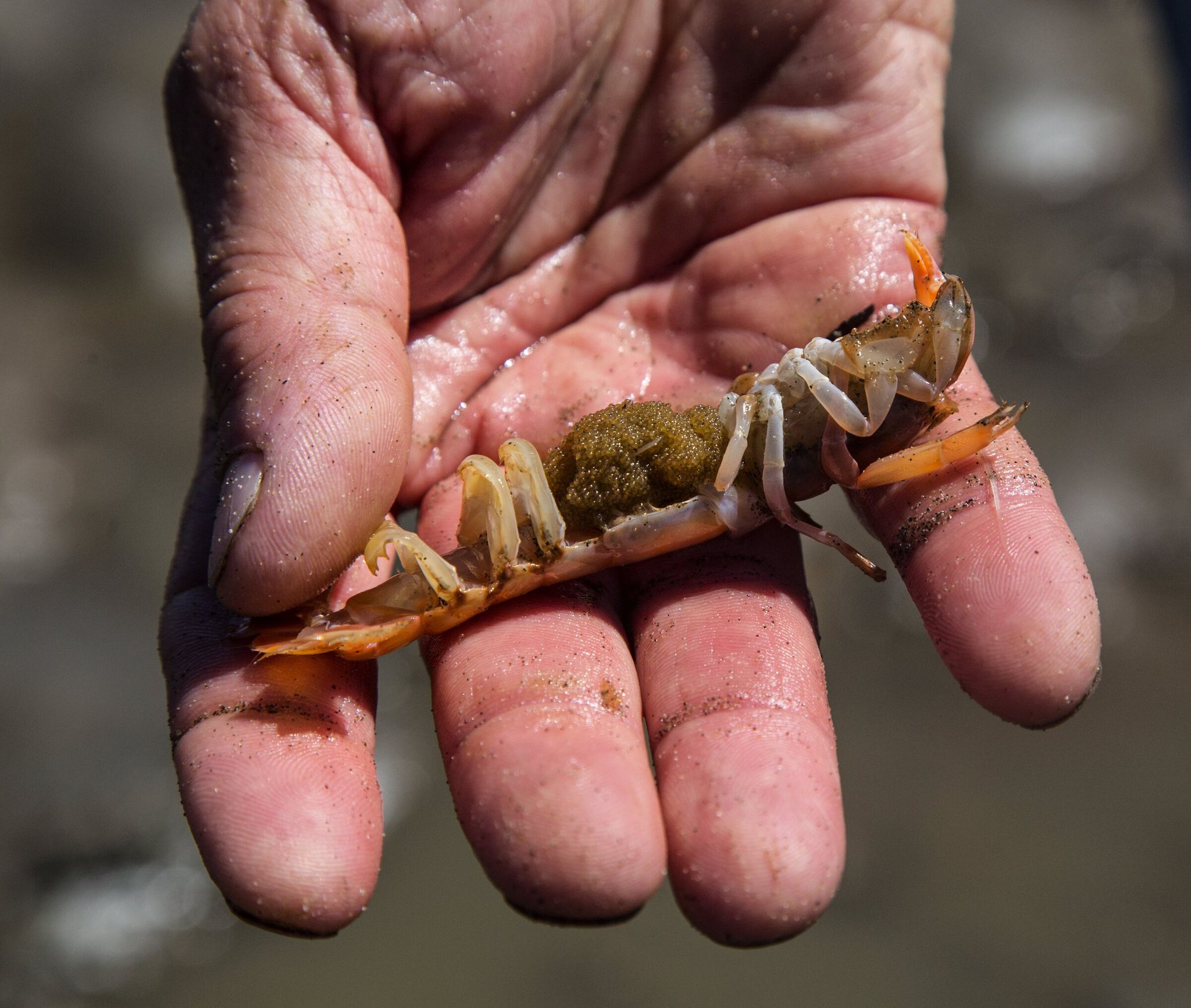
A new study by University of Washington biology professor Jennifer Ruesink has revealed a promising method for combating ghost shrimp — small crustaceans that are causing major damage to oyster farms in Willapa Bay. The bay, on Washington’s southwest coast near the Oregon border, is one of the largest oyster-producing regions in the U.S., thanks to clean, plankton-rich waters and extensive muddy flats ideal for shellfish cultivation. The region supplies about 25% of all farmed oysters in the country. Results published in early March show that a combination of subsurface vibration and surface pressure can effectively reduce these pest populations.
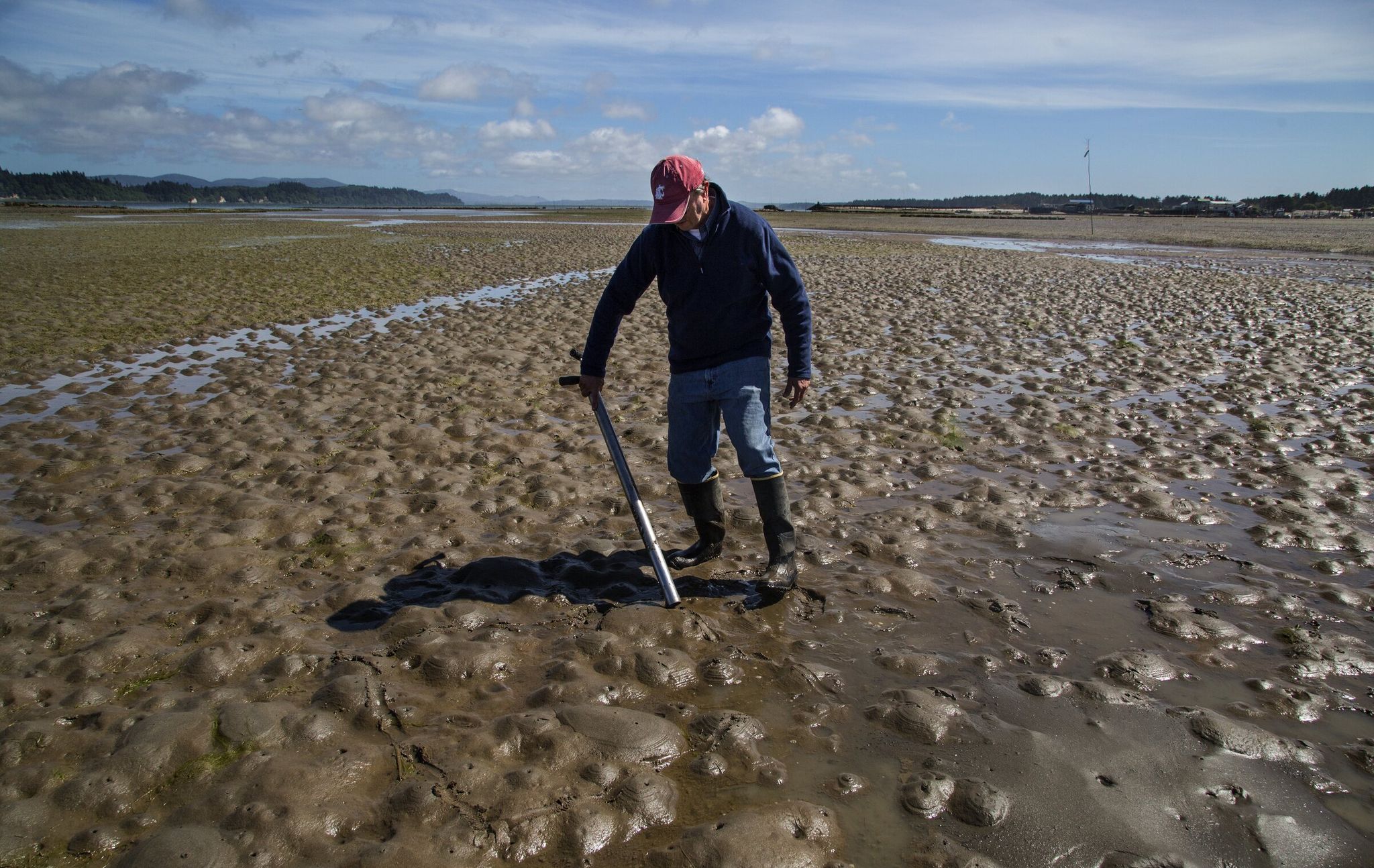
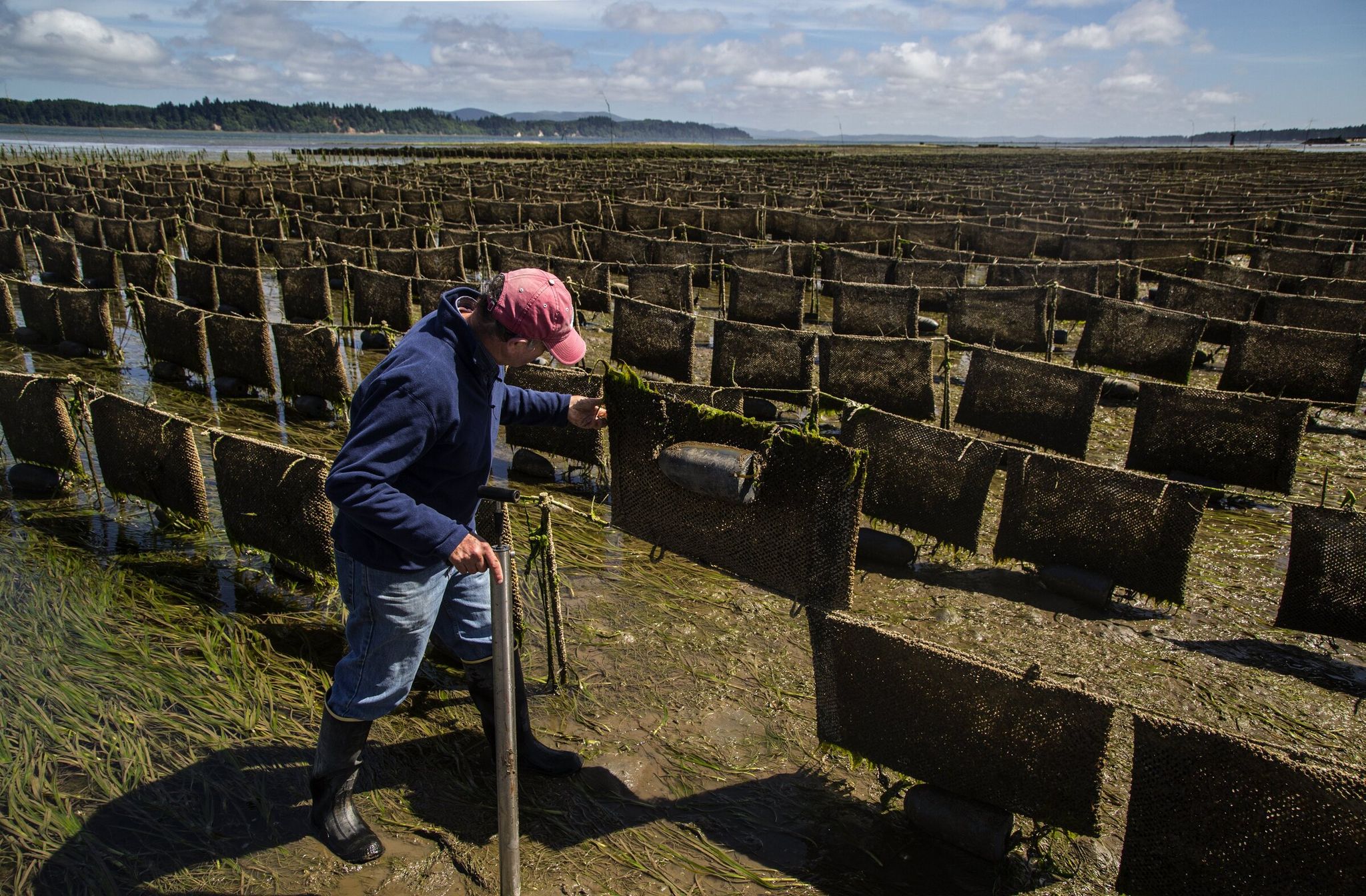
The problem lies in the shrimp’s behavior: they actively burrow, loosening bottom sediments. Firm sand turns to soft mud, where oysters on sandy grounds simply sink and suffocate. Ken Wiegardt, owner of Jolly Roger Oysters and a fifth-generation oyster farmer, says the shrimp have cost his operation two-thirds of its production capacity — from 235,000 to 75,000 bushels of market oysters.
Ghost shrimp, which are actually closer to crabs than to true shrimp, became a problem back in the 1950s. The cause was the construction of dams on the Columbia River, which altered the natural freshwater flow into Willapa Bay. The dams reduced the regular seasonal floods and increased freshwater input in summer months, lowering salinity. As Wiegardt explains, freshwater had been a natural control on shrimp numbers, and without it the population began to grow unchecked.
For a long time farmers fought the pests with pesticides — first carbaryl, then imidacloprid. But in 2018 the Washington State Department of Ecology — the state agency responsible for environmental protection and regulation of water and air quality — banned their use. That decision had a critical impact on oyster operations, because without pesticides farmers could not effectively control shrimp populations. Mechanical methods also failed: specialized amphibious Marsh Masters that compacted muddy bottoms only reduced shrimp numbers by about 50% while completely destroying oyster habitat.
Professor Ruesink, who attended a seminar on shrimp control methods, decided to test the effectiveness of mechanical compaction at a larger scale. But early experiments showed that simple tamping didn’t work. Then her husband, UW research scientist Alan Trimble, suggested an idea: “If you want to affect something living a meter deep, you can’t just scratch the surface.” That’s how the concept of using vibration was born.
The researchers decided to reproduce the vibration created by Marsh Masters with professional concrete vibrators. By inserting them to a depth of a meter, the scientists found that a single vibration only temporarily drove shrimp out of their burrows. But combining the vibration with light surface pressure, comparable to the weight of a person, produced an impressive result: the shrimp were trapped in their burrows and died.
Sediment samples taken two days after treatment showed population declines of 72–98% across four experimental plots. That’s comparable to the effectiveness of the previously banned pesticides. “We’re not driving them away or vibrating them to death,” Ruesink says. “We turned their adaptive advantage into a vulnerability.”
Despite the encouraging results, the method is still far from farm-scale deployment. The researchers estimate that building an industrial device capable of treating several acres during a single tide would cost about $2 million. Ruesink is seeking grant funding, including from the U.S. Department of Agriculture, emphasizing Willapa Bay’s importance to the nation’s food security, since the region is one of the country’s largest oyster producers. Oyster farms are an important part of the coastal Washington economy: the industry provides hundreds of jobs in processing and transport, supports local communities, and attracts tourism. The losses described by the farmer are critical — for small family farms such losses can mean bankruptcy and complete closure.
Based on: UW professor’s research could help oyster farmers fight ghost shrimp