Today’s roundup: The Utah Royals clinched a playoff spot on the strength of their defense and Delzer’s play on the wing; Sound Transit’s Link 1 and 2 lines resumed service after an hour-long outage caused by a problem with the overhead power system; and the Seattle Seahawks are weighing whether to bolster their running back group before the trade deadline — at the risk of parting with players whose contracts are expiring.
A royal defensive stand: How the Utah Royals clinched a playoff spot without scoring
Sometimes a soccer match is won not by the team that scores, but by the team that prevents the other side from scoring. That is what happened Friday, when the Utah Royals hosted the Seattle Reign in their final home game of the regular season. A 0-0 score may seem dull to a casual viewer, but behind the goalless draw was a tremendous amount of work, especially on defense. The Royals did more than keep the ball out of their net: they did it when the stakes were at their highest, with a playoff spot on the line. And they secured it. The match, covered in a report on the club’s official website, was a vivid lesson in how defense in soccer is an art, not a last resort.
The club named Cece Delzer its player of the match. The context matters: a week earlier, with Japanese international Mina Tanaka unavailable, head coach Jimmy Coenraets had been forced to move Delzer into the center of the attack, as an attacking midfielder. It was a makeshift solution, and while Delzer handled the role, her natural position is on the right wing. Against the Reign, the coach moved her back to her familiar spot on the right, and she flourished. She created four scoring chances in 90 minutes — more than any other player on the field. She also led the match in successful dribbles. When Delzer is “in the zone,” she is extremely difficult to stop: her dribbling, speed and vision make the right flank a constant threat to the opposition.
The paradox is that, despite Utah’s attacking activity, no one found the net. The team did not score, but Delzer was still named player of the match — a telling signal. First, the club values more than goals; it also recognizes a player’s overall contribution. Second, her activity created the kind of pressure that kept Seattle from settling and forced the opposition to focus on defense, indirectly helping Utah’s own back line. Third, the recognition underscores her importance to a team that has reached the playoffs: players like her are invaluable in decisive matches.
It is worth clarifying a few terms that may not be familiar to everyone. A “central attacking midfielder” plays in the middle of the pitch, just behind the forwards, linking midfield and attack and creating chances. A “right winger” (or wide midfielder) operates on the flank, using the width of the field, speed and dribbling to stretch the opposition’s defense and deliver balls into the penalty area. “Chances created” is a statistical measure that counts passes leading directly to a shot on goal and, under some methodologies, shots that create a threat. “Dribbles completed” refers to occasions when a player beats an opponent one-on-one and keeps possession. A “shutout” in North American sports terminology means a match in which one team does not concede a goal; in soccer, this is more commonly called a “clean sheet.” Finally, “player of the match” is an unofficial but widely used accolade for the best player in a game, often awarded based on a combination of statistics and impact.
The main takeaway is simple but important: the Utah Royals reached the playoffs through a balance of attack and defense, not a goal-scoring spree. The 0-0 draw with Seattle was not an attacking failure but a triumph of defensive organization and Delzer’s creativity on the wing. Coenraets’ decision to return Delzer to the right flank proved astute, restoring the team’s main attacking outlet precisely when it needed to push for a win. And though the fans saw no goals, the club’s report described Delzer’s performance in the season finale as “dazzling” — no small praise. The playoffs are next, and if the Royals maintain the same defensive discipline and threat from the flanks, they could prove an unwelcome surprise for any opponent. After all, in knockout matches, the winner is often not the team that attacks with the most flair, but the one that knows how to keep the ball out of its net and wait for its chance. Utah, it seems, has already mastered that formula.
Sound Transit light rail disruption: Lines 1 and 2 resume service after an hour
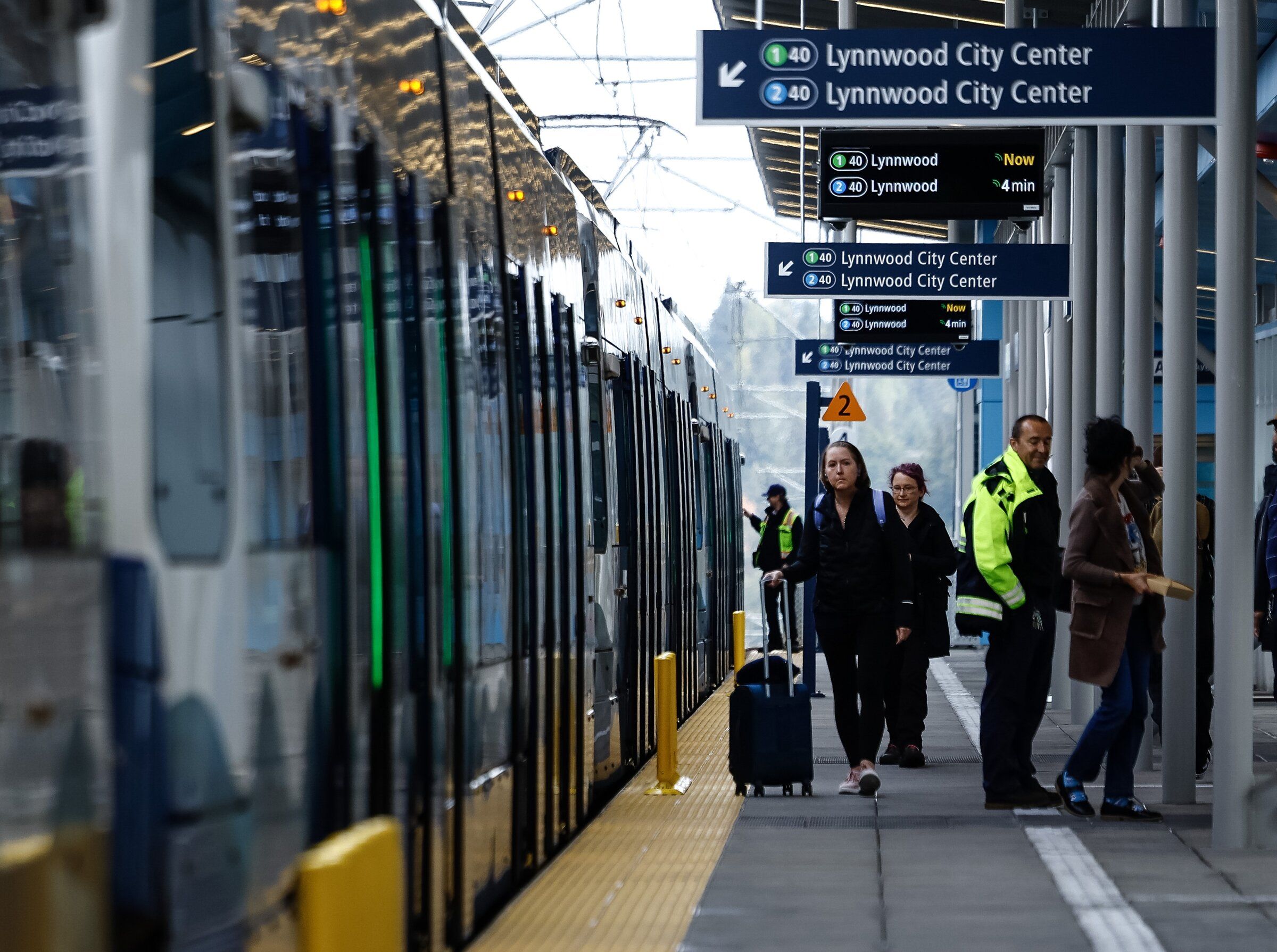
Passengers on Sound Transit’s light rail system in the Seattle area faced a sudden service stoppage on two key lines Saturday morning. According to the agency, trains on Lines 1 and 2 were suspended for about an hour between Pinehurst Station and the University of Washington Station. The cause was a problem with the overhead power system that supplies electricity to the trains. Sound Transit announced the disruption in a statement at around 9:50 a.m. Saturday, as reported by The Seattle Times.
In addition, Line 2 trains were also out of service between Judkins Park Station and International District Station. The disruption therefore affected two separate sections of the network, a particular problem on a weekend, when many residents rely on public transit to get around or head out for leisure. It is important to understand that the overhead power system is more than just “wires above the tracks”: it is complex infrastructure that directly enables electric trains to run. Any failure can immediately halt service along an entire section, since trains cannot bypass a damaged span.
The situation was complicated by the fact that service did not stop entirely: trains continued to run from Lynnwood City Center to Pinehurst, as well as from the University of Washington to Federal Way Downtown. The system was therefore operating in fragments, leaving passengers to transfer or find alternate routes. To ease the disruption, Sound Transit arranged shuttle buses to replace trains on the affected sections. This is standard practice for the agency in such situations, though buses cannot fully match rail transit’s capacity and add time to journeys.
By 11 a.m. Saturday, service had been fully restored. However, the agency warned that delays on Lines 1 and 2 could continue for a while as the system returned to its normal schedule. This is a typical consequence of any disruption: even after a fault is fixed, it takes time for trains to resume regular intervals, while passenger flows remain uneven.
The key takeaway from the incident is that Seattle’s light rail system remains vulnerable to failures in its power infrastructure, and a single fault can paralyze sections of two lines at once. For passengers, that means allowing extra time and having alternate routes in mind, especially on weekends, when service intervals are longer to begin with. The agency responded promptly — just over an hour passed between the 9:50 a.m. disruption announcement and the full restoration of service at 11 — but the stoppage across such a long stretch underscores how critical a reliable overhead power system is to the city’s everyday mobility.
Seahawks weighing a running back trade: An upgrade or a crowded room?
As the NFL trade deadline approaches, rumors are swirling about who the Seattle Seahawks might acquire. But a trade works both ways, and a 3-3 team still in Super Bowl contention could just as easily become a seller as a buyer — especially when it comes to the team’s most problematic position this season: running back. Considering a possible move for a back such as Saquon Barkley, Jonathan Taylor or Tony Pollard, a Field Gulls columnist asks what the team would have to give up to make room in an already crowded group.
The logic is straightforward. Seattle’s current running back group has been disappointing, and a star like Taylor or Barkley could immediately breathe life into it. Zach Charbonnet is only just returning from a torn ACL, while Jadarrian Price is still weeks away from coming back. Price has yet to prove he is ready to carry an NFL offense, and Charbonnet is playing on an expiring contract; no one can guarantee he will be the same after knee surgery. The Seahawks need to be prepared for the worst-case scenario. But if the team pursues another running back, it will have to put one of its own on the market — a clear signal that neither Emanuel Wilson, George Holani nor even Charbonnet is part of the team’s plans beyond 2026. All three, importantly, are in the final year of their contracts.
Charbonnet is the least likely trade candidate. He has only just returned after a serious and surprisingly swift recovery, is an important presence in the locker room, and trading a player like him could hurt team morale. Wilson and Holani are a different matter. If Seattle acquires a running back, both risk seeing no more offensive snaps, making them expendable assets. Holani has struggled badly this season, though he flashed in Week 6 against Denver; his reputation as a reliable blocker and receiver could make him attractive to other teams as part of a package. Despite obvious athletic limitations, Wilson remains a rare bright spot in the Seahawks’ bleak and listless running game. Seattle signed him last offseason as a stopgap until Charbonnet returned — and now that Charbonnet is back, Wilson is a logical trade candidate, even in a deal that does not bring back another running back.
At the very bottom of the depth chart are Robert Henry Jr. and Velus Jones Jr. Henry was just signed off the Commanders’ practice squad, is under contract for three seasons, and, as an undrafted player in 2026, was available to any team in the league. All of that suggests general manager John Schneider is unlikely to want to part with him, while other teams are unlikely to be interested. Jones moves between the active roster and the practice squad, which also makes him a limited asset in any package.
As an illustration, the author proposes a scenario of his own: Jonathan Taylor goes to Seattle in exchange for Emanuel Wilson, a second-round pick and a third-round pick. The Seahawks have accumulated plenty of 2027 draft picks, including several third-rounders, so giving up a couple of Day 2 picks would not be difficult. The big question is whether the Colts would agree, because if Taylor really is available, Seattle will face a bidding war. Two Day 2 picks plus a serviceable running back in Wilson might be enough to make the offer attractive. In this hypothetical scenario, the Seahawks’ depth chart would look like this: Velus Jones Jr. (under contract through 2026), Jonathan Taylor (through 2027), Jadarrian Price (through 2029/30, with a fifth-year option), Zach Charbonnet (through 2026), George Holani (through 2026) and Robert Henry Jr. (through 2028).
A few terms help put this in context. The trade deadline is the cutoff after which NFL teams cannot trade players until the end of the season. An “expiring contract” means a player’s deal ends after the season, leaving the team at risk of losing him for nothing in free agency — which is why such players are often traded while they can still bring something in return. A fifth-year option gives a team the right to extend the contract of a first-round draft pick by one more season. “Day 2” of the draft refers to the second and third rounds, where picks are valuable but not as valuable as first-round selections. Finally, a “practice squad” is an expanded group of reserve players from which teams can call players up to the main roster.
The main takeaway is that the Seahawks’ problem is not so much a lack of talent at running back as a question of asset management: acquiring a star would automatically turn several players with expiring contracts into trade chips, and the team must decide whether it is willing to sacrifice depth and locker-room chemistry for an immediate upgrade. Notably, even the author acknowledges that his scenario is speculative — he says he is proposing the trade to “make a fool of himself.” Still, the main conclusion is clear: if Seattle enters the market for a running back, the other side of the deal will be parting with one of its own. That, not the arrival of a star, will determine whether the front office has made the right call.