
A unique wall has gone up along the border between Washington state and the Canadian province of British Columbia. It's not made of steel or concrete — it exists only in people's minds. Attorney Len Saunders, who lives in the border town of Blaine, was shocked when he drove up to the Pacific Highway crossing on a Friday afternoon and saw not a single car in line. In 25 years of living there he couldn't recall anything like it. Previously, this and other key crossings, such as Peace Arch, Lynden and Sumas, were busy: Canadians regularly drove south for shopping, beach and mountain getaways, sporting and cultural events in Seattle, and Americans crossed into Canada for tourism and winery visits. There were regular commutes and family trips that created a sense of a single region.
The statistics back up these observations. In Donald Trump's first year in office, the flow of vehicles with Canadian plates through four major crossings in northwest Washington fell by 39%. That's nearly a million fewer cars than the year before, equivalent to a loss of roughly 1.2 million visits. For the economies of cities like Bellingham and Seattle it was a heavy blow, since Canadians are vital for retail, tourism, services and even the housing market. Blaine Mayor Mary Lou Steward says "trust has been undermined," and the cooling of relations could last a generation.
The roots of this "psychological wall" lie in Trump's statements a year ago, when he threatened to annex Canada as the "51st state." Canadians responded with a mass boycott: booing the U.S. anthem, refusing to shop or vacation in the U.S. Although it may seem in the U.S. that the conflict has subsided, the data show discontent is only growing.
The situation continues to worsen. In the first half of February 2026, crossings were down another 13% compared with February 2025, when Trump was actively talking about "taking control" of the neighboring country. Meanwhile, the flow of cars with U.S. plates stayed the same, making this wall one-sided. Economic factors, such as the Canadian dollar exchange rate, aren't to blame.
The main causes are fear and political outrage. Canadians Saunders meets daily in his legal practice fall into two camps: those who are afraid to go to the U.S. because of reports of detentions or shootings, and those who are simply furious at the actions of the American administration. Threats of massive tariffs are only part of the problem. administration policies aimed at tightening controls have made other aspects of life in border communities harder, such as joint environmental initiatives to protect Salish Sea waters or educational exchanges between schools and universities, which have declined because of bureaucratic hurdles and concerns.
More painful to many Canadians are attacks on their country's sovereignty and outright disrespect. Trump's remark "They need us. We really don't need them" became emblematic of that rudeness. A recent international poll produced a shocking result: Canada is the only country among those surveyed (the U.S., the U.K., France, Germany) where a majority of respondents named the United States "the main threat to peace."
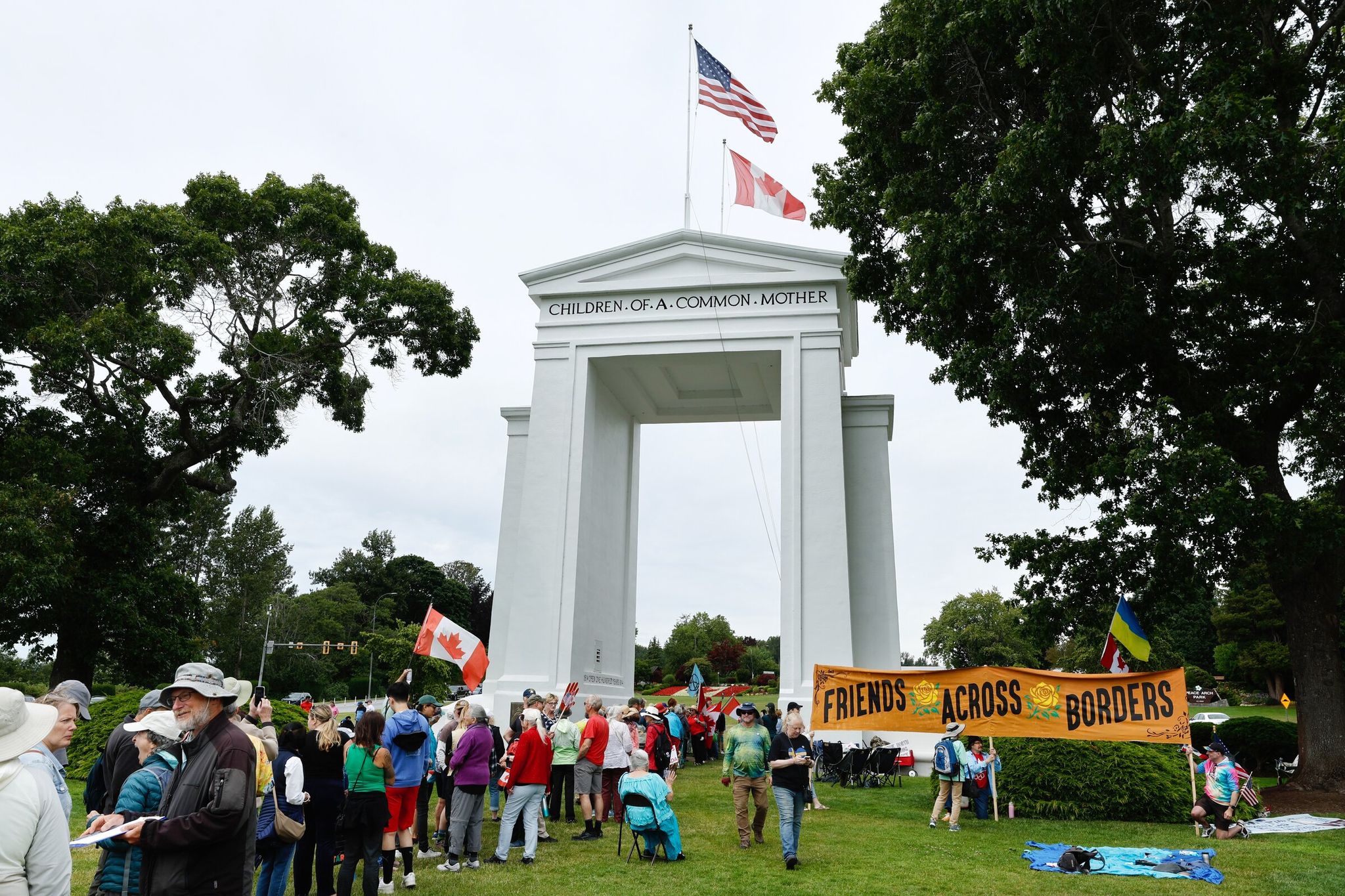
Attempts by ordinary Americans to mend relations seem to be getting drowned out by the bigger noise. A year ago the author of this article wrote an open letter of apology to Canadians that was reprinted across the country. The main Canadian response was: "Okay, you regret it. But what are you Americans doing to fix it?" That question goes to the heart of the matter. Some positive initiatives, like a group of people who meet Canadians every Saturday at the Peace Arch in Blaine, remain almost invisible. That white monument, built in 1921 right on the border and inscribed "Children of a common mother," has historically served as a symbol of peace and shared values, a reminder of the longest undefended border in the world. Now it stands as a mute witness to the rift.
Alberta resident Lexi Angelo wrote in January that Americans, in Canadians' view, look like "a population of easily distracted fools" who do nothing while things head over a cliff.
The conclusion is sad: the obsession of one man has caused tangible harm, pushing millions of Canadians away from visiting Washington. This invisible wall, erected in an instant, has proven remarkably sturdy. To begin tearing it down will require more than words — systemic apologies and actions by future American leaders that carry real weight. For now, the damage to relations between neighbors continues to grow.
Based on: ‘Psychological’ Trump wall on WA’s border has repelled a million trips