
Washington — a true treasure trove for mineral and fossil enthusiasts. From reddish carnelian in the southwest to a 15-million-year-old petrified forest in the central part of the state, there’s plenty to see. But beginners, often called “rockhounds,” can find it hard to navigate the complex web of rules and identify good places to search.
The best way to start is to join a field trip led by a local geological club or the Washington State Mineral Council. Experienced collectors share tips on where to look, what gear to bring and how to prepare for an outing. “It’s great company for hikes,” says Susan Gardner, president of the North Seattle Mineral Club.
The southwest of the state is known for orange-red carnelian, which can be found on the coast and in streambeds. However, the popular Damon Point site on the Olympic Peninsula is closed to rock collecting due to environmental restrictions — it’s a protected nesting area for birds and dune preservation. Instead, collectors can head to beaches near the town of Moclips or the mouth of the Copalis River, where collecting agates, jasper and petrified wood is allowed, but you should always check local rules.
In central Washington, collectors search for the rare “Ellensburg Blue” agates — deep blue gemstones found only in Kittitas County around Mount Daniel. They’re scarce because of a unique chemical composition, a limited deposit and extraction difficulty; they’re highly valued among collectors, especially for gem-quality stones. Petrified wood is also found here — its crystallized remains can be seen in Ginkgo Petrified Forest State Park. In the east, in Ferry County, modest fees allow collecting quality serpentine and hunting for insect fossils.
Collecting rules depend on the land type. On private property you need the owner’s permission. In national and state parks, and on tribal lands, collecting is prohibited. Washington tribes include the Makah, Quileute, Hoh, Quinault, Yakama and many others; their lands are sovereign territories protected by federal laws such as the Native American Graves Protection and Repatriation Act, and resources are considered cultural and sacred heritage. In national parks like Olympic and Rainier, collecting is also completely prohibited. National forests managed by the U.S. Forest Service and Bureau of Land Management lands generally allow the collection of a “reasonable amount” of minerals and common fossils for personal use, though rules can vary in detail. State lands managed by the Department of Natural Resources have their own restrictions as well.
Some finds require special permits. Meteorites, vertebrate fossils and archaeological artifacts can be collected only with a scientific permit. Petrified wood may be taken only up to 25 pounds (11 kg) per day and 250 pounds (113 kg) per year, and it cannot be sold without a contract with the Bureau of Land Management.
Where to find locations? Information is posted in Facebook groups, on collector forums and blogs. Useful books include Rockhounding Washington by Lars Johnson — a recognized expert on mineral hunting in the state, whose guides are considered among the most authoritative thanks to detailed maps and practical advice — and Gem Trails of Washington by Garrett Romaine. However, experienced collectors recommend going with a club first: members know hidden trails and often have access to private properties.
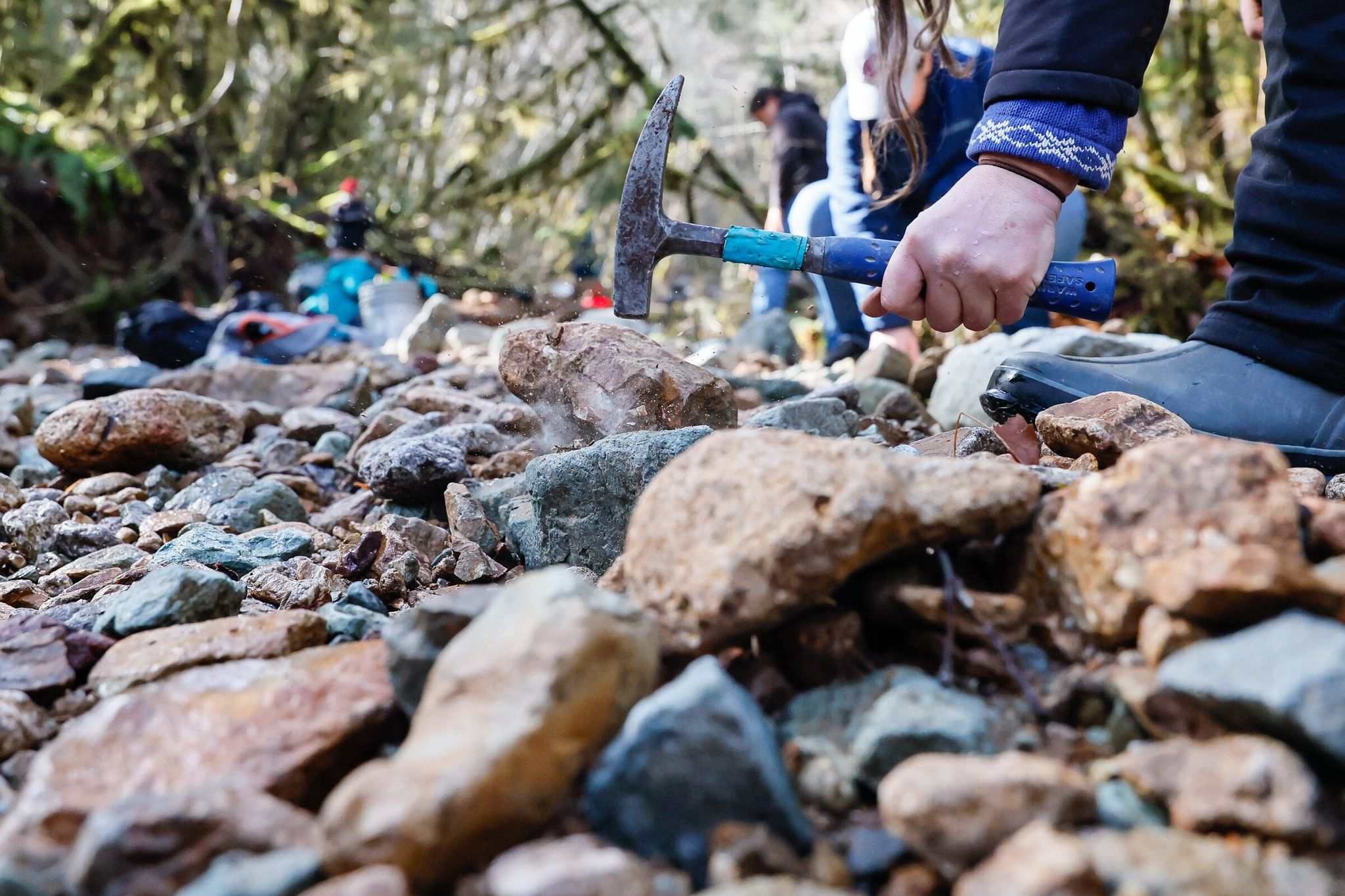
Gear depends on your goal. You may need a flat chisel, hammer or pry bar. A steel geological hammer is popular — its sound on a strike helps identify a mineral. For starters, a trowel and bucket are enough, and a water bottle is handy to wash dirt off finds away from water sources.
Check the weather forecast: snow, rain or fires can make a trip dangerous. Pay attention to tides — beaches are easier to search at low tide. Many advise searching after rain: wet soil makes minerals more visible.
An ethical code is important: don’t leave trash, build fires only in safe places, fill in holes so you don’t harm wildlife. Leave the site better than you found it. This is part of the “Leave No Trace” principle respected by all collectors.
And most importantly — don’t be discouraged if you don’t find treasures. “You never know what you’ll find,” says collector Shell Hallahan. “But even without an agate, a day outdoors is a great day.” Rockhounding is above all an adventure and a chance to enjoy the beauty of the wild.
Based on: Rockhounding in WA: How to start hunting minerals, fossils and gemstones