National Guardsmen in Memphis shot and killed a young man; in Tacoma, two died in a motorcycle crash; in Seattle, criticism is growing over cosmetic upgrades for World Cup tourists.
National Guardsmen in Memphis shot a man during a pursuit: tragedy amid a federal operation
In Memphis, Tennessee, two National Guard servicemembers sent by the Trump administration to the city as part of an anti-crime effort shot and killed 20-year-old Tyrin Johnson. The incident happened early on Sunday morning, when the troops—along with local police—pursued an armed man who, according to authorities, turned toward them with a weapon. As reported by The Seattle Times, this is the first fatal shooting involving Guardsmen under the federal mission launched last fall. The National Guard was deployed in Memphis and five other Democratic-run cities that President Trump described as being swept up by an out-of-control wave of violence—though statistics show that in many of these cities, the level of violent crime fell after the pandemic peak.
The shooting occurred after servicemembers, alongside police, responded to reports of gunfire. They began chasing a man fleeing with a handgun. According to the police department, when the suspect turned toward them with the weapon, the Guardsmen opened fire. Tyrin Johnson died at the scene despite attempts by two National Guard medical specialists to provide first aid. The Tennessee Bureau of Investigation is looking into the circumstances of his death. No law enforcement officers were injured.
The victim’s relatives dispute the authorities’ account. Tyrin Johnson’s cousin, Terrakle Nelson, said he was “as good a guy as you can get”: he lived in Nashville, worked in construction, studied at university, and earlier this year became a father. “I just want to know how they could shoot a 20-year-old kid twice in the chest if he didn’t harm anybody,” she said. Authorities have not yet answered questions about how many shots were fired, and the Bureau of Investigation refused to comment on her statements. Memphis Mayor Paul Young, a Democrat, called the incident “unfortunate” and said he would wait for the investigation results before making further comments.
It’s worth clarifying that the National Guard is a reserve component of the United States armed forces, which typically answers to the governor of a state but can be federalized by presidential order. In this case, the troops were sent to Memphis in October of last year as part of the “Memphis Safe” task force created by Trump. The deployment took place despite objections from the Democratic mayor, but with support from Republican Governor Bill Lee. Local leaders have repeatedly said that federal involvement is unnecessary, and some have even challenged it in court. In April, the Tennessee appeals court ruled that local officials lacked legal grounds to block the presence of the troops, and in May four residents filed a lawsuit challenging a law that prohibits filming law enforcement officers from closer than 7.6 meters. The plaintiffs also argue that members of the federal task force are harassing them for recording the work of officers.
Although the Trump administration justifies the deployment as a fight against allegedly unmanageable crime, even Republican and Democratic officials in Memphis noted that some types of crime had been declining before the mission began—consistent with national trends. At the same time, the operation’s cost turned out to be enormous: according to the nonpartisan Congressional Budget Office, by the end of December it came to nearly half a billion dollars and could exceed one billion over the course of 2025.
The tragedy involving Tyrin Johnson again raises questions about whether it’s appropriate to involve the military in policing functions in cities where local officials say it’s excessive. The victim’s family is demanding answers, and civil-rights organizations point to the risk of abuse. While the Bureau of Investigation is still establishing the details, one thing is clear: the price of a federal “war on crime” is measured not only in dollars, but in human lives.
Tragic accident in Tacoma: two killed in a motorcycle crash on Independence Day
On the evening of July 4, a fatal motorcycle crash occurred on State Route 509 in Tacoma, killing two people. According to the Washington State Patrol, the incident report came in around 8:40 p.m. A 41-year-old man and a 39-year-old woman riding the motorcycle were traveling northbound when, for a reason not yet determined, they crashed into a guard barrier. The impact threw both riders from the bike, and they suffered injuries incompatible with life. The road had to be closed for more than three hours, causing major disruption for the holiday evening. The circumstances are still being investigated, but an initial review found that neither the driver nor the passenger was under the influence of alcohol or drugs—ruling out one common cause of such crashes. Details of the investigation have not yet been released, but, as reported in the KIRO 7 original story, the patrol continues to determine what led to the collision with the barrier.
The tragedy serves as another reminder of how vulnerable motorcyclists are on the road: even without alcohol impairment—and presumably even with speed limits being followed—one wrong maneuver or a mechanical malfunction can still lead to irreversible consequences. Independence Day, traditionally one of the most dangerous times for road traffic due to mass travel and festivities, once again confirms its reputation for a higher death toll period on American highways. The families of the victims will have to endure an irreplaceable loss, and the community will have reason to reflect on the safety of two-wheeled transportation.
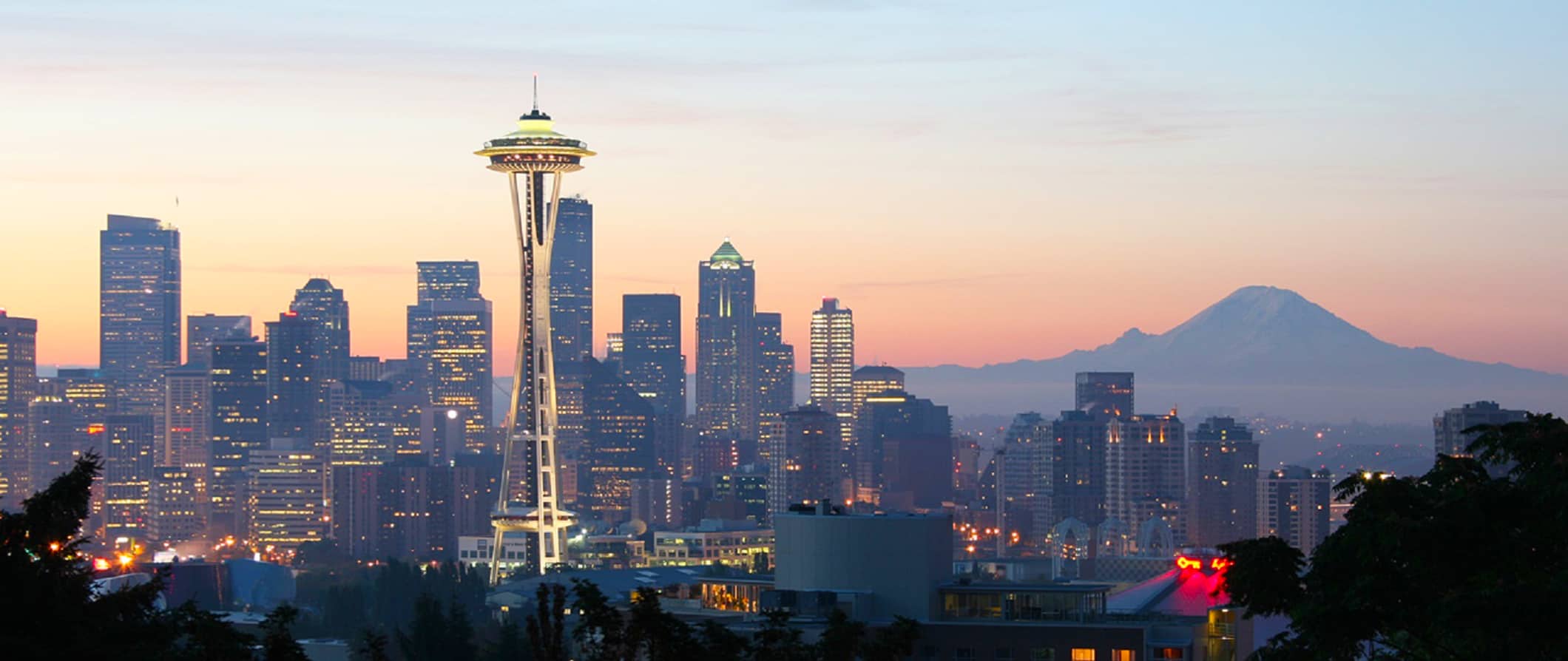
Seattle’s hypocrisy: the city dresses up for World Cup guests—but forgets residents once the tournament ends
During the matches of the World Cup in Seattle, the city truly transformed itself: streets became cleaner, parking was easier to access, and security noticeably improved. Many visitors, seeing the city for the first time, remarked on how tidy and welcoming it felt. However, as radio host John Curley said on KIRO Newsradio, this is only a temporary disguise that will disappear as soon as the last fans leave the city. “The hypocrisy is that we clean up because guests are coming,” Curley rants. “And the moment the guests leave, everything goes back to the usual filth.” He argues that parking, street makeovers, and even the ability to walk around freely with alcohol are privileges reserved for tourists, while local residents are deprived of those benefits on ordinary days.
Curley acknowledges that he himself is not a soccer fan, but he views the sense of unity brought by the tournament positively. “Hundreds of thousands of people from other countries saw Seattle in sunny days, saw how nice everyone is to each other,” he says. “There was no politics—everyone was together. That’s great.” Still, his main point remains unchanged: if the city can be like that for guests, why can’t it be the same for its own residents all the time? In Curley’s view, after the tournament ends Seattle will return to its problems: the homeless will once again fill the streets, parking will become harder to find, and everyday residents won’t be able to use the same conveniences as foreign fans. In an article on MyNorthwest.com, he lays out the paradox in detail.
Curley’s key takeaway is a critique of temporary cosmetic improvements that don’t solve the deeper problems the city faces. Seattle has shown it can be clean and safe—but only for a short time, while the whole world is watching. That calls into question the sincerity of city officials and their priorities: instead of ensuring residents’ comfort year-round, they dress up the city only for tourists. “If it’s good for guests, why isn’t it good for us who live here?” Curley asks in a rhetorical question. His remarks highlight that major sporting events are often just a facade behind which unresolved social issues—ranging from housing to public order—remain hidden. As stated in the original publication, Curley claims Seattle’s World Cup makeover won’t last, and his skepticism appears to be shared by many residents who are tired of watching their city only be transformed for the duration of the celebration.