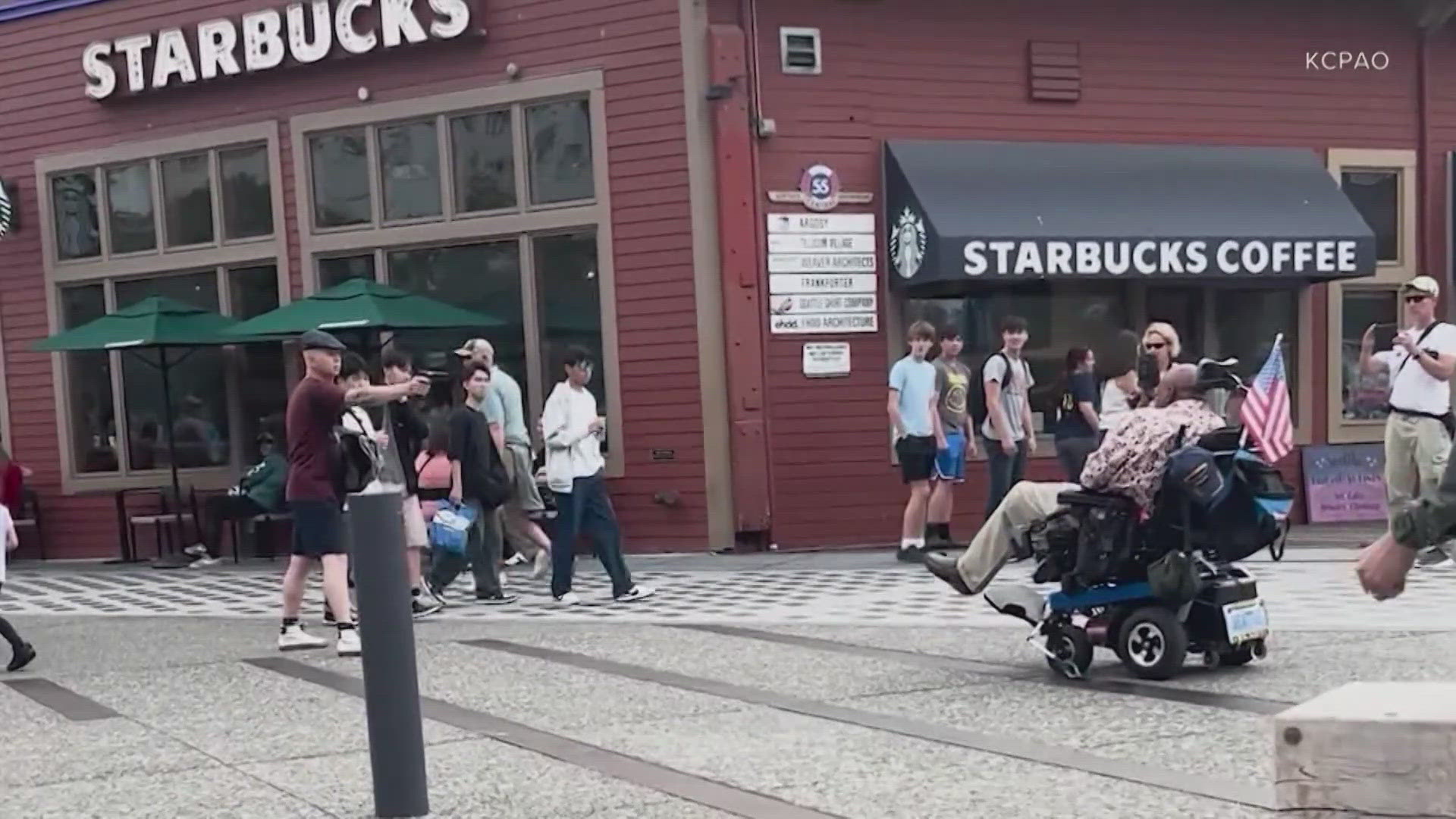
Today in the digest: three tiny homes in Seattle are on the market for $900,000 — a unique cascade property for investors; a dispute in Lynnwood over a pride flag as the city refuses to fly the LGBTQ+ symbol in a park; and the sentencing of a man who shot a Navy veteran in a wheelchair.
Unique cascade home: three tiny homes in Seattle listed for $900,000
A truly rare offering has appeared on Seattle’s real estate market: a lot with three separate tiny houses being sold as a single parcel for $900,000. That’s just $300,000 per house — significantly below the city’s median home price. These structures, located on the edge of Puget Park, have a rich history and were fully restored in recent years. They previously served as housing for workers in a nearby industrial area. According to realtor Patty Hill of John L. Scott–West Seattle, when the current owners bought the lot, the buildings were three dilapidated shacks. From 2021 to 2023 they completely rebuilt them, and now they are “very cool” homes.
Each of the three houses, located on a single fenced lot, is a fully self-contained one-bedroom unit with one bathroom and a kitchen. Interiors are done in a modern loft style: wooden and concrete floors, exposed beams, skylights, energy-efficient windows and stylish kitchen-bath combinations. Each house has its own private deck. The parcel includes a small courtyard with a patio and a fire pit that creates a micro-neighborhood feel. In recent years the owners rented all three homes to long-term tenants, and the residents got along well.
Notably, because all three houses sit on one parcel, property taxes are very low: documents show they will be only $8,106 in 2025. That makes the property highly attractive to investors: one could continue renting all three, or live in one and rent out the other two. It’s also an ideal option for a large family that wants to live close but in separate homes, or for a group of friends pooling resources to buy property together — a sort of modern commune. The houses were originally built in 1907 in West Seattle’s industrial district, and their restoration cost the owners significant investment, though the original lot purchase in 2015 was only $60,000. The listing calls it “an ideal opportunity for investors, owner-occupants, or anyone seeking a unique multi-family property in a great Seattle neighborhood.” According to the agent, the location is unusual and industrial: a working waterway is nearby where ships come to load containers.
Lynnwood dispute over pride flag: city refuses to fly LGBTQ+ symbol in park
An unexpected but revealing conflict is unfolding in the small Washington city of Lynnwood. Local organization Lynnwood Pride, which supports the LGBTQ+ community, says city officials are refusing to fly a rainbow flag in Wilcox Park during June, the declared Pride Month. Activists say the refusal stems from a policy put in place by a previous mayor. The situation, detailed in a KIRO 7 News Seattle report, may seem local at first glance, but it touches on a broader issue: where municipal regulation ends and a community’s right to public expression begins.
The core of the dispute is both simple and complex. City officials, citing internal rules, say they cannot fly the flag this year because the procedure was not pre-approved under regulations set by prior leadership. Lynnwood Pride insists the bureaucratic snag is a pretext. Activists say they sincerely want to hold the display in the heart of town, and the refusal looks like an unwillingness to support the community during its important month. To someone unfamiliar with local nuances, the whole episode may seem odd: in the 21st century, in a Seattle suburb among the most liberal regions of the U.S., people are arguing over a flag. But digging deeper shows it’s more than fabric on a pole — it’s a clash between two worldviews: corporate-bureaucratic and civic-activist.
A key point to explain is the principle governing public-space use. In most U.S. cities parks and squares are not “no-man’s land.” Their use — including temporary installations, flags, and events — is tightly regulated by municipal codes. City governments can set application windows, limit the number of events, or adopt “city flags only” rules to avoid accusations of partisanship. That policy, adopted by a former mayor, is the stumbling block here. The administration is likely acting not out of malice but out of concern for legal consequences: if they allow a pride flag, they would have to allow flags for any other group, including, for example, ultra-conservative organizations. This is the standard “limited public forum” principle: authorities cannot discriminate based on speech content but may set neutral rules.
For Pride organizers, however, this formal approach feels like betrayal. For them the flag is not merely an application to use space but a symbol of safety and recognition. Denying it during Pride Month in the city center sends the community a worrying message: “You are unwelcome here.” Last year the flag flew; this year it does not, and the simple explanation “the rules changed” rings hollow in a world of emotions and identity. The irony is that KIRO 7 pairs this story with coverage of a “World Cup arts walk” — an arts stroll celebrating the World Cup. The city is clearly searching for its identity, trying to balance large international projects with sensitive local initiatives. Lynnwood is not a conservative backwater but a progressive suburb, and this dispute shows that even in liberal environments administrative procedures can conflict with a community’s desire to be seen. How it ends — whether officials will make concessions or find a regulatory workaround — remains to be seen, but the episode has already exposed a painful gap between the letter of the law and the spirit of the community.
Man sentenced in Seattle for shooting Navy veteran in wheelchair
A high-profile trial in Seattle that drew attention to false patriotism and street violence has concluded. Gregory Timm, accused of shooting 65-year-old U.S. Navy veteran Harold Powell Sr., was sentenced to three and a half years in prison. The incident occurred July 31 last year during the annual Seafair summer festival on the Seattle waterfront, when Powell, who used a wheelchair, was entertaining passersby with street performances. As reported by KING5.com, the conflict began when Timm publicly accused the veteran of faking his military service.
Court documents say Timm approached Powell and demanded proof of his service, after which the veteran tried to produce ID. Instead of verifying the claim, Timm ripped a military patch off Powell’s clothing. The argument, captured on surveillance cameras, escalated into a shooting. Prosecutor Jeff Dernbach emphasized that Timm escalated the situation by firing at Powell at close range amid hundreds of tourists in broad daylight. The defense argued self-defense: attorney Jesse Dubow claimed his client used his weapon only after the veteran allegedly pulled out a knife and reached for an object Timm mistook for a firearm — which in fact was an air-powered BB pistol.
Powell flatly rejected the self-defense claim. In court he addressed the defendant with an unexpected statement: “First, I forgive this gentleman. Second, I forgive myself. I hope he will want to become a productive citizen of our state, our county and our city.” The veteran, who was shot in the chest and appeared in court nearly nine months after the injury, showed courage, but his words carried bitter irony as Timm offered no statement in his own defense. A key point many commentators missed: the three-and-a-half-year sentence is not just punishment for a violent crime but a societal verdict — in a community where stoked hatred toward others’ service and pathological distrust of veterans can turn into a bullet in the chest of a defenseless person who was merely entertaining passersby on a holiday.