
Social media has been flooded with frightening videos: "Three Sisters caldera is cracking! 213,072 Americans in the death zone!" The creators of these clips claim the cities of Bend and Sisters in Oregon are about to be devastated by a monstrous eruption and that mainstream media have been suppressing this threat since 2017. In reality, behind these panic-inducing statements is real — but much less dramatic — science.
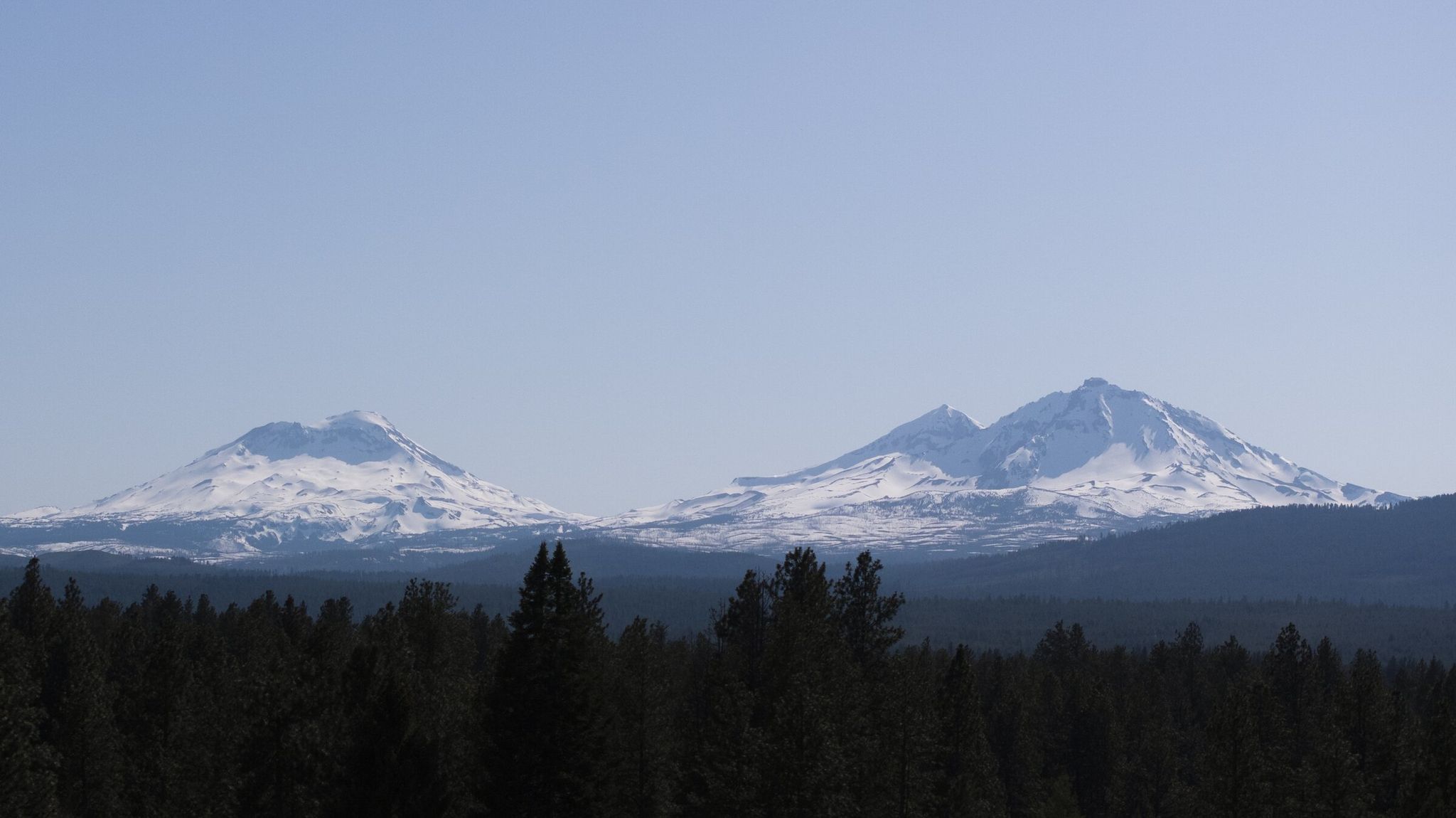
The Three Sisters are a group of stratovolcanoes in the Cascade Range, which stretches from British Columbia to Northern California. The Cascades are part of the Pacific Ring of Fire, where the Juan de Fuca oceanic plate is subducting beneath the North American plate in the Cascadia subduction zone. This zone extends from Northern California to British Columbia: when the plate subducts to depths of about 100 km, it partially melts, forming magma that rises to the surface and creates a chain of volcanoes — from Mount Shasta in the south to Mount Garibaldi in the north. The Cascadia zone is particularly dangerous because it can generate earthquakes of magnitude 9+; the last such event occurred in 1700.
Stratovolcanoes are considered among the most dangerous on the planet: one only needs to recall Mount Rainier in Washington state, which the National Park Service calls "the most dangerous volcano in the continental U.S." Rainier, located about 90 km southeast of Seattle, is hazardous not just for the force of an eruption but for the massive glaciers on its summit: during an eruption they can melt rapidly, producing destructive lahars that can reach Tacoma and Seattle suburbs within an hour. The U.S. Geological Survey estimates the probability of a major Mount Rainier eruption in the next 50 years as 1 in 600 per year, but smaller eruptions can occur every 500–1,000 years. Over the past 400 years the Cascades have experienced 13 major eruptions: Mount St. Helens in 1980 claimed 57 lives and sent ash across 11 states, and Mount Lewis in 1999 triggered an ash avalanche. For Seattle the primary threat is lahars from Rainier: their speed can exceed 50 km/h, and they can reach coastal areas in 30–40 minutes. After the Mount St. Helens eruption, authorities created an early warning system for lahars for Tacoma and Seattle with sensors on Rainier’s slopes and developed evacuation routes. Volcanic ash is also dangerous: in 1980 it halted airport operations and disrupted Seattle’s water supply for several days by clogging filters.
Yes, the region is seismically active, and many volcanoes are located near cities. The U.S. Geological Survey (USGS) does rate the threat from the Three Sisters as "very high" on the National Volcano Early Warning System scale. But that rating does not mean an eruption is inevitable; it means the area is under intensified monitoring. "Very high" and "high" levels require the most intensive monitoring — which is why the Three Sisters are under close scientific scrutiny alongside Crater Lake, Mount Hood and Newberry.
An eruption could produce ashfall, pyroclastic flows, lava rivers, lahars and landslides. Ash could blanket much of central Oregon, and lahars pose a particular danger to communities. Around 200,000 people could theoretically be affected — but that does not mean a catastrophe will happen tomorrow.
The last eruption in the Three Sisters area occurred about 2,000 years ago. However, in 2001 scientists noticed ground uplift near South Sister — a normal phenomenon associated with magma movement. In 2022 USGS observatory specialists recorded another small uplift and a series of minor earthquakes. But, as scientists emphasize, eruptions are typically preceded by clear and strong seismic signals, changes in topography and shifts in chemical composition.
In other words, the Three Sisters could wake up — but Oregon residents would have plenty of time to prepare. Similar rumors resurface every couple of years, sometimes about the Crater Lake caldera, sometimes about Yellowstone — and so far none of these apocalyptic forecasts have come true. Modern agencies are prepared for various scenarios, but 70% of the region’s population has never experienced a major eruption, so psychological preparedness remains low.
Don't give in to panic from viral videos: real science does not shout about a "death zone," it calmly monitors the volcanoes. The Three Sisters are among the best-observed, and if something truly dangerous were to happen — people would know in advance, not learn about it from YouTube bloggers.
Based on: What scientists say about claims that Oregonians are in ‘death zone’