Seattle news roundup: The Mariners named Jason Kanzler manager after years of pursuing him, voters approved Proposition 1 to expand bus service, and the Morgan Junction charging-station project became a symbol of bureaucratic delays.
The Astros’ “White Whale”: How the Mariners Pursued Jason Kanzler for Years
The news that Jason Kanzler had been named the new manager of the Seattle Mariners at first seemed as if the team had pulled a completely unexpected name out of a hat. But at Wednesday’s introductory press conference at T-Mobile Park, it became clear that the 36-year-old was no stranger to the organization: he had been a target for years. As Seattle Sports reports, Mariners general manager Justin Hollander admitted that the team first reached out to Kanzler in 2021, when it was looking for a hitting coach. Kanzler had just spent a year as a hitting coordinator in the Houston Astros’ system—the Mariners’ archrivals in the AL West—and then joined the Astros’ major league coaching staff, becoming part of the 2022 World Series-winning team. Seattle was unable to lure him away from Houston at the time, but he had made such a strong impression on the Mariners’ leadership that they never forgot about him.
Hollander said that interview was one of the strongest—if not the strongest—he and his colleagues had ever taken part in. He called Kanzler the team’s “white whale”: a rare specialist they wanted to work with at the first opportunity. He emphasized that when a candidate makes that kind of impression, the process doesn’t end and the person’s name isn’t thrown out the window for good. So when the Mariners parted ways with Dan Wilson in late September and began looking for a new manager, Kanzler’s name—he had been the Chicago Cubs’ director of player development since 2024—surfaced again in various contexts, more as an intriguing possibility than a clear favorite. Hollander acknowledged that no one initially expected the search to end with Kanzler’s appointment.
But, he said, Kanzler left them no choice: round after round, conversation after conversation, he dominated the process so thoroughly that passing on him after all that work would have been foolish. And so the “white whale” Seattle had pursued since 2021 finally joined the team. Now he will have to prove that the years of waiting—and his reputation as someone capable of transforming the organization’s approach to player development—were worthwhile. A few terms help put the story in context. “Hitting” refers to batting, the offensive side of baseball, while a “hitting coordinator” oversees a consistent approach and the development of hitters throughout a club’s farm system. The “farm system” (minor leagues) comprises the lower leagues where a club develops young players before calling them up to the major league team; it is where the future of the roster takes shape. The Cubs’ director of player development oversees this entire pipeline, from drafting and signing prospects to preparing them for the major leagues. That helps explain why the Mariners see Kanzler not simply as a coach but as an architect of the team’s player-development system. Finally, MLB is Major League Baseball, and the World Series is its championship series.
The key insight is that Kanzler’s appointment wasn’t a search for a “fresh face” for the sake of novelty. It was the culmination of a years-long pursuit of a specific person whose player-development expertise the Mariners value more highly than dugout experience. Hollander’s “white whale” description and his claim that Kanzler “dominated the process” signal a high degree of confidence within the organization: this is a deliberate bet on a young specialist’s potential, not a compromise. It is also telling that Seattle wasn’t put off by Kanzler’s ties to Houston, a fierce rival whose system the Mariners apparently studied closely. The consequences could be significant: someone who led player development for the Cubs and worked on the staff of a championship-winning Astros team could reshape how the Mariners develop young players and manage their roster—and affect the club not just next season but for years to come. The question is how quickly the abstract reputation of “the most impressive interview” will translate into wins on the field.
Seattle Voters Approve Expanded Bus Service: 70% Back Proposition 1
Seattle voters have given strong early support to a proposal to expand bus service across the city. According to the King County Elections Department, about 70% voted in favor of Proposition 1. The result, as KOMO News reports, reflects growing demand for affordable transportation, even as the tax increase will add to the burden on some residents.
The measure would replace and increase the existing municipal transportation tax. Seattle currently has a 0.15% tax, approved by voters in an earlier election, which expires on March 31, 2027. If the new measure takes effect, the rate will rise to 0.3% on April 1, 2027. For shoppers, that means paying 30 cents on every $100 of taxable purchases, up from 15 cents—an increase of 15 cents. City officials estimate that the new tax will generate about $138 million a year.
The money is intended to maintain 180,000 subsidized bus trips a year and add another 95,000. Priority will go to expanding service in the evenings and at night, on weekends, and during the middle of the day. These changes are part of the city’s 2026 Seattle Transit Renewal program. If the measure is formally adopted, the tax rate will remain in place for ten years.
Residents were divided over the added expense. One person interviewed, Sean, said he had left Seattle for Boise because of the high cost of living but returned for work. “How much more can you squeeze out of people? It’s like a tax on a tax on a tax. It’s hard, you know? Groceries are expensive,” he said. Another passenger, Dane, took a different view: “Even if the tax goes up, it’s still a really good deal, and the bus system here is incredible.”
Greg Woodfill, president of the Amalgamated Transit Union Local 587, supported the measure, saying demand for public transportation in the city keeps growing and exceeds the county’s capacity. “Seattle voters have an insatiable demand for more transit. They’re asking for more than the county can provide, so Seattle is stepping in and buying more service,” he said. According to Woodfill, approval of the measure also affects employment directly: “Otherwise, we would have lost jobs, and now we’ll gain new ones.” He also noted that union members are negotiating a new collective bargaining agreement in Tukwila and are urging officials to invest not only in infrastructure but in the people who operate it.
Natasha, who recently moved to Seattle from Singapore, said she understood why people were reluctant to pay more but supported the measure’s goal. “Nobody wants to pay more taxes, but if it means better transit, why not?” She said she had been surprised by the high cost of rideshares, especially between Seattle and Sea-Tac Airport.
Opponents of the measure reportedly failed to block it, but said they had succeeded in drawing attention to concerns about the tax’s cost, fairness, and effectiveness. They nevertheless acknowledged that the proposal would deliver the largest expansion of transit service in the city’s history.
Seattle Mayor Katie Wilson called the vote historic: “This measure will deliver the largest expansion of transit service in our city’s history, double the number of subsidized transit passes for low-income residents, and provide resources for faster, more reliable service. Together, these investments will make transit—our most affordable and sustainable way to get around—even more appealing. I’m grateful to voters for their support and for trusting in Seattle’s bright transit future.” A mayor’s office press release notes that ridership during off-peak hours has grown faster in recent years than during traditional rush hours, supporting the case for frequent service throughout the day and making it easier for residents to leave their cars at home.
The city plans to provide a total of 275,000 bus trips a year—95,000 more than at present—and improve service at all times of day, including daytime, evening, and weekend routes. It will also increase the number of free ORCA cards available to low-income residents, students, older adults, and families with young children, from 12,000 to 22,000. In addition, the measure provides funding for the Seattle Streetcar, construction projects to remove bottlenecks that delay buses, improved access and comfort at bus stops, and city staff to support transit and mobility, including permit processing and work related to future Sound Transit light-rail stations.
King County Metro General Manager Michelle Allison welcomed the results: “King County Metro appreciates Seattle voters’ ongoing support for safe, clean, and reliable transit. With the extension and expansion of the Seattle Transit Measure, people throughout Seattle will see buses arrive more often, later at night, earlier in the morning, and on weekends as we improve and expand service for riders.”
A few terms are worth clarifying. Proposition 1 is a local ballot measure—in this case, a tax measure, not a specific construction project. A 0.3% sales tax means shoppers pay an additional 30 cents on every $100 of purchases, with the revenue going to the city’s transit fund rather than the federal or state budget. ORCA cards are the regional transit cards used across the Puget Sound area to pay for rides on buses, streetcars, and ferries. The subsidized-card program serves low-income residents and allows them to ride for free or at a discount. King County Metro is the county transit agency that operates buses; under an agreement with Seattle, it uses the tax revenue to pay for additional service within city limits.
The main takeaway from the vote is that, despite widespread concern about the rising cost of living, Seattle voters decided that expanding transit was a priority. The result backs up a trend noted by KOMO News: demand for frequent, affordable public transportation in the city exceeds the county’s capacity, and the city is taking on the extra cost. The measure’s victory also strengthens the transit workers’ union’s position in negotiations over a new contract and lays the groundwork for coordinating bus service with future Sound Transit light-rail stations.
Eight Parking Spaces That Have Taken Half a Decade: How an EV Charging Project Became a Symbol of Bureaucracy
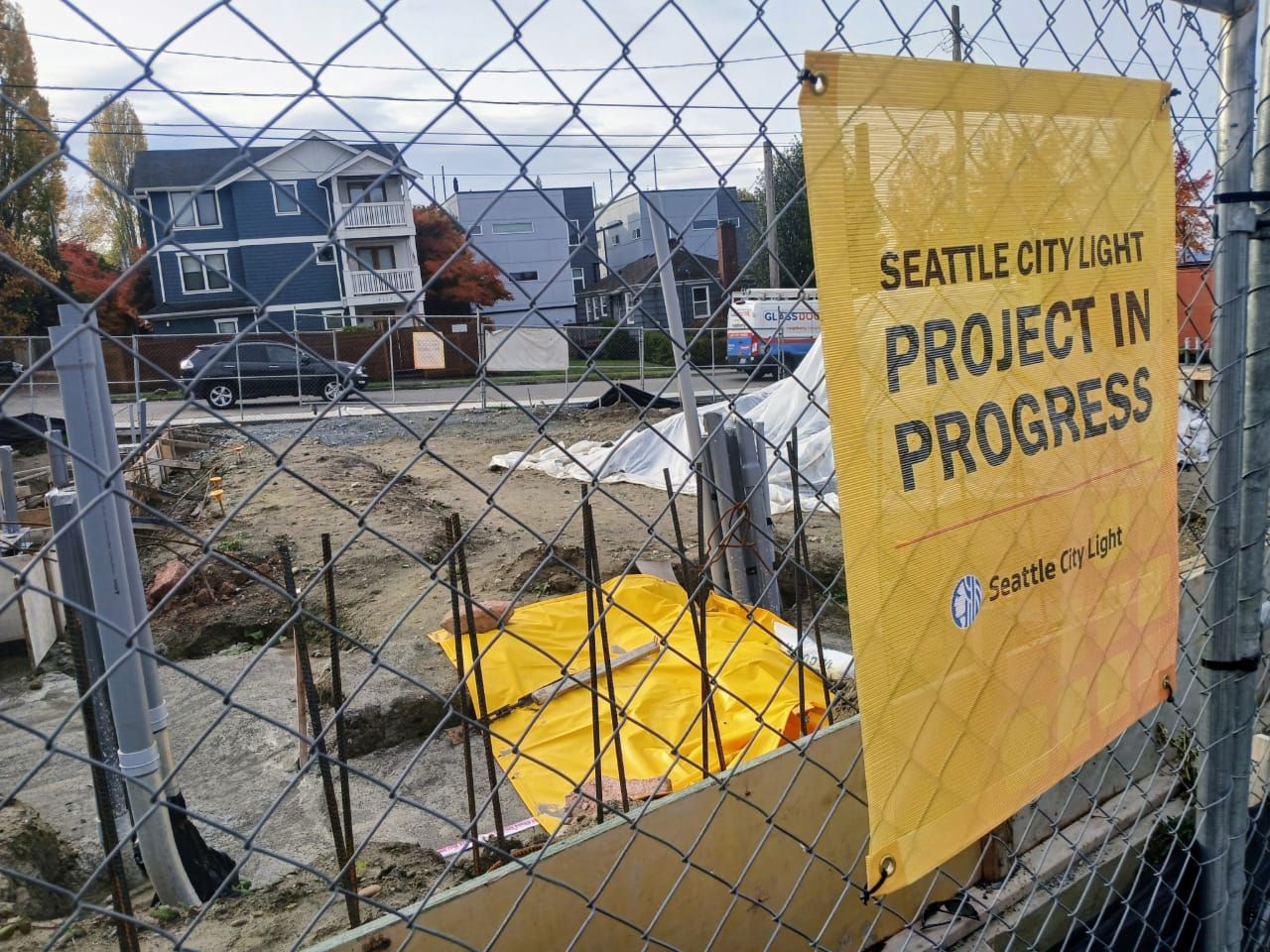
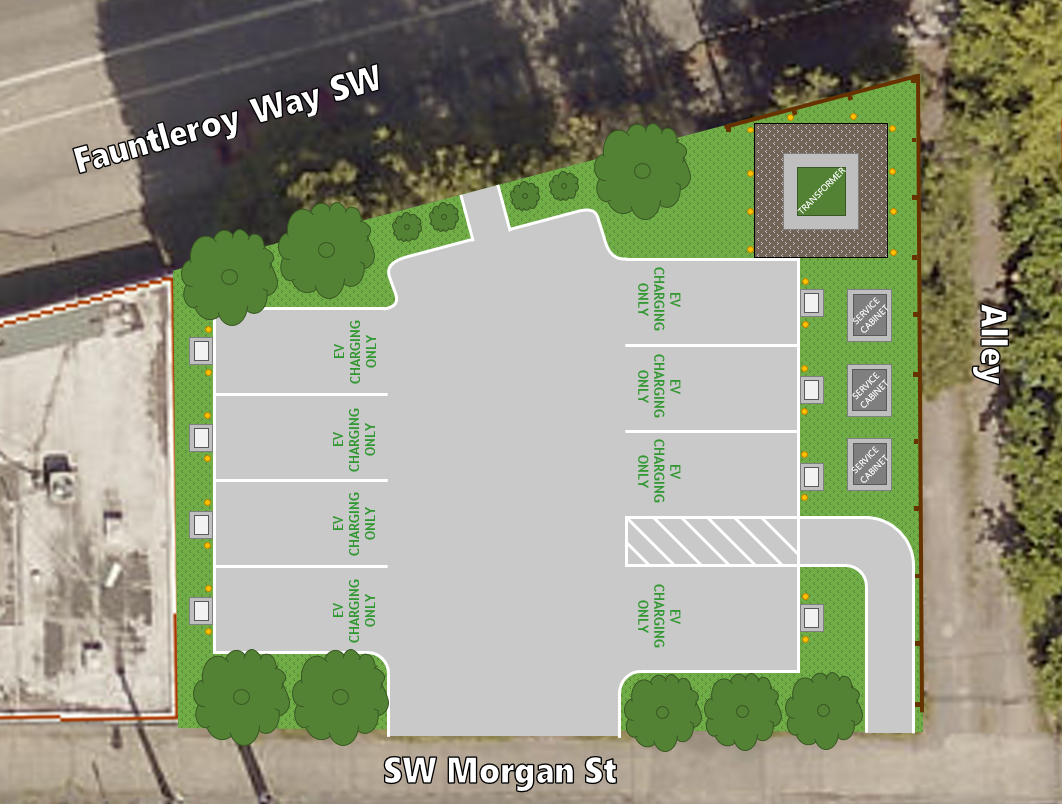
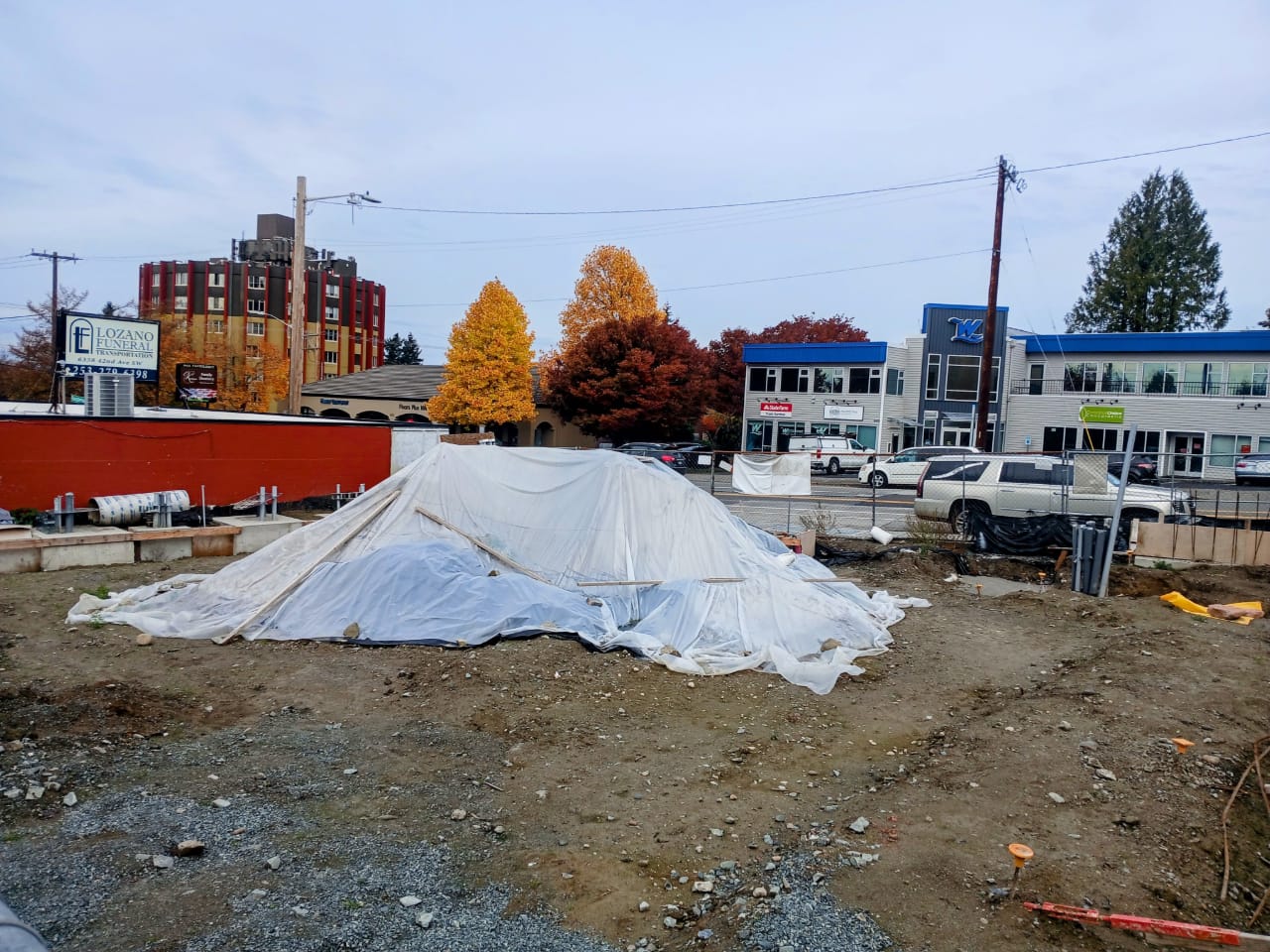
The story of Seattle’s municipal utility trying to build a lot with just eight electric-vehicle charging stations might seem like a joke—if it weren’t true. The Morgan Junction project in West Seattle was conceived in 2022 as a quick, high-profile effort: take a vacant, roughly 4,500-square-foot former substation site that had been unused for 20 years, install eight paid fast chargers, and bring charging infrastructure closer to shopping streets and major roads. That same year, Seattle City Light promised construction would start within a year and take about three months. Today, four years later, the site sits abandoned, the contractor has been fired in the middle of construction, and the opening date has been pushed to September 2027. In a city where public projects routinely run past their promised deadlines, this site has become a vivid symbol of residents’ frustration with local government’s ability to see projects through.
West Seattle Blog has tracked the project’s troubles in detail, documenting each schedule change since the design phase. In late 2024, when the site was still being designed, an SCL representative attributed the delays to the scale of the task. Morgan Junction, they said, was the utility’s largest and most ambitious charging-station project to date, requiring more time, engineering, and permitting than a typical station. Significant delays had also affected the purchase of the chargers and electrical equipment, likely because of the rapid nationwide growth in transportation electrification. In early 2025, District 1 City Councilmember Rob Saka announced that his office had taken “decisive steps” to speed up the schedule and released an internal SCL memo that called for construction to begin in October. Work did not actually start until February of this year, when contractor Zenisco Inc. arrived at the site.
Five months later, construction came to a halt. The site’s eastern wall needed to be redesigned because of problems with the quality of the work and the condition of the soil; the redesign was needed to preserve a barrier between the site and an adjacent alley. In a July update to West Seattle Blog, SCL said engineers had identified a serious structural problem in the design, forcing a complete work stoppage and pushing the schedule back further. The utility said it would announce a new completion date after the permitting authorities approved a solution. A few weeks later, after the design issue was resolved, SCL fired Zenisco—apparently over the very quality concerns in question. In a September update on the project website, SCL acknowledged that the project was taking longer than planned and said it understood residents’ frustration, but promised to finish the job. At the time, the city was still looking for a new contractor, and the opening date was listed as September 2027. Another delay would hardly surprise anyone: people following the project have grown accustomed to the schedule being a moving target.
Morgan Junction is not the only setback for City Light’s stand-alone charging lots. In 2021, the utility proposed turning another decommissioned substation on Northwest Market Street in Ballard into a charging lot. But it dropped the idea after preliminary design work: soil tests showed that on-site drainage was impossible, and the only viable option—a connection to the city’s stormwater system on the south side of the street—would have made the project uneconomical because of the added cost and disruption to traffic and King County Metro trolleybuses. Attention then shifted to a site in Belltown owned by the Seattle Department of Transportation (SDOT), which had initially been considered for a children’s playground as part of a waterfront redevelopment project. The proposal involved a land swap with an adjacent SCL site where Portal Park is planned. But amid serious concerns about using such valuable land near Pike Place Market for yet another surface parking lot, the utility abandoned this project too, citing unforeseen delays and funding constraints.
SCL spokesperson Kate Jacobs says the utility now appears to be moving away from the idea of building stand-alone surface lots: its planned network expansion does not include comparable sites that would require new parking lots. Curbside chargers in public streets, on the other hand, have been much more successful. With funding from Seattle’s 2024 transportation levy, the utility expects to install chargers at 200 on-street locations by 2030. As for Morgan Junction, where work is expected to resume soon, Jacobs promised that SCL would conduct a comprehensive review of every stage of the project as soon as the facility is turned over to the community. She said incorporating lessons learned is standard practice, and that the experience at Morgan Junction and earlier projects will improve the utility’s approach to expanding the public charging network as demand grows.
A few details help explain the story. Seattle City Light is a municipal electric utility—that is, a public service owned by the city. Its projects are funded with public money and subject to city procedures, which in itself can lengthen timelines. The “substation” here is an electrical distribution substation, not a train stop. It was decommissioned 20 years ago, and the site had to be surveyed and prepared before construction could begin. “Fast chargers” are high-powered direct-current charging stations that can significantly replenish a battery in tens of minutes, unlike slower “overnight” chargers. Their installation requires substantial electrical equipment and coordination with the power grid. Another detail is the “FIFA construction moratorium”: before Seattle hosts matches at the 2026 FIFA World Cup, the city imposed restrictions on road work. Contractors managed to work at the site during that period, adding another layer of irony to the story. Finally, the Seattle Transportation Levy is a voter-approved municipal tax that funds transportation infrastructure, including on-street chargers.
The main takeaway from this saga is simple: even in a progressive city that has pledged to shift to electric transportation, the gap between ambition and execution can stretch for years. Eight parking spaces, initially promised in three months, are now not expected to open until fall 2027, while the utility acknowledges that the cost of chargers and equipment has risen amid a nationwide increase in the cost of electrification. The city’s response is telling too: Councilmember Saka’s intervention and “decisive steps,” backed by an internal memo, did not speed up construction—it began four months later than promised. For Morgan Junction residents, that means the promised charging station near shops and major roads will remain on paper for at least a couple more years. For the city, it suggests that curbside charging may be far more practical than trying to develop stand-alone sites with all their geological, drainage, and structural surprises. In a way, the Morgan Junction story is less about electric vehicles than about how difficult it is for a modern city to take a seemingly small step when every move runs into permits, contractors, and the laws of soil physics.