A wildfire known as the “Little Giant” is burning in the U.S. state of Washington. In just two days, it has grown tenfold and produced a pyrocumulus cloud. At the same time, a Kenmore Air seaplane crashed off the coast near Seattle, but all 11 people aboard survived thanks to prompt rescue efforts and help from bystanders.
A Pyrocumulus Cloud Over “Little Giant”: The Washington Fire Rapidly Escalates
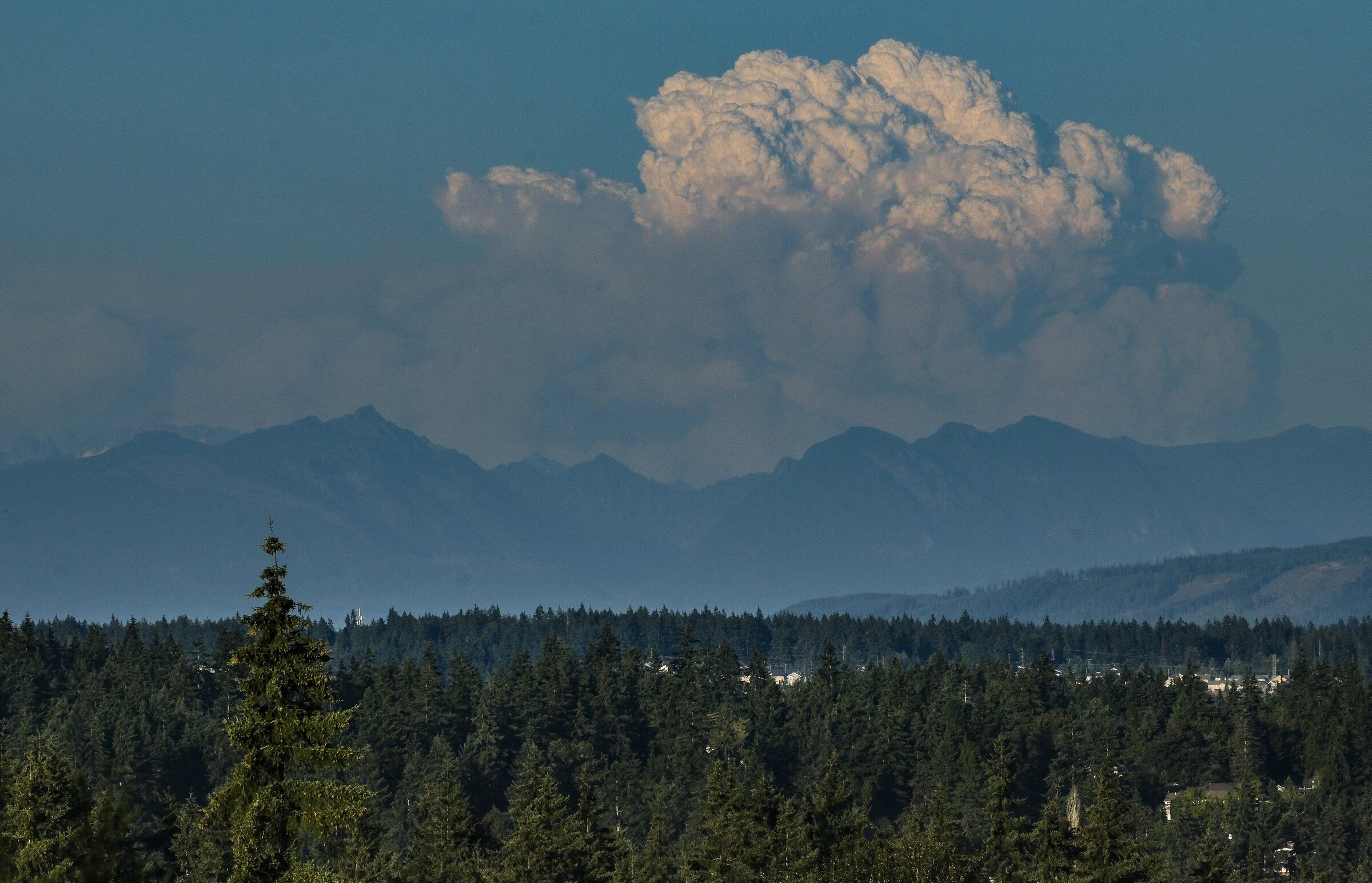
On Friday, Seattle residents could witness an unusual sight: a huge cloud rose over the mountains east of the city, resembling a mushroom. It was a pyrocumulus cloud—an atmosphere-driven formation not caused by thunderstorms, but by the intense heat of a forest fire. The fire’s ignition zone, called “Little Giant,” grew tenfold in only two days and now covers more than 16 square miles (about 41 square kilometers). Fire crews are still unable to bring it under control: the containment level remains at zero.
As reported by The Seattle Times, the blaze began about a week ago, on July 16, during a thunderstorm that passed over the Chiwawa River Valley. Lightning ignited dry vegetation in rugged, hard-to-reach terrain about 30 miles northwest of the town of Leavenworth. The situation is further complicated by the landscape: the flames are moving south along the west bank of the Chiwawa River over steep slopes where it is extremely difficult for crews and equipment to operate. As of Friday, only 35 people were working to fight the fire, but by Saturday a specialized team to manage complex incidents is expected to arrive.
Evacuations have already affected the area. In Trinity, within the Chiwawa River basin, the highest—third—level of threat has been issued, “Leave now.” That means there is no time to wait: the fire may block evacuation routes. To the south, along the Chiwawa River Road, the second level is in effect—preparing for evacuation. In this zone are popular backcountry hiking routes through the Alpine Peak Glacier Wilderness area. Tourists and local residents are strongly urged to leave the danger areas.
The pyrocumulus cloud seen from Seattle is a telltale sign of powerful burning. It forms when convective currents of heated air lift smoke and water vapor so high that the moisture condenses into a dense white “cap.” Often, these clouds resemble nuclear mushrooms—an effect also observed during major volcanic eruptions. The cloud itself is not inherently dangerous, but it indicates the fire’s extreme intensity.
Meteorologists are offering conflicting forecasts. On one hand, cooler weather is expected over the weekend (down to 20–25 degrees Celsius), but the wind will not die down. On Saturday daytime, gusts up to 20 miles per hour will blow northwest, pushing the smoke toward Chelan and Okanogan counties. That lowers the risk for nearby communities, but does not help crews fight the fire. On the other hand, there may be fog and low cloud cover, which could slightly moisten the vegetation. However, as Jeff Heywens from Watch Duty noted, the smoke over the fire will linger for a long time.
The thunderstorm that sparked the “Little Giant” brought little rain but plenty of lightning. This is a typical pattern for the start of major wildfires in the U.S. Pacific Northwest. The same storm also produced another serious fire—the “Kaiser Canyon” blaze on the Colville Indian Reservation, north of the Grand Coulee Dam. By Friday, its area had already reached 165 square miles (about 427 square kilometers). Together, the two incidents underscore a grim lesson: in conditions of drought and abnormal heat, even a brief but intense thunderstorm can turn into a disaster.
For now, the “Little Giant” situation remains tense. Forecasters say temperatures over the coming days will stay within 20–25 degrees Celsius—somewhat lower than July record highs—but wind and dryness will work against firefighters. Importantly, a comprehensive emergency management team has already been deployed in the region, meaning more resources and aviation support will be brought in. But for now, the fire is calling the shots, and the pyrocumulus cloud serves as a grim reminder of nature’s power.
All 11 People Survived After a Seaplane Crash Off Seattle
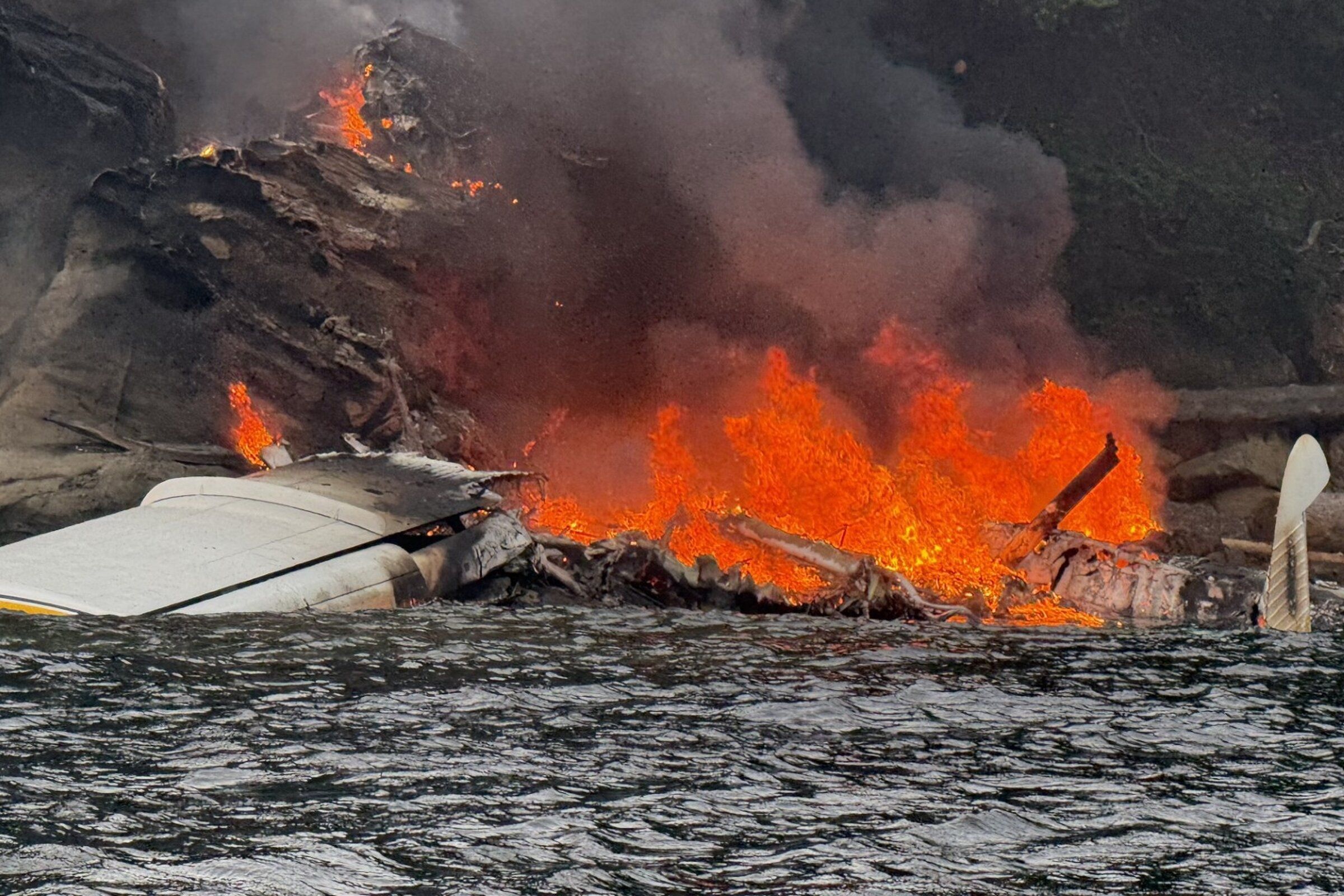
Late on July 23, a Kenmore Air seaplane crashed in the Puget Sound area north of Seattle. Ten passengers and a pilot were aboard. They were all flying on a route from Seattle to Roche Harbor on the San Juan Islands. Around 5:15 p.m. local time, the plane went down into the water near Sucia Island and then caught fire. However, despite the seriousness of the incident, all eleven people on board survived. As reported in a Yahoo News story, coordinated actions by the pilot and swift work by rescue teams made it possible.
According to a statement from Kenmore Air, the aircraft was a de Havilland DHC-3 Otter—an all-purpose, single-engine turboprop seaplane widely used to transport people in remote areas. It crashed in Shallow Bay, off the northwest end of Sucia Island, part of Sucia Island State Park. The San Juan County Sheriff’s Office confirmed that everyone aboard was pulled from the water. Injuries ranged from head trauma to broken bones and lacerations. One patient is in critical condition. Coast Guard crews, local responders, and three medical helicopter units were dispatched to the scene.
Lieutenant Commander Marshall Bergh of the Coast Guard said that by the time the rescuers arrived, the seaplane was already nearly submerged, and their main job was to get the people out of the icy water as quickly as possible. “The pilot likely did an excellent job landing the aircraft gently enough to give everyone a chance,” Bergh said. He added that “a lot went right for everyone to get out of the aircraft.” While the cause of the crash has not yet been determined, the National Transportation Safety Board (NTSB) has already started an investigation. Experts plan to raise the aircraft from the water and move it to a protected location for a detailed inspection, and to interview the pilot and witnesses, as well as review bystander video recordings.
Flight tracking data from Flightradar24 showed that three minutes before the seaplane went down, it made a sudden 180-degree turn and headed back toward Sucia Island. Bystander video recorded the aircraft struggling to maintain balance just a few feet above the water, before it hit the water and erupted in flames. Kenmore Air is refusing to speculate about the cause, saying it is fully cooperating with the investigation. CEO David Gagel confirmed that the carrier is providing all necessary assistance to the authorities investigating the incident.
The incident is again drawing attention to seaplane safety. Puget Sound is a complex area for flights: narrow channels, changeable weather, and cold water. That everyone survived after the crash and the subsequent fire is almost miraculous, but experts emphasize the role of pilot professionalism and the rapid response of rescue crews. The NTSB investigation will likely focus on the aircraft’s technical condition and the crew’s actions. The cause could be an engine failure or a piloting error during the approach to landing, but there are no confirmed conclusions yet. The fact that all 11 people survived is already being described as rare good luck in an aviation incident of this kind.
Kenmore Air Seaplane Crash: Rescue by Bystanders and Investigation Details
A tragedy in the waters of the San Juan Islands on Thursday evening turned into a miracle: all eleven people aboard the Kenmore Air seaplane that crashed survived. However, three of them remain in the hospital. The rescue operation unfolded quickly, but the main heroes were not professional rescuers—instead, ordinary people on recreational boats, who arrived first, helped, and pulled passengers and the pilot out of the water. The incident also brings renewed attention to the safety of older aircraft models that continue to be used in general aviation.
Late on July 24, 2026, at about 5:15 p.m. local time, a de Havilland DHC-3 Otter seaplane manufactured back in 1960, operating for Kenmore Air, was on a flight. Ten passengers and the pilot were aboard. The aircraft was making an emergency water landing in Shallow Bay near Sucia Island, north of Orcas Island. Immediately after touching down, the plane caught fire. Because the crash occurred near a popular recreational area, boats were nearby.
According to a spokesperson for San Juan Islands EMS, civilians aboard private vessels conducted the rescue entirely on their own, reaching the injured before the first emergency services arrived. All eleven people were accounted for, and as of noon on Friday, three remained hospitalized. The 11th person was lifted onto a Coast Guard helicopter using a rescue winch—video of that moment was shared by the news media.
Kenmore Air spokesperson Aaron Blank confirmed that the three injured remain in the hospital, and that the company is providing them with all necessary support. The investigation into the crash’s cause is still ongoing: why the pilot had to land on the water there, and what led to the fire will need to be determined by experts. For now, only this is known: the 1960-built DHC-3 Otter model is widely used in the region for inter-island transport because of its reliability and ability to take off and land on water. However, the aircraft’s age may play a role in the investigation.
The swift response of bystanders—who put everything aside and rushed to help—undoubtedly saved lives. But a question remains: why was there not enough time to wait for professionals before beginning the rescue? A The Seattle Times report emphasizes that civilians acted faster, and that is the key lesson: even in the era of advanced technology, human involvement at the scene remains crucial. Another striking detail is that the aircraft was built 66 years ago—machines like these require especially careful monitoring of their technical condition.
To put it in context: the de Havilland Canada DHC-3 Otter is a single-engine piston aircraft developed in the 1950s. It can carry up to 14 passengers and is known for its ability to operate from short runways and from water surfaces. But by modern safety standards, its design is outdated, and any malfunction can lead to a catastrophe. In this case, a fire after landing is alarming: there could have been a fuel leak or engine damage.
The consequences of the crash extend beyond the injuries. For residents and tourists who rely on Kenmore Air, it is a signal to reexamine how the older fleet is maintained. The aircraft is not a museum piece—it is a means of transportation, and every such accident harms the company’s reputation. It is also a reminder for everyone in remote areas: it is important to be ready to come to help, because the first people on scene are often not professional rescuers, but neighbors or random passersby.
For now, three people continue treatment, while the rest have likely already returned to their families. The investigation is ongoing, and we await an official conclusion about the cause of the emergency landing and the fire. This case should prompt more careful oversight of general aviation in the region.