
Seattle authorities are continuing an experiment to limit vehicle traffic at the city’s historic Pike Place Market. This month the Seattle Department of Transportation (SDOT) will begin installing temporary portable bollards that will block access for most vehicles. The measures will allow the city to evaluate the barriers ahead of a large influx of visitors in June, when Seattle will host matches of the FIFA Men’s World Cup. Major events in the city — such as that tournament, a victory parade after the Seattle Seahawks win the Super Bowl, or the annual Bumbershoot festival — have traditionally prompted temporary changes to transportation infrastructure and logistics.
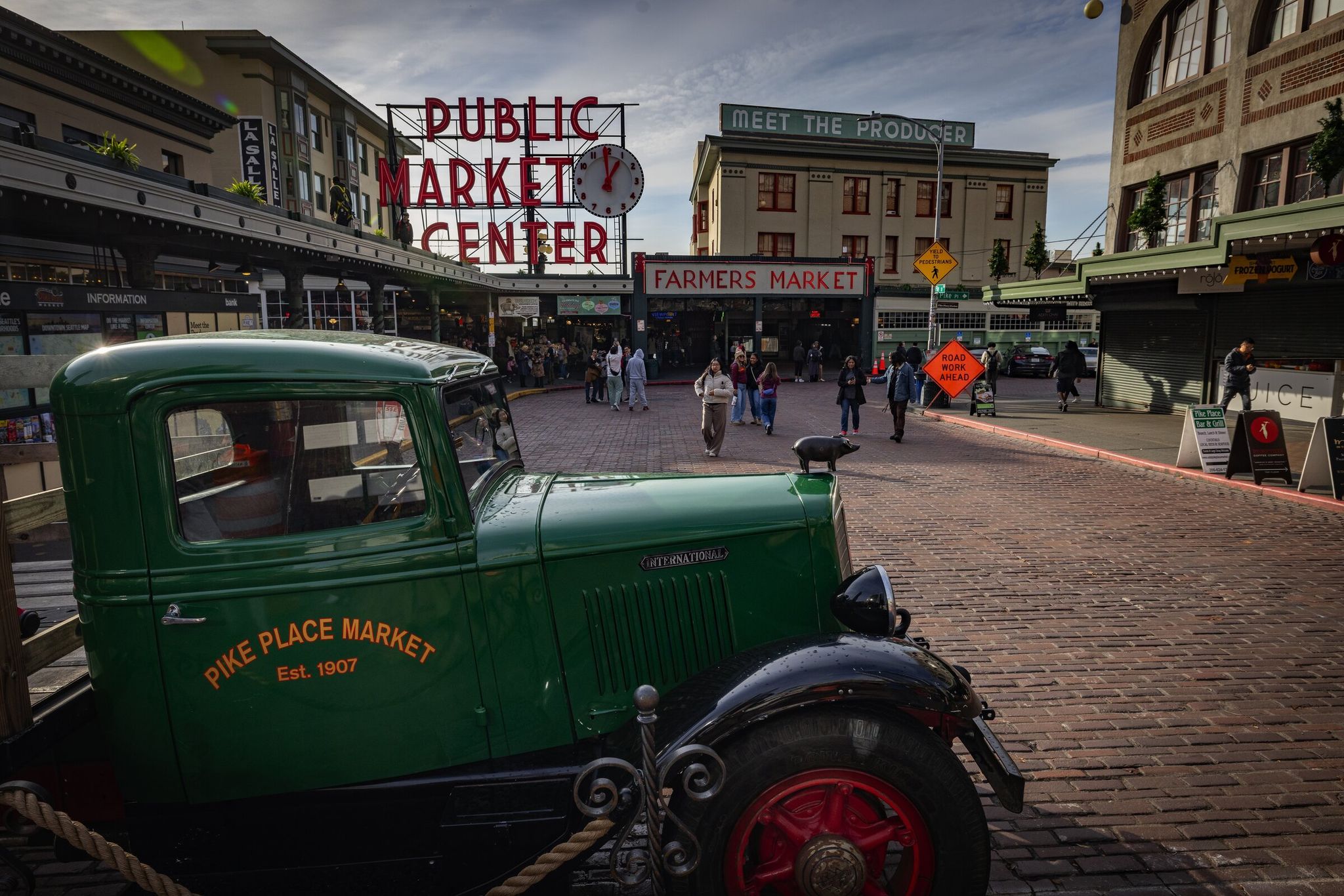
The new bollards are low posts that pedestrians can easily walk past but that cars cannot drive over. For now they will be temporary while the city develops a long-term plan for the market. Other possible barriers include planter boxes or a vintage truck at the main entrance, as well as heavy steel Archer-type barricades the city has already used during the Super Bowl parade and the opening of the new light-rail station.
The pilot project to create an almost car-free zone at the 118-year-old market began last April. Currently entry is allowed only for emergency services, vehicles with special permits for people with disabilities, commercial deliveries, vendor loading, and brief stops to pick up goods ordered for curbside delivery. Reactions to the experiment are mixed: some business owners support it, others complain of reduced revenue, and activists say the market has become safer and more pleasant without cars.
Despite the market’s modest size, the question of banning vehicle traffic has long been politically sensitive. But after the pandemic — which led to a greater appreciation for public spaces — and in light of vehicle-ramming attacks around the world, the idea has received support from both former Mayor Bruce Harrell and current Mayor Cathie Wilson, who began her career as a transportation activist. Market visitors, it seems, don’t notice much difference and continue to stroll freely through the streets.
The city’s proposal identifies six locations within the market that need protection from vehicles, including the main entrance at the intersection of Pike Street and First Avenue. Discussions about a permanent solution began last November but became more concrete as the World Cup approached. SDOT has already discussed with the Pike Place Market Historical Commission the possibility of making the barriers permanent as early as this September. That city body, responsible for preserving the market’s historic character and architectural integrity, has the authority to review and approve such changes under historic-preservation standards, although final approvals for major projects may require city council sign-off.
Based on: Pike Place Market to get temporary barriers ahead of World Cup