
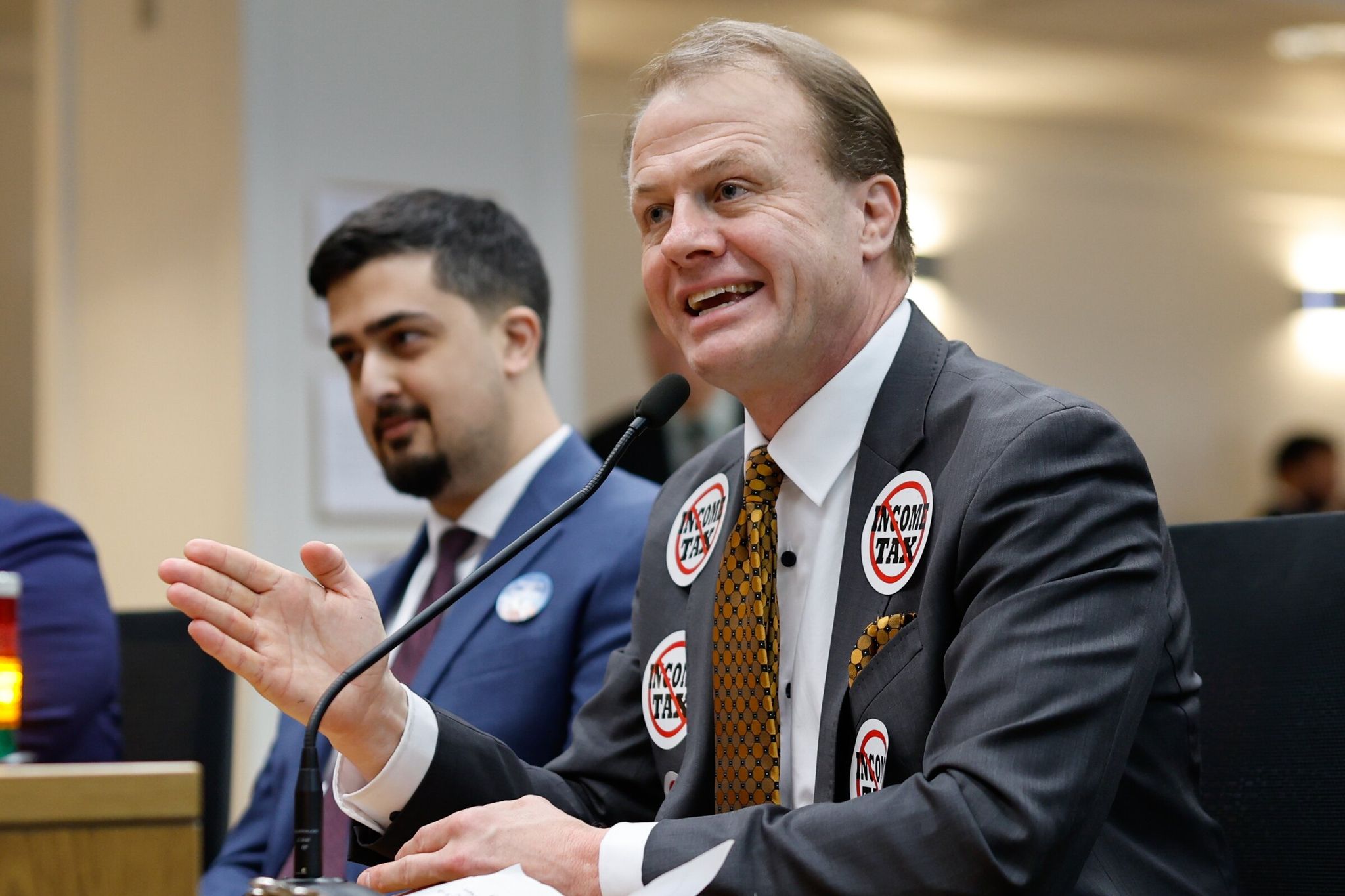
Tim Eyman, a political activist from Washington state who for more than two decades has been pushing tax-limiting initiatives through the citizens’ direct-vote system, made an unexpected statement. In a letter to his 60,000-strong audience he warned fellow conservatives that an attempt to overturn the new “millionaires’ tax” by referendum is doomed to fail.
Eyman’s role in the state’s tax politics is unique: Washington has no income tax and relies on sales and property taxes, and Eyman became the chief “anti-tax” voice, using the citizen initiative mechanism to block any attempts to impose new taxes. He has, alone or with a minimal team, managed to put dozens of proposals on the ballot — an unusual feat for a single individual in U.S. politics.
A poll commissioned by business groups showed 59% of voters support the tax, and only 33% are ready to vote to repeal it. Eyman, who was barred from managing political funds for violating campaign finance rules, remains an active public figure and continues to travel the state giving lectures opposing an income tax. But this time his own data proved a cold shower for the conservative camp, which had been convinced the surtax on very high incomes is unpopular with most people.
The 9.9% tax on incomes above a certain threshold was passed by the state legislature in March 2024. Opponents made desperate attempts to stop it: House Republicans staged a 25-hour filibuster. However, that delaying tactic could not fully block the law’s passage — unlike the U.S. Senate, Washington state does not require a supermajority to overcome a filibuster, and the Democratic majority ultimately voted for the tax despite the delays.
Business leaders and technology companies, primarily Amazon and Microsoft — Seattle’s largest corporations — actively lobbied against the tax, funded ad campaigns and lawsuits, arguing it would harm the business environment and drive wealthy taxpayers away. The opposition also included the Seattle Chamber of Commerce and former T-Mobile US CEO Michael Hunter. Nevertheless, public support for the tax remains strong.
The results of the April poll closely match a January study, which showed the tax is popular across all demographic groups — among young and old, urban and rural residents. Even among Republicans a small majority approves of it. Democratic internal polls confirm this as well.
Eyman attributes the bleak position of the anti-tax camp to new voting rules enacted by Democrats in 2022. The amendments that took effect lowered the threshold for passing or rejecting tax laws via referendum from a supermajority (previously two-thirds) to a simple majority of 50%+1. Ballots now are required to state how a measure will affect the budget. For example, when voters were asked to repeal the capital gains tax, they saw a warning that doing so would reduce funding for schools and childcare.
“I don’t pretend to know everything,” Eyman wrote to his supporters, “but I do know a lot about referendums.” He argues the new rules contain a “built-in pro-government bias” and effectively make it impossible to overturn any taxes. Critics, however, note that voters may simply prefer funding for education over tax cuts for the wealthy.
Observers say the paradox is that state residents want both low taxes and high government spending. When forced to choose, votes tend to favor social programs. Still, Eyman remains optimistic about the long term, predicting that 2027 will be “a much better year to repeal an income tax.”
Based on: Remember Tim Eyman? He’s bearing bad news — for his own side