
For decades in Washington state politics, there has been no more toxic subject than an income tax. The state still has no tax on personal income: back in 1933 the state Supreme Court, in Culliton v. Chase, ruled a progressive income tax unconstitutional, and the constitution requires a single tax rate, making a differentiated scale almost impossible. Later, taxpayers locked in an additional constraint through initiatives: any new taxes or increases in rates must receive a two-thirds vote in the legislature or be approved by a referendum. Instead, the budget is funded by a sales tax, a property tax, a business gross receipts tax, and excise taxes on fuel, alcohol, and tobacco— a system critics call regressive, because people with low incomes pay a disproportionately large share of their earnings in taxes. Attempts to change this model have failed: as early as the 1970s, the popular governor Dan Evans tried twice to introduce an income tax and lost both times resoundingly at the ballot box.
So when, this spring, the governing Democrats finally pushed through their own version— the “millionaires tax”—the key question was whether voters would recoil from them. Formally, it is not a classic income tax: the capital gains tax adopted in 2021 is charged at a 7% rate on net profit from the sale of stocks, bonds, and other financial assets above $250,000 per year. Real estate, retirement accounts, and several other categories are excluded, so only about 0.2% of state residents pay it. In 2023, the state Supreme Court ruled it constitutional, characterizing it as an excise tax on the right to possess an asset rather than an income tax that the state is barred from imposing. Revenues are directed to education programs and child care.
The answer, judging by the results of the August primaries, was a loud “no.” Democrats who backed the new tax and other tax increases are leading Republicans comfortably in the early vote counts. What’s more, it is the Republicans—who criticized the tax and what they called Democrats’ “waste”—who look most vulnerable. In the 17th and 18th districts in Vancouver, business groups spent about $450,000 defending four Republican state lawmakers, yet the new Democratic candidates lead in all of these races.
Republicans also targeted Democrats in the suburbs of Seattle— in the 47th district in Kent and the 44th district in Snohomish County. All these Democrats voted for the capital gains tax, and all of them are leading. One of the tax’s authors, state representative April Berg, is ahead of her opponent by 22 points, and the bill’s chief sponsor, Senator Jamie Pedersen, is ahead by more than 40. Even in the 5th district, where Republican Michelle Bennett made “control Olympia” her slogan and criticized the tax, two Democrats together are still up by 11 points. Here it’s worth remembering the local “top-two” system introduced by I-872 in 2008: all candidates, regardless of party, compete in a single August election, and only the two candidates with the most votes advance to the November ballot. In deeply Democratic districts, that means the finalists could well be two Democrats— and then party affiliation stops being the main factor for voters.
Criticism of Democrats simply isn’t landing. This summer former Democratic governors Christine Gregoire and Gary Locke said their party has “gotten out of control” on spending and taxes. Businessman Howard Schultz, who moved to Florida, also accused the party of being unfriendly to business. But voters—the real bosses—aren’t demanding “control” over Democrats.
There are two explanations. First: what Democrats are doing is popular. People want to tax the wealthy and don’t view higher government spending as a problem. That doesn’t mean voters will necessarily approve the “millionaires tax” itself in November’s referendum, but the party’s overall approach is something they like for now.
Second: the all-encompassing influence of Donald Trump. He has so damaged the brand of local Republicans that they can’t even carry their arguments against Democrats. A fresh poll shows Trump’s job approval in the state is only 27%, with 68% disapproving— a 41-point difference. No party is going to sail against that wind.
At the federal level, all eight Democrats in Congress from the state feel confident, including Marie Gluesenkamp Perez, who was viewed as one of the most vulnerable. In her district, where Trump won in 2024, Democrats are at 56%, while Republican John Brown and allies are at only 42%. The numbers will still shift as votes are counted, but the trend of the whole Trump era remains: rejection of him makes a blue state only bluer.
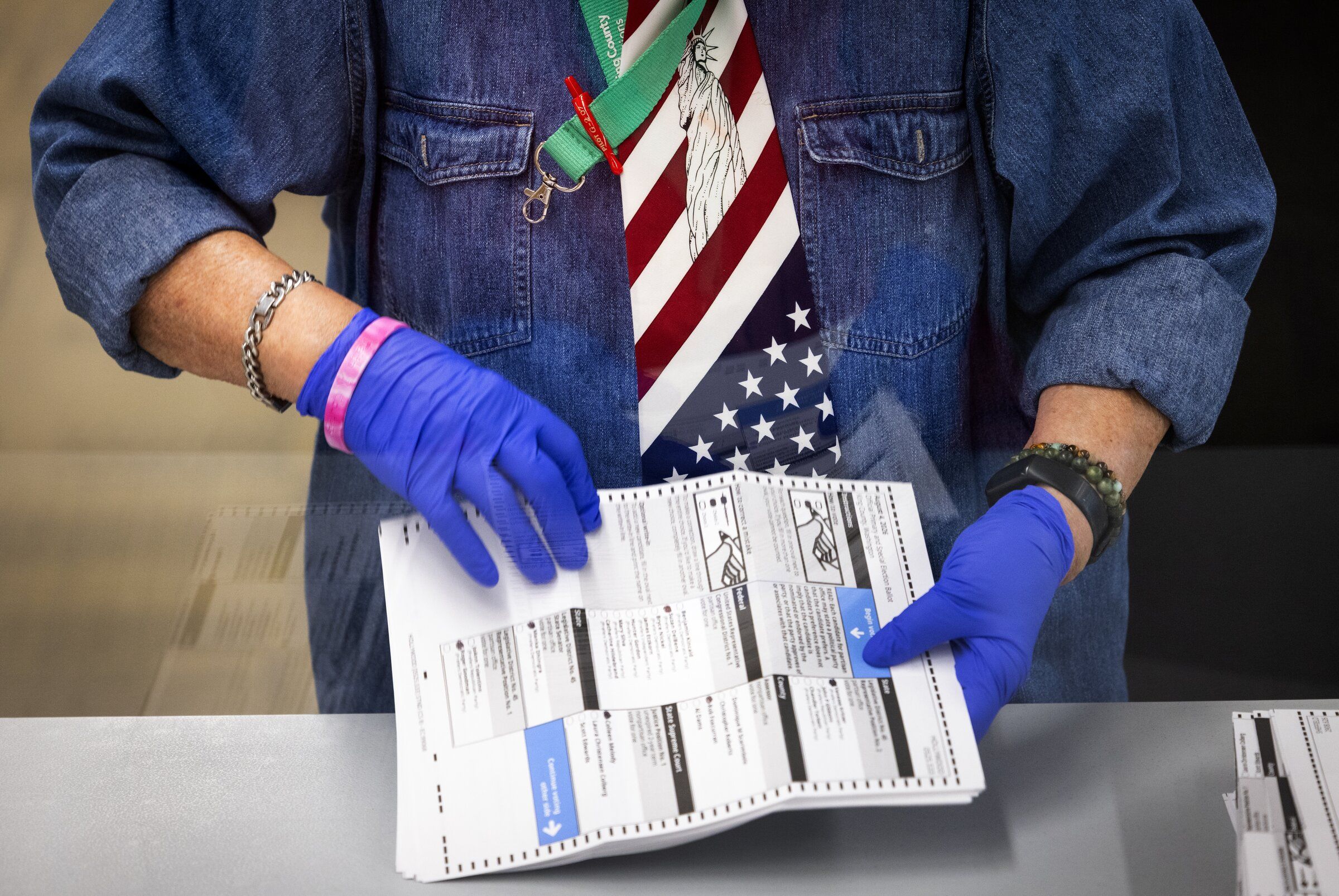
Based on: WA Democrats face no backlash for ‘millionaires tax’