
New York's subway, long used to ads for startups, lawyers and dermatologists, suddenly filled with bright and strange images. Drawings of sailboats, hearts, dragons and wizards have appeared at the 72nd Street, West 4th Street and East 86th Street stations. The artist is Susan Bird, a self-taught painter from Seattle who decided to turn the subway into a gallery of kind feelings.
Her real name is Sue Sarah Gilbert, and she is 76. She is a great-granddaughter of John D. Rockefeller Sr., the well-known American magnate and philanthropist. Raised on a private island in Connecticut, Gilbert stayed out of the spotlight for many years, but after a career in film she became interested in digital art. To realize her dream of showing her work in the New York subway, she raised more than a million dollars from wealthy friends.
The project is called "Love in Transit NYC." From February through September new collections of drawings appear at five subway stations and one street-level site in the Hudson Square area. They occupy ad boards, digital screens and even turnstiles, and some works will be shown on a giant screen in Times Square. According to marketers, renting all the surfaces at one station can cost up to $250,000 a month, and the total cost of the campaign exceeded a million dollars.
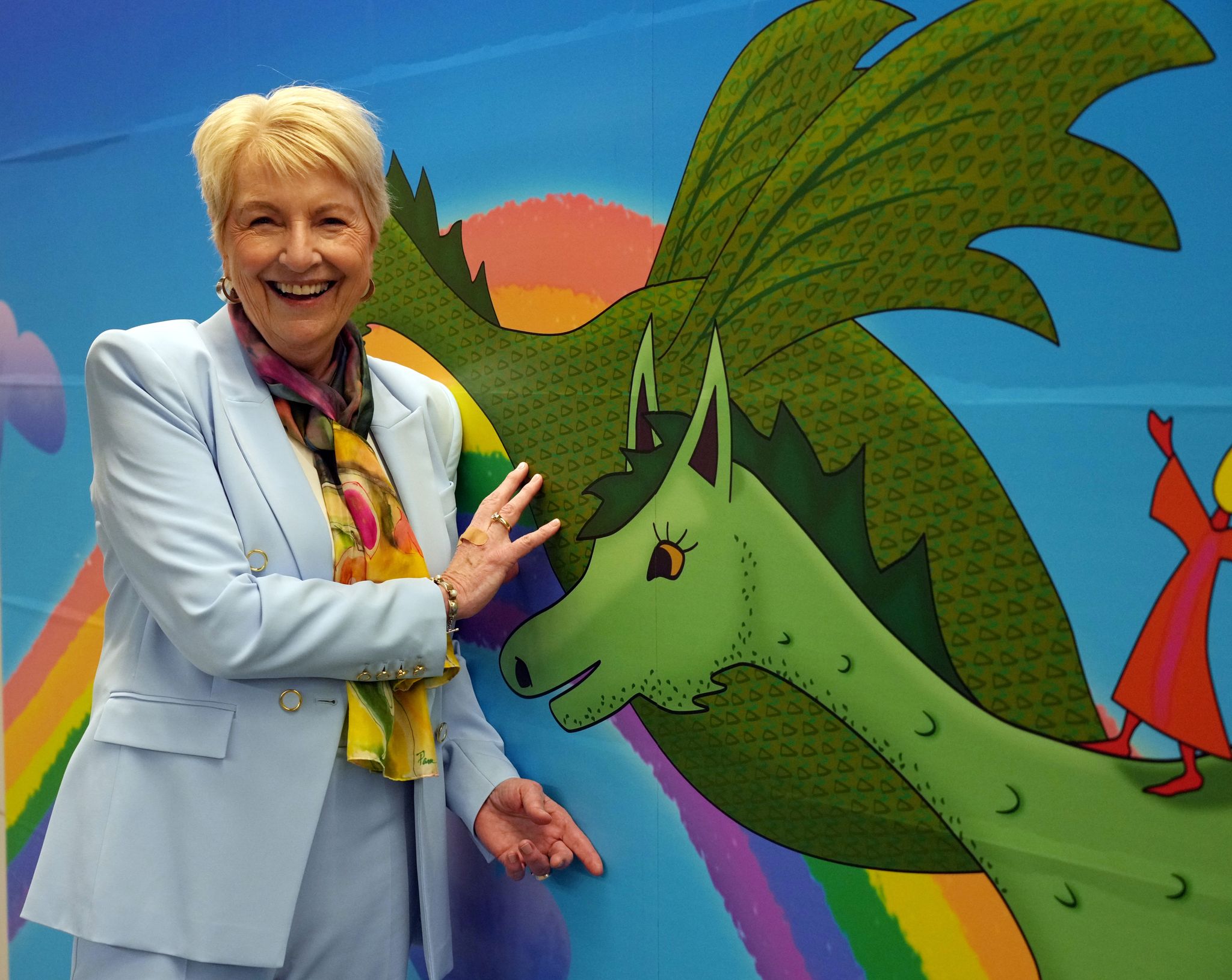
Susan Bird’s works are full of warmth: suns, wizards, dragons and phrases like "Be Seen" or "I Love You All." The artist emphasizes that her goal is not to sell anything but to give passersby a break from aggressive advertising. "This is art as a gift, not as a transaction," she says. Unlike provocateurs such as Banksy, Gilbert does not make political statements; she simply aims to bring lightness and cheer to the underground space.
Riders' reactions have been mixed: many rush by without noticing the pictures, some wonder whether it’s a secret ad campaign. But others stop to appreciate the unusual aesthetic. Nurse Alexis Chin, who works nearby, called the drawings "relaxing" and said they are better than blank walls or broken schedule displays.
Gilbert herself, who uses the pseudonym Susan Bird and reveals little about her personal life, comes to New York once a year — only for family gatherings. But the idea to transform the subway came to her suddenly, "like a thought that just fell from the sky." In a pale-blue suit and rainbow scarf she watched riders' reactions at the 72nd Street station and genuinely lit up at every astonished look she spotted.
The artist admits that her illustrations are a "swan song" in her career, but perhaps also a door to new opportunities. The investors, whose names she keeps secret, were confident of the project's success: "Let’s just say it doesn’t hit their wallets," Gilbert smiles. For her, the important thing is that passersby feel: art asks for nothing but a minute of attention.
"I don't know why I was drawn to transit," the artist says. "But the subway is the perfect place to give something pure and kind. It’s not a sale — you just walk by and smile."
Interestingly, Susan Bird could have chosen her native Seattle for the campaign, where the art scene is known far beyond the city. World-class museums such as the Seattle Art Museum and the Frye Art Museum sit alongside independent galleries in Capitol Hill and Fremont. The city is proud of famous local artists like Dale Chihuly, who creates glass sculptures, and Jacob Lawrence, whose paintings are part of history. Equally notable are musical and theater groups like the Intiman Theater, and street art flourishes in Georgetown and on the "Art Wall" downtown. Anonymous street artists have a long tradition in Seattle: artists such as "Sketchy," with his humorous graffiti comics, and the collective "Monster Road," with anonymous installations made from recycled materials, have left their marks. The city even supports legal graffiti walls, though it periodically battles unauthorized art.
Seattle residents generally welcome noncommercial public-art projects, especially those created under the "1% for Art" program, which requires allocating a portion of budgets to art. Examples include murals at transit stations, temporary park installations under the "4Culture" initiative, and the annual Seattle Design Festival. However, disputes arise when projects touch politically sensitive themes or require removal of existing infrastructure elements. That is likely why Susan Bird chose not to stage the campaign in Seattle: after the events in the Capitol Hill Autonomous Zone in 2020 the police became more sensitive to any unauthorized gatherings in public places, and strict safety rules and permits at transit hubs would have made the project risky. In the end the artist picked a city with less formalized rules for temporary art actions to give commuters a respite from aggressive advertising and the simple joy of encountering art.
Based on: The mystery Seattle artist filling NYC subway ad space with whimsy