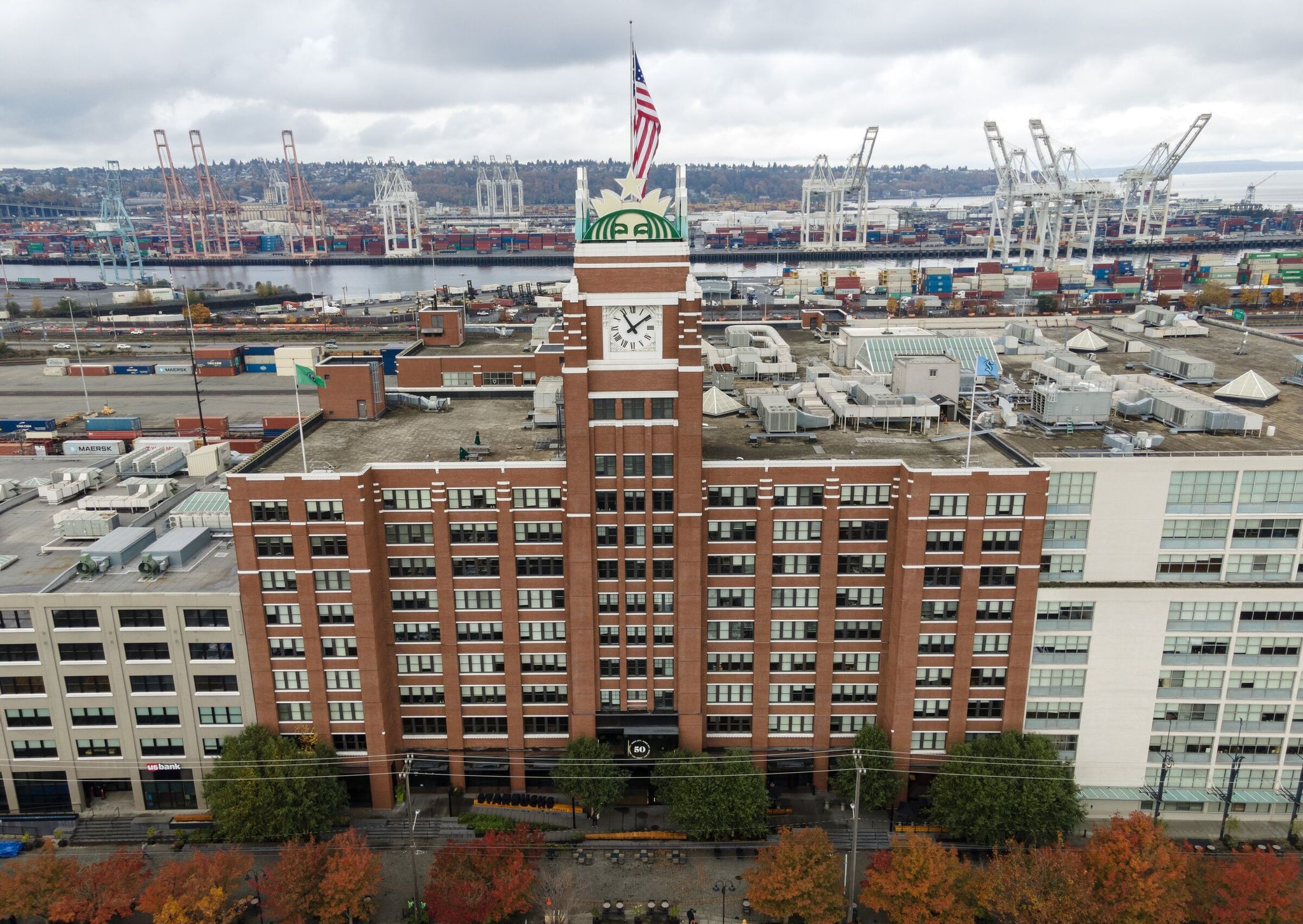
Starbucks is expanding its footprint by opening a corporate office in Nashville while keeping its headquarters in Seattle. Meanwhile, Seattle’s mayor has unveiled a plan to create 1,000 new shelter spaces to speed assistance to those in need.
Starbucks opens new corporate office in Tennessee
Coffee giant Starbucks, whose global headquarters are in Seattle, announced plans to open a new corporate office in Tennessee. The decision reflects the company’s strategy to strengthen its presence in the fast-growing Southeast U.S. market while underscoring its continued commitment to Seattle as a central hub for global and North American operations.
Starbucks chose Davidson County, Tennessee, home to the state capital Nashville, for the new corporate operations office. According to a press release reported by The Seattle Times, the move is intended to support the chain’s growth and meet rising consumer demand, particularly in the Southeast. The company confirmed it has no plans to relocate its global headquarters from Seattle, where it recently renewed a lease in the SoHo area. Starbucks spokesperson Lori Torgerson made clear: “Seattle remains our headquarters to support North American and global operations.”
The new Nashville office will focus on teams responsible for direct and indirect procurement and supply for North American operations. This is a logical expansion into a region that has already attracted other corporate giants, including Amazon and Nissan. Starbucks Chief Operating Officer Mike Grams called Nashville “an ideal location” to establish a more strategic presence, highlighting the area’s “deep, talented and growing workforce.” Tennessee Governor Bill Lee linked the decision to the state’s “strong values and fiscally conservative approach,” which he said is business-friendly.
The announcement comes amid mixed context for Starbucks in Washington. Last year the company closed 31 stores in the state, including flagship locations such as the Reserve Roastery on Capitol Hill, as part of a network optimization across North America. Opening a new office in Tennessee can therefore be seen as part of a broader strategy to reallocate resources and invest in regions with high growth potential. The decision underscores the growing economic appeal of southern states, which companies view as offering a favorable business climate and access to skilled labor. For Starbucks, this means strengthening operational infrastructure to support ambitious expansion plans while Seattle remains the company’s strategic global nerve center.
Starbucks opens new Nashville office: a strategic move to the U.S. South
Starbucks, the global coffee-industry giant, announced it will expand its corporate presence by opening a new office in Nashville, Tennessee, later this year. The move is part of a broader strategy to bolster the company’s position in North America, with particular focus on the central, southern and northeastern U.S. regions. The decision, disclosed in an internal company memo, marks not merely the opening of a new branch but a strategic relocation of some jobs from Starbucks’ historic headquarters in Seattle.
The Nashville office will be a hub for teams managing Starbucks’ North American supply chains. As Chief Operating Officer Mike Grams said, Nashville is viewed as ideal due to its deep, talented and growing workforce and its appeal as a location. The city is already home to major employers like Bridgestone and HCA Healthcare, underscoring its status as an important business center. Details of the plan were first reported by The Wall Street Journal. The company says the move will consolidate current and future procurement roles (both direct and indirect) in a geography that offers better access to talent and closer proximity to key suppliers.
Importantly, Seattle will retain its status as the global headquarters and support center for North American operations. The move is not a full exodus but represents strategic diversification. Employees based in Seattle will be offered opportunities to relocate to Nashville, and the company also plans to post new jobs locally in Tennessee over time. For those who choose not to relocate, severance packages and opportunities to apply for other open positions within Starbucks will be available. The decision comes alongside encouraging signs for the company: according to Fox Business, U.S. sales are growing again after two years of decline, suggesting the recovery plan is working.
Governor Bill Lee welcomed the decision, saying the state’s business environment—rooted in strong values and a fiscally conservative approach—continues to attract major corporations. He thanked Starbucks for choosing the “Volunteer State” and creating quality jobs for its residents. The move fits a broader trend: for example, In-N-Out plans to open an eastern office of about 100,000 square feet near Nashville this year. Thus, Starbucks’ decision reflects a wider corporate migration to regions with favorable tax climates and an expanding talent pool. The strategic maneuver aims to optimize logistics, reduce costs and strengthen supplier relationships, ultimately supporting the company’s ambitious growth plans in a key U.S. market.
Seattle mayor announces plan to create 1,000 new shelter spaces
Seattle officials are taking a new step in addressing the chronic homelessness crisis that has shaped the city for years. Mayor Katie Wilson unveiled a package of legislative actions intended to rapidly create 1,000 new shelter spaces and related support services. The plan, detailed in a KOMO News report, is an attempt by the city administration to break a situation that many acknowledge has become stuck.
At a Wednesday news conference, Mayor Wilson, flanked by community leaders and service providers, outlined a three-part strategy designed to accelerate the process of bringing people indoors. The administration sees the core problem as bureaucratic inertia and outdated regulations that slow the opening of new shelters. The first legislative measure directly targets this: it will give the director of the Department of Finance and Administrative Services the authority to sign lease agreements with property owners directly. This should significantly speed up the creation of new shelters, reducing timelines by an estimated 5–12 months. The second proposal concerns increasing shelter capacity. Currently, Seattle has a limit: no shelter, including tiny-house villages and safe RV parking sites, may house more than 100 people. Wilson called this cap outdated and inconsistent with best practices in cities like Los Angeles, Tampa and Austin. Her plan temporarily raises the limit to 150 people and allows one site in each city district to house up to 250 people. “We cannot just keep moving people from place to place and call it progress,” the mayor said.
But alongside these administrative measures are skeptical voices that tie political declarations to the harsh reality of the streets. Staci Hammons, who—along with others—was displaced from a camp on 41st Street in Ballard last month, said nearly all those moved simply relocated to a new, larger camp a few blocks away and received almost no help from the city. “If you want to end homelessness, give people homes, give people housing,” Hammons said. “They don’t actually give anyone housing.” Her comment highlights a key dilemma: expanding shelters is not the same as providing permanent affordable housing, which many activists consider the only long-term solution.
The third element of the plan concerns funding. Councilmember Cathy Moore (the article notes a possible typo in the original naming: Councilmember Cathy Moore, not Wilson) said her team identified $4.8 million in existing city funds to support new shelters and wraparound services. Of that amount, $3.3 million will be reallocated from an underused revolving loans program and $1.5 million from the Downtown Health and Human Services Fund, which has been unused for a decade. Wraparound services are a key concept in modern homelessness approaches. They mean not just a roof over someone’s head but a coordinated set of supports: addiction treatment, psychiatric and medical care, employment assistance and social integration services delivered simultaneously.
The mayor’s initiatives have already received public backing from some city council members. Rob Saka, who represents districts including West Seattle, SoDo and Pioneer Square, said the scale of the crisis requires action and that his constituents are bearing much of the burden. He expressed particular support for expanding alternatives like tiny-house villages and safe RV parking sites, noting that “tiny-house villages work, and many people prefer them.” Downtown Seattle Association President John Scholes also backed the package, saying “too many people are sleeping on the streets of our city, and this plan will ensure more people get shelter and access to the help they desperately need.”
In conclusion, Mayor Wilson’s plan represents an attempt at an administrative breakthrough in Seattle’s prolonged fight against homelessness. It combines procedural streamlining, increased scale of intervention and reallocation of funding. But it also highlights the fundamental debate between expanding temporary shelter systems and activists’ demands to focus on providing permanent housing. The success of the initiative will depend not only on the speed of legislation but on its ability to deliver real, sustainable transitions off the streets, rather than cyclical movement between cleared camps and new tent encampments. Notably, the mayor did not take questions from reporters after the announcement, leaving room for questions about details and potential obstacles to implementing the ambitious plan.