
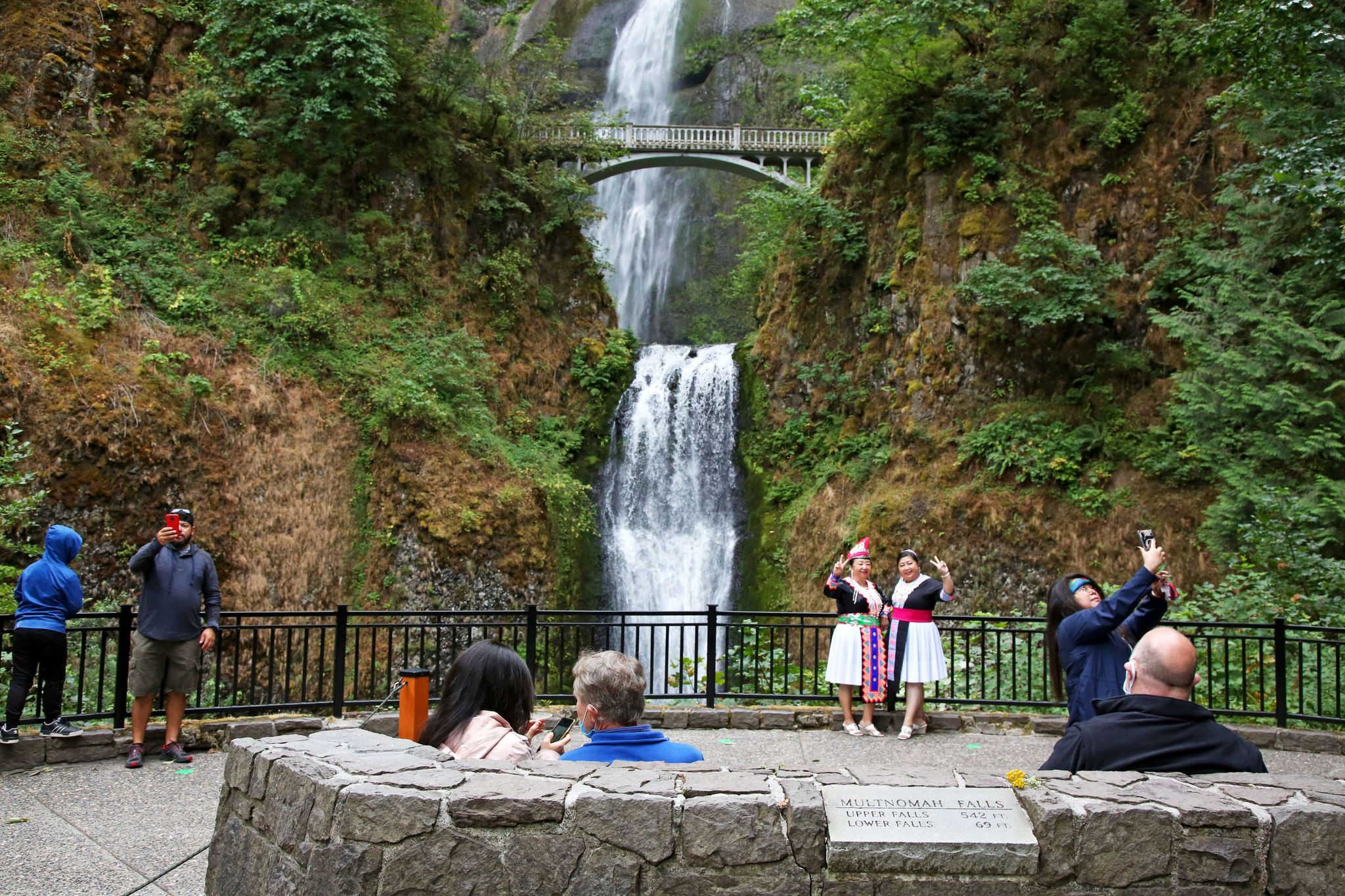
The spring travel season is in full swing, and the state's tallest waterfall is once again facing major traffic problems. The parking lot at Multnomah Falls, located on Interstate 84, is overflowing with visitors who arrive before the paid-permit season begins on Memorial Day (the last Monday in May). The Oregon Department of Transportation (ODOT) says unusually warm spring weather combined with construction on the Historic Columbia River Highway (the scenic US 30 roadway that runs along the river through the national recreation area) has created backups. During repairs on that road, traffic is being redirected onto I‑84, which is already congested with tourists and trucks — narrow stretches and no alternative detours through the gorge are causing severe jams, especially during peak hours.
Particular danger comes from drivers trying to get around closed gates. The east entrance to the parking lot automatically closes when it reaches 99% capacity, but some visitors keep going, turn around at the next exit and enter through the west entrance. This trick, long used by local buses, is now causing hazardous backups on the highway. Witnesses say up to 40 cars sometimes pile up at the closed gates.
Columbia Area Transit even warned that, because of extreme congestion, buses may be forced to skip the Multnomah Falls stop. So far drivers have avoided this extreme measure, but officials are concerned about a rise in crashes. Executive Director Amy Slappy said some motorists have already been in accidents while trying to get into the full parking lot.
Solving the problem is proving difficult. Expanding the parking lot or building a multilevel garage is not possible because of strict restrictions in the Columbia River Gorge Scenic Area — set by the Scenic Area Act of 1986. That law prohibits any construction that could disrupt the natural landscape or visual harmony. A multilevel garage or parking expansion at Multnomah would be considered "visual pollution" and could also harm the waterfall’s ecosystem and nearby forests. Reconfiguring exits from the highway is also prohibitively expensive. The only alternative parking on the Historic Highway is owned by a private company that charges a premium for spots near the falls.
The existing paid-permit system, introduced in 2020, works effectively in summer but can’t be launched earlier due to lack of funding. The system requires complex planning and infrastructure — gates, payment stations and an online platform — which takes time. In addition, approvals are needed from the Bureau of Land Management and local authorities, plus an environmental review since the falls are in the protected Columbia River Gorge. An early launch could disrupt those processes. ODOT faces a budget shortfall of $289 million, and the U.S. Forest Service is undergoing major reorganization. According to coordinator Terra Lingley, issuing permits and enforcement require significant funds that the agencies simply don’t have.
Interestingly, the problem is directly tied to the weather. In 2022, when April, May and early June were record wet, there were no congestion problems at the falls. Now, sunny weather is drawing crowds eager to see the famous waterfall. "We’re in this odd transition where the weather is beautiful and the permit system hasn’t kicked in yet," Slappy explains.
The construction on the Historic Columbia River Highway that worsens the backups is expected to finish before the permit season begins. Officials expect that the combination of construction completion and the paid system will bring much‑needed relief. Permits, costing $2 per car, will be in effect from 9 a.m. to 6 p.m. from the Friday before Memorial Day through Labor Day.
Officials are urging travelers to be cautious and patient. "We’re all doing everything we can to ease congestion and keep people safe," Slappy says. Unfortunately, experts acknowledge there’s no simple fix.
While the situation remains tense, there is hope that once the permit season starts in late May the parking chaos will ease. Until then, Oregon residents and visitors are advised to either be prepared for delays or seek alternative spots for spring outings in the Columbia River Gorge. For example, visitors can go to Latourell, Shepperd (Shehi?—keep original if unsure), Wahkeena Falls, the less‑crowded Elowah Trail, or walk along the Historic Highway to Moffett Falls. All offer similar springtime wildflowers and water flows but with far fewer visitors.
Based on: Multnomah Falls parking lot overflows with spring travelers