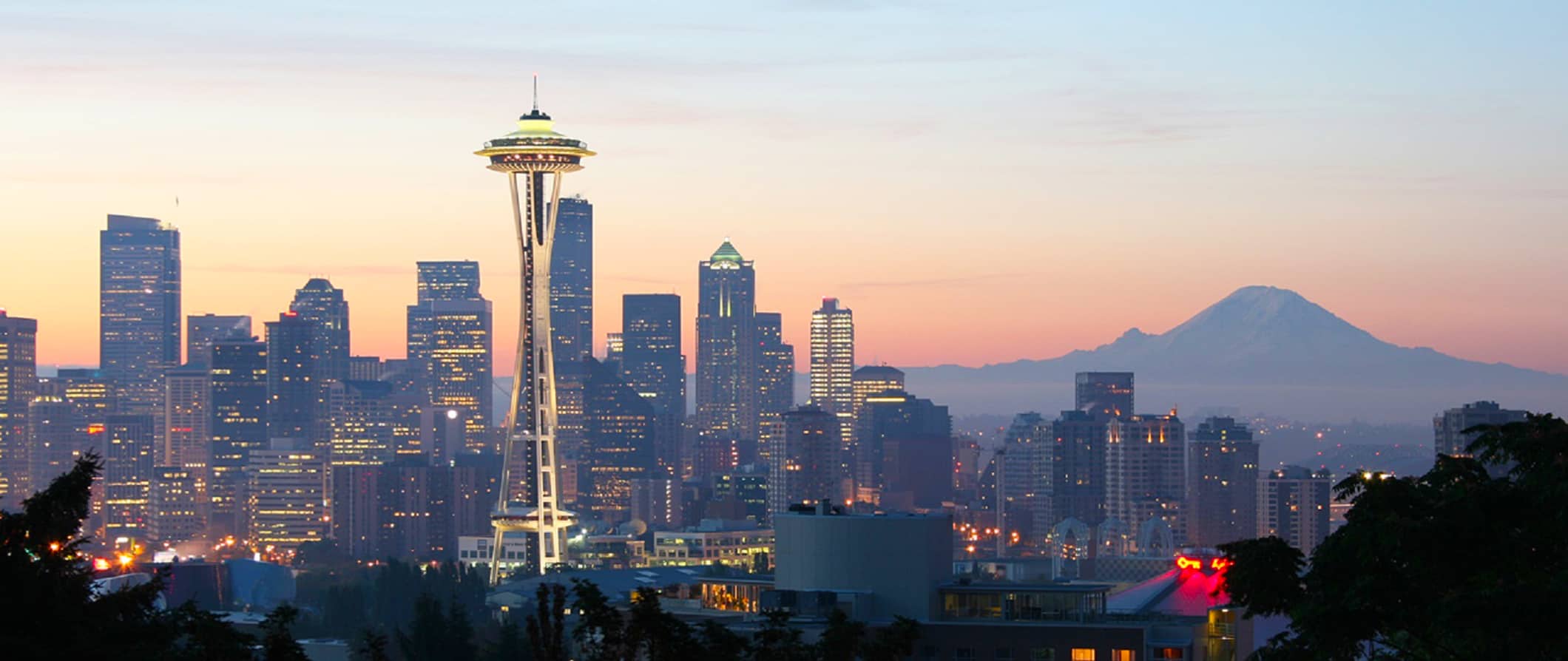
In Seattle, the sports week is packed with key decisions: the Storm are preparing for the WNBA draft that will shape the team's future. In the PWHL, local hockey clubs teeter on the brink of elimination from playoff contention. The city is also ramping up infrastructure and security for the upcoming 2026 FIFA World Cup.
Who will the Storm pick? The upcoming WNBA draft will determine the future of the revamped club
Ahead of the WNBA draft on Monday, the Seattle Storm sit at the center of a major rebuild. General manager Talisa Rhea and new head coach Sonya Raman have decisively pursued youth following back-to-back first-round playoff exits and a so-so 23-21 season. As a result, the team lost its top five scorers in free agency but balanced those departures with veteran role players like Natisha Hiedeman and Stef Dolson, while retaining key pieces — Ezi Magbegor and Katie Lou Samuelson. All these moves were made with the draft in mind, where the Storm hold a high third overall pick.
The Storm’s fate in the draft largely depends on decisions by the teams picking ahead of them. The Dallas Wings, holding the first pick, after reinforcing their frontcourt in free agency, might target UConn sharpshooter Aazhiya Fadd. Her selection would reunite her with teammate Paige Bueckers and create a dangerous backcourt alongside Aari McDonald. The Minnesota Lynx, picking second, have a size need and could opt for a tall center: 19-year-old Spanish center Ava Fam (6'9") or Lauren Betts (6'7") from champion UCLA. If that happens, the Storm are expected to take TCU point guard Olivia Miles with the third pick.
For readers unfamiliar with college basketball, the draft is an annual event where professional teams select rights to young players, most often from colleges. Picks are made in an order designed to help weaker teams improve. A "triple-double" is when a player records double-digit points, rebounds, and assists in one game, a sign of all-around impact.
Olivia Miles, who stayed an extra year in college, was a top candidate for the Storm in last year’s draft as well. Last season she became the first NCAA player to average at least 19 points, 7 rebounds, 6 assists, and 1.5 steals per game, showing triple-double upside. As ESPN commentator Ryan Ruocco notes in The Seattle Times piece, a Miles pairing with 20-year-old center Dominque Malone, taken No. 2 last year, could form the foundation for future team growth. "That definitely would be my goal if I were Seattle," Ruocco said.
However, if Fadd is available at pick three, the Storm face a difficult decision. The team has a vacancy at shooting guard, and Fadd—this draft’s purest shooter, hitting 44.7% from three last season—looks like an ideal fit. "Aazhiya will be a great pro," Ruocco said. "She’s much better defensively than people might think because her shooting is just outstanding."
The picture becomes more complicated if neither Miles nor Fadd is available to Seattle. With Magbegor signed, the team is unlikely to spend a high pick on another frontcourt player. After Fadd and Miles, the pool of top guards drops noticeably, leaving options like Flo'Jey Johnson from LSU, Raven Johnson from South Carolina, and UCLA standouts. The Storm also hold the 14th and 16th overall picks, linked to several promising forwards, and a third-round pick at No. 39. Ruocco believes the team can still find a useful piece even at 14. Talisa Rhea herself is confident this draft class is deep and that the Storm can select several excellent players.
Thus the WNBA draft will be a pivotal moment for the Seattle Storm, determining whether the team can lay the groundwork for a championship-caliber future. A full roster overhaul is risky, but experts argue it’s more promising than remaining mediocre. The choice between immediate help in the shooter Fadd and building a dynamic young duo of Miles-Malone will be the first serious test for the club’s new leadership.
A fateful week in the PWHL: how Seattle, Vancouver and New York could be eliminated from playoff contention
Professional women’s hockey has reached one of the most dramatic stretches of the season. Teams that once showed great promise now find themselves on the verge of mathematically falling out of the race for the Walter Cup. The West Coast will be especially heated, where a true drama with a predetermined finish is about to unfold.
The season began with high expectations for teams such as the Seattle Torrent and Vancouver Goldeneyes. They lived up to fans’ hopes, building bright and raucous fan bases on the West Coast. But now their paths are likely to diverge in a fight not for a championship but for the right to the top pick in the upcoming draft. Already on Tuesday, in their head-to-head matchup, one or even both of these teams could officially lose their playoff chances. Seattle needs a regulation win to keep a faint hope alive, while Vancouver can preserve its chances with a win in any fashion — regulation, overtime, or a shootout. The most ironic scenario would be if the Torrent win in overtime or a shootout: in that case both teams would immediately be eliminated from playoff contention, as reported by Yahoo Sports.
The New York Sirens are slightly better positioned, but they too face serious risk this week. To stay alive, the Sirens must secure at least two points in upcoming games against Toronto and Ottawa. Those opponents themselves desperately need points, fighting each other for the fourth and final playoff spot. That creates an incredibly tense environment where every mistake could be fatal.
Once a team is mathematically out of playoff contention, the so-called "Gold Plan" comes into effect. This system ensures every league game retains significance until the end. Points earned after elimination count toward a separate competition — for the right to the first pick in the PWHL draft. The team that collects the most points in this "second championship" earns the coveted top spot. It’s this system that gave the New York Sirens the first pick in the draft for the past two seasons. Thus for teams like Seattle and Vancouver, losing the playoff race instantly becomes a new, no-less-important battle — for the future leaders who could reshape the roster next season. This week will be a turning point that determines not only spring’s playoff participants but the balance of power for months to come.
A look inside Seattle’s Emergency Operations Center on World Cup match days
Seattle is preparing for a unique challenge — hosting hundreds of thousands of fans during the 2026 FIFA World Cup — and behind the scenes a tense operation is underway. While fans from around the world plan their trips to enjoy the soccer, city services are rehearsing responses for any contingencies. The hub of this preparation is the Emergency Operations Center, which will serve as the brain center for security and logistics on match days.
As KOMO News reports, the city expects about 750,000 visitors over the six weeks of the tournament in June and July. To handle that influx, more than 40 agencies — from police and fire to transportation and communications — will join forces in the center. On match days, roughly 80 specialists will staff the facility, monitoring the city in real time. Kenneth Nifsi, operations program manager for Seattle’s Office of Emergency Management, expresses confidence in the city’s readiness, noting plans were carefully adapted to the tournament’s unique demands. Planning covers a wide range of potential threats — from terrorism and extreme heat to smoke from wildfires, which is a regional concern.
One key measure will be creating pedestrian zones around Lumen Field (which will be referred to as "Seattle Stadium" for the tournament). Seattle’s Department of Transportation will close streets in the Pioneer Square area four hours before each match, with parking restrictions starting at 2 a.m. This aims to ensure safety and convenience for the tens of thousands moving through the historic neighborhood. Officials have already published closure schedules for the opening matches, including games featuring Belgium, Egypt, the U.S., Australia, and Qatar. A particular challenge will come on June 26, when the soccer match between Egypt and Iran coincides with a Seattle Mariners baseball game, requiring precise coordination of fan flows.
A separate and delicate part of the preparations concerns video surveillance. Authorities are installing more than 20 new cameras around the stadium intended to be part of the "public space camera" network feeding data into the Seattle Police Department’s Real Time Crime Center (RTCC). However, Mayor Cathy Wilson decided not to activate these new cameras until a privacy audit confirms how camera data will be used. This decision has sparked debate over balancing security and privacy. Police emphasize the value of video as a tool to assess on-the-ground situations without distortions that can occur via radio reports. Captain Dan Nelson pledged to follow the mayor’s directive, noting that the 62 existing cameras connected to the RTCC will remain operational. Yet criteria for what constitutes a "credible threat" sufficient to activate the new cameras have not been clearly defined, leaving open questions.
Seattle’s World Cup preparations are a complex process where crowd and transportation management measures intersect with modern security technologies and ethical dilemmas. The city aims not only to deliver a seamless sporting celebration but to do so while respecting residents’ and visitors’ privacy. The success of this large-scale operation will demonstrate how effectively a major city can marshal resources for unprecedented challenges while staying true to its principles.