Daily digest: Pacific’s women’s soccer team fell to the Seattle Redhawks despite a goal from Kaya Rosa; a shooting in Kerry Park left two people injured and led to a teenager’s arrest; and Sound Transit released a new video showing the future West Seattle line.
Rosa Extends Scoring Streak, but Tigers Fall to Seattle
Pacific University’s women’s soccer team is continuing its difficult season in the West Coast Conference, but even amid a string of losses, there is room for individual achievement. Last Saturday at Knoles Field in Stockton, during Alumni Week celebrations, the Tigers fell 2–1 to the Seattle Redhawks. Forward Kaya Rosa once again drew the spotlight, scoring her seventh goal of the season and extending her scoring streak to three consecutive matches. The Pacific University athletics website reported the result.
For the Tigers, the match was another test of their resilience. The team’s conference campaign has been extremely difficult—just one win, one loss and one draw in its first four WCC matches, with an overall record of 1–11–1—but it once again showed character without avoiding defeat. The visitors from Seattle, meanwhile, confirmed their status as one of the conference’s leading teams, improving to an impressive 9–4–2 overall and 3–1–0 in WCC play.
The first half belonged clearly to the Redhawks, who opened the scoring in the 35th minute through Kylie Wilson. The goal was a logical result of the pressure the visitors had applied to the home defense. The Tigers suffered an even greater psychological blow immediately after halftime: just 36 seconds into the second half, Kyla Schuster doubled Seattle’s lead to make it 2–0. Such a turn of events could have broken any team near the bottom of the standings, but not the Tigers.
After that moment, the home side seized the initiative and began steadily increasing the pressure. The second-half statistics speak clearly to the nature of the match: Pacific won four corner kicks after halftime and took six shots overall, five of them on target. This showed that the team was not merely chasing the game but creating genuine scoring chances and forcing the visitors’ defense and goalkeeper to work at their limit.
The hosts’ patience and persistence were rewarded in the 84th minute, when Kaya Rosa calmly converted a penalty to cut the deficit to one. For Rosa, the goal was more than just another addition to her tally; it was an important milestone. She has now scored in each of her last three conference matches—against Portland, Santa Clara and now Seattle. She has six goals in her last seven games, placing the high-school senior among the West Coast Conference’s leading scorers. That figure is especially valuable given the team’s overall difficulties: when a team struggles to score, having such a reliable finisher provides a foundation for future success.
Freshman goalkeeper Ava Wells also deserves special mention. She recorded three saves, two of them in the second half. Her confident play kept the Tigers in the match until the final whistle and gave the team a chance to equalize, though they ultimately could not take advantage of it. For a young goalkeeper, games like this provide invaluable experience, particularly under constant pressure from one of the conference’s strongest attacks.
The context of this defeat extends beyond a single match. The Tigers are in a difficult position, and every game is an opportunity to test their resilience. Alumni Week added an emotional dimension to the meeting: the stands were filled with former players who had once represented the university, while the current generation tried to show that Pacific’s spirit remains alive despite the team’s struggles. In that sense, the match against Seattle illustrated the team’s central problem: it can compete, create chances and score, but defensive inconsistency and an inability to maintain concentration during key stretches lead to lost points.
As for the Seattle Redhawks, they reinforced their claim to a place near the top of the conference. The team knows how to punish opponents’ mistakes and make the most of its chances—two goals within 36 seconds of second-half playing time vividly demonstrated its ability to begin a stretch of play with maximum aggression. For the Redhawks, the victory was another step toward the conference playoffs.
The Tigers’ next match will be on the road against San Francisco, at 6 p.m. Saturday at Negoesco Stadium. It will be another test for a team that continues to fight despite its position in the standings. Perhaps matches like the one against Seattle—games in which the team loses but refuses to surrender—will lay the foundation for the program’s eventual revival. For now, fans can follow Kaya Rosa’s scoring streak, which has become the only consistent source of joy in this difficult season.
For readers seeking more context: in American college sports, a conference is an association of universities that play a regular season against one another before determining a champion through the playoffs. The WCC, or West Coast Conference, is one of the strongest women’s soccer conferences on the U.S. West Coast. The penalty Rosa converted was a standard penalty kick awarded for a rule violation inside the penalty area. A corner kick is a set piece in which the ball is put back into play from the corner of the field after crossing the goal line off a defending player. A save is a shot stopped by the goalkeeper that does not result in a goal. These elements form the basic fabric of a soccer match, and Pacific displayed both its weaknesses and its flashes of promise through them.
Shooting at Seattle’s Kerry Park: Teenager Arrested, Two Men Injured
Early Saturday morning, the quiet and scenic Kerry Park, known for its panoramic views of downtown Seattle and Mount Rainier, became a crime scene. Roughly 50 spent rifle and handgun casings, an abandoned vehicle and two injured men formed the picture of what happened, once again drawing attention to gun violence in the city.
According to Seattle police, a report of gunfire came in at around 3:30 a.m. Patrol officers arrived at the park, located in the Queen Anne neighborhood, and found a vehicle with people inside. After spotting a rifle and other evidence, officers detained everyone in the car. As KOMO News reported, nearby residents later shared surveillance footage in which gunshots can be heard at approximately 3:29 a.m., while vehicles can be seen leaving the scene immediately after the shooting.
While officers were working at the scene, two adult men with gunshot wounds arrived at Harborview Medical Center on their own. One had been shot in the leg and the other in the thigh. According to the medical center, both were in satisfactory condition. Their separate arrivals suggest that they left the park before police arrived, making it more difficult to reconstruct the full sequence of events.
A juvenile was arrested on suspicion of the attack. The teenager was booked into the Judge Patricia H. Clark Children and Family Justice Center. Detectives from the Gun Violence Reduction Unit are handling the case. The unit was created to investigate the city’s most serious shooting incidents. Police impounded the vehicle and intend to obtain a warrant to search it for additional evidence.
The case is notable not only because of its brazenness—the shooting occurred at one of the city’s most popular and normally peaceful tourist sites—but also because of the number of casings recovered. Approximately 50 rifle and handgun rounds indicate that the gunfire was intense, posing a serious threat to bystanders, although the park was likely sparsely populated at that early hour. The use of a rifle in an urban area is particularly concerning: such incidents are less common than handgun shootings but have significantly greater destructive potential.
For Seattle, which in recent years has been balancing police reforms with rising street crime, the incident is another troubling warning sign. The arrest of a teenager underscores another dimension of the problem: the involvement of minors in serious gun crimes. As the investigation continues, police have not disclosed whether the people involved knew one another or what triggered the confrontation. One thing is clear: the morning quiet at Kerry Park was shattered by gunfire, and detectives must now determine who opened fire and why in a place normally associated with postcard views rather than crime reports.
New Sound Transit Video Shows Future West Seattle Light-Rail Line
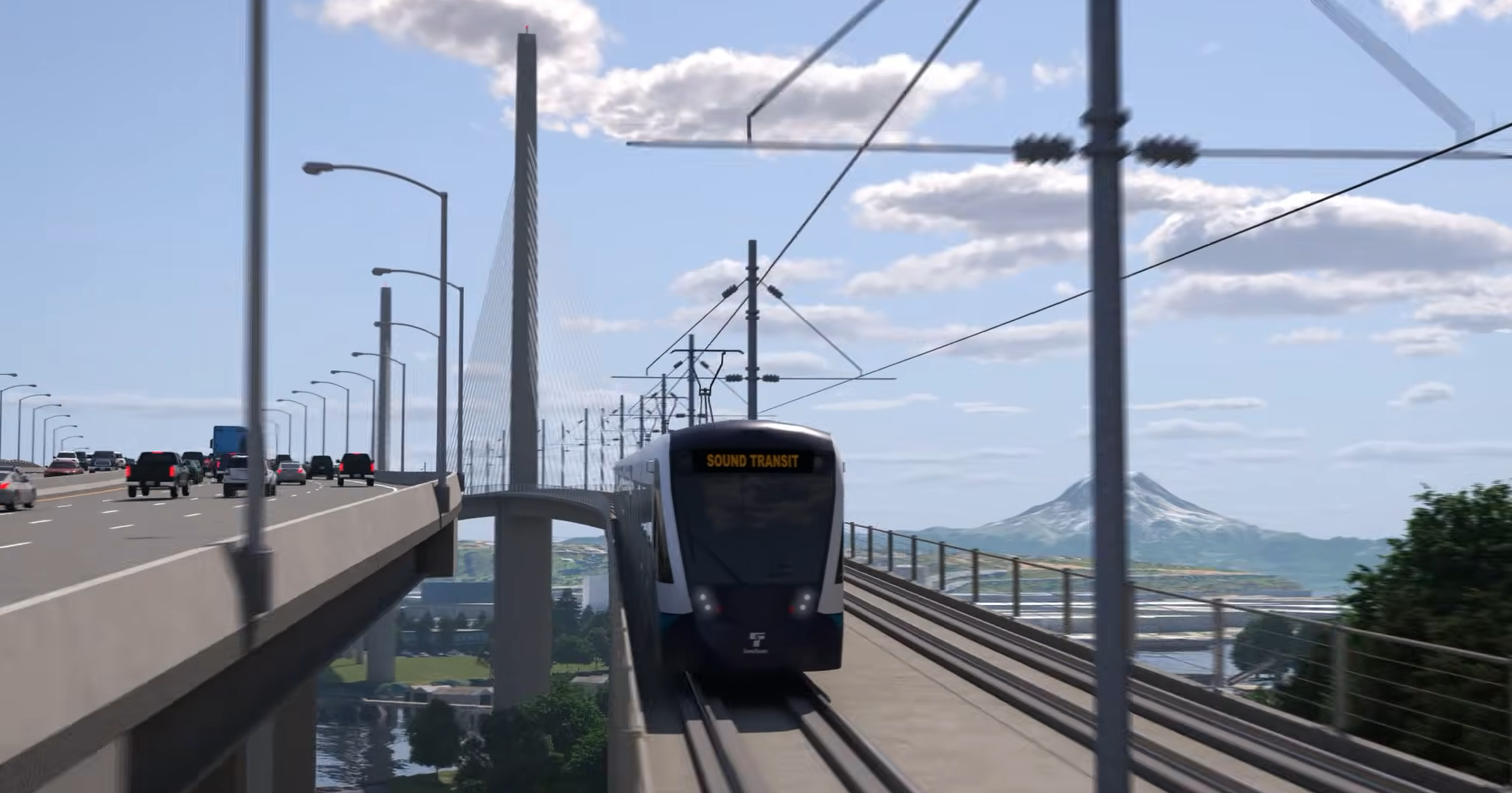
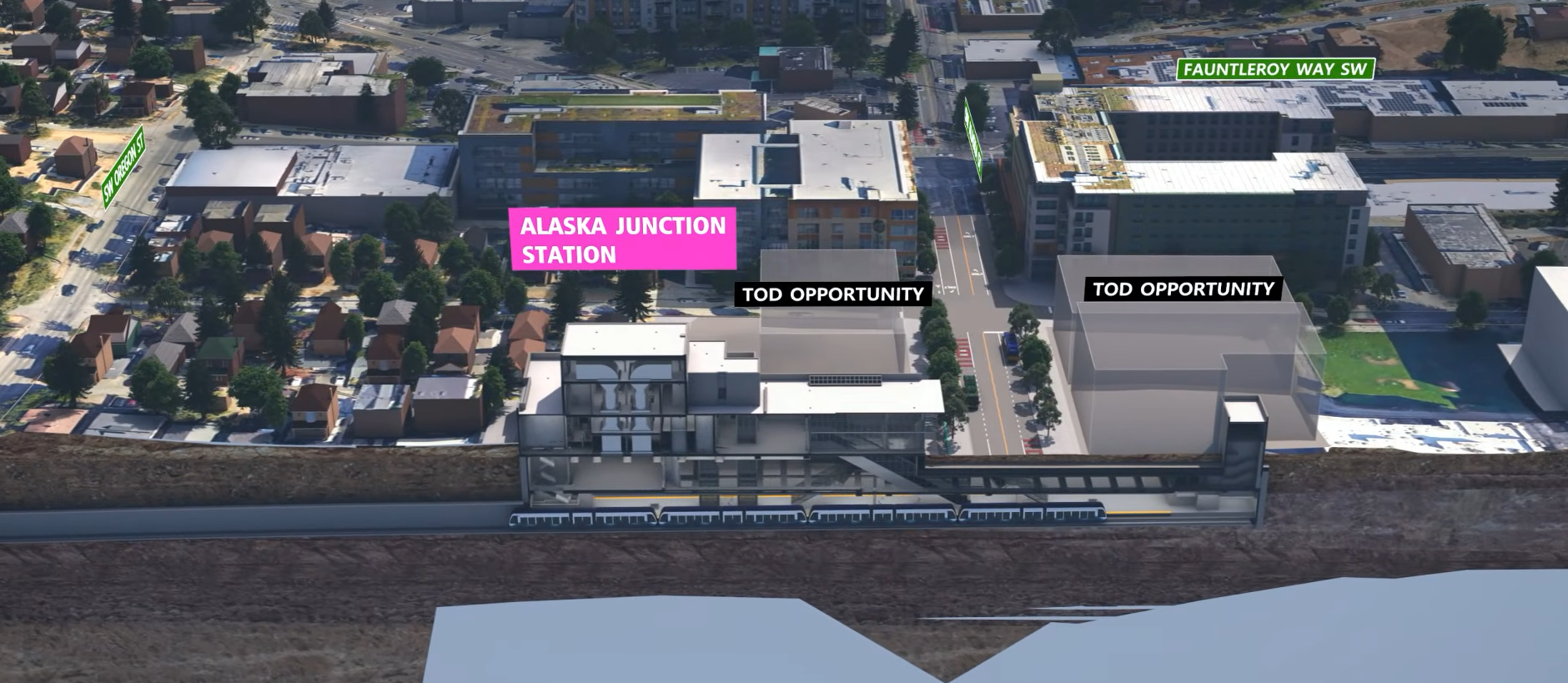
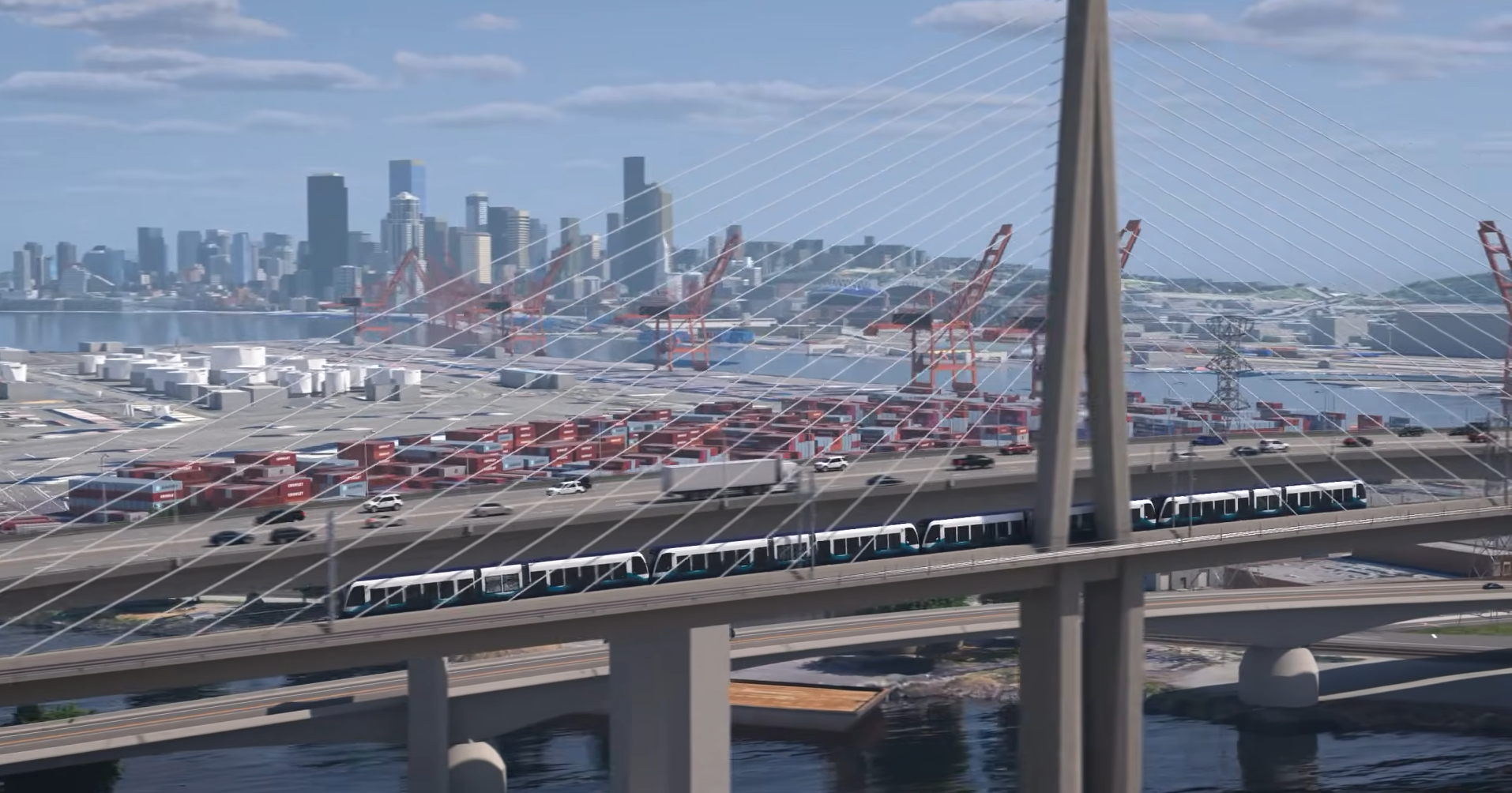
Sound Transit has released a new flyover video giving future passengers an aerial view of what the light-rail line to West Seattle will look like. The video marks an important milestone: the West Seattle Link project has officially reached 30 percent design. That means the concept for the future line has been established and can now be refined, while its main features have already been determined. The project involves a 3.9-mile branch connecting SoDo with the Alaska Junction hub station, with an opening planned for 2035.
The video shows more than an attractive rendering; it represents the result of substantial internal work. Over the past two years, Sound Transit has celebrated the opening of several new sections, and attention has now turned to the next major project, known as “Line 3.” In the spring, however, the agency faced a serious budget gap, and the project could easily have been delayed or scaled back. A thorough cost-optimization process, known in English-language practice as value engineering, allowed West Seattle Link to remain on schedule. According to the agency, the line’s cost was reduced by more than $2 billion between 2024 and 2026 alone.
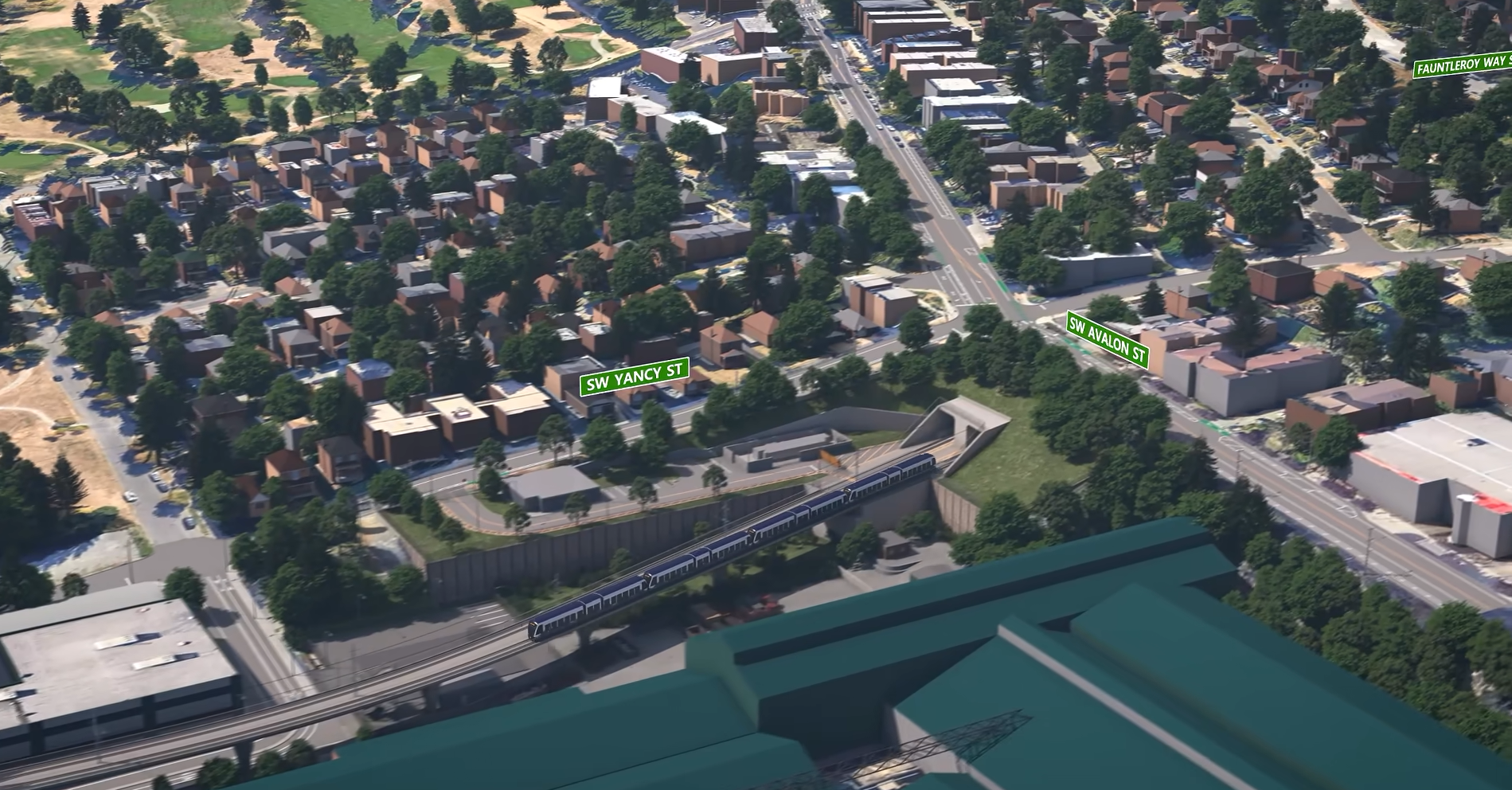
The savings, however, came at a real cost for passengers. Under the new plan, the line will enter a tunnel near the Nucor Steel plant in West Seattle, close to SW Yancy Street. At the same time, the planned station beneath Avalon Way SW, which was intended to serve the area’s rapidly growing section, has been canceled. Eliminating the station made it possible to redesign the alignment and tunnel portal in a way that avoids demolishing several prominent structures, including part of the West Seattle Health Club building. But there is an unwelcome consequence: unlike the station recently opened in North Seattle, which could theoretically be added later, the Avalon station cannot be restored even if Sound Transit’s finances miraculously improve or voters approve a new Sound Transit 4 funding package.
Additional optimization took place on August 13, when Sound Transit and the City of Seattle announced another change that is barely visible in the flyover video. A major power line currently running along the dedicated bus lane through SoDo will be relocated. The high-voltage poles and wires operated by Seattle City Light, carrying 230 kilovolts and 26 kilovolts, will instead be placed within the light-rail project’s footprint. As the city stated at the time, this will eliminate the need to move massive transmission lines to 6th Avenue S, substantially reducing construction and long-term impacts on neighboring properties and businesses. The change is expected to save the project more than $100 million and eliminate the risk of damaging other critical city transportation and water infrastructure.
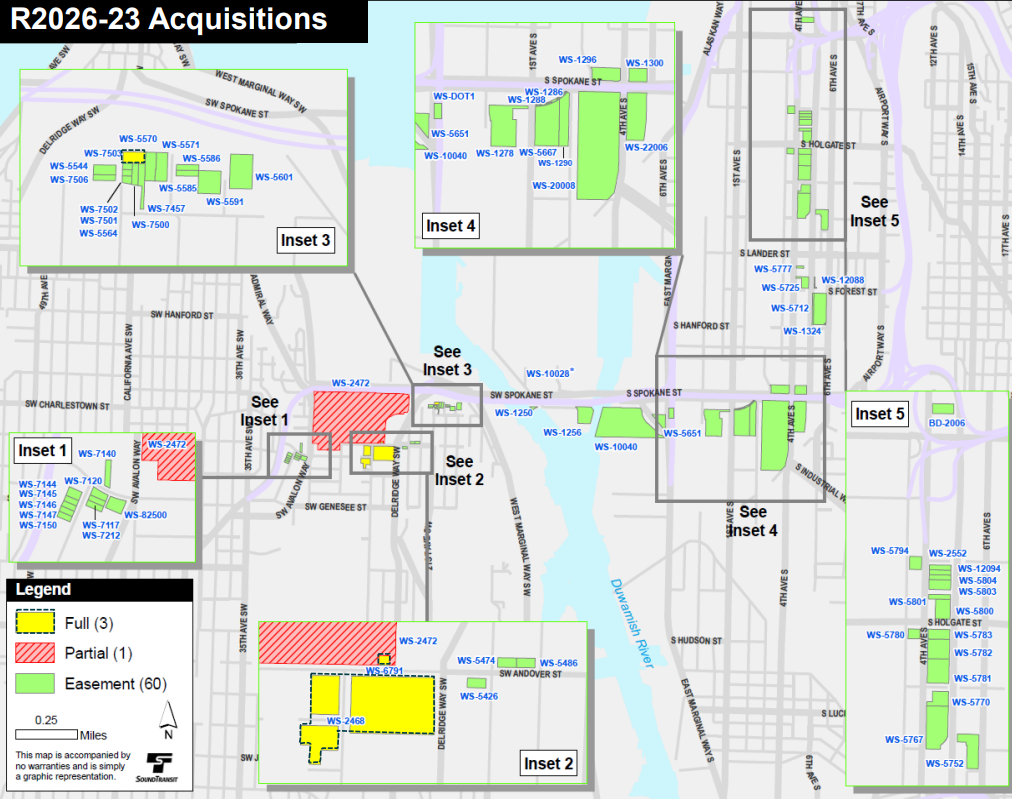
Following the May 28 board vote that balanced the larger Sound Transit 3 plan and kept West Seattle Link on the agenda, agency leaders have repeatedly emphasized how quickly they are moving toward construction. In August, the board unlocked an additional $765 million in funding, clearing the way for a contract for construction-support services, including preparations for crossing the Duwamish River. Just last week, the System Expansion Committee approved another property-acquisition package, including West Seattle Corporate Center, the former headquarters of pharmacy chain Bartell Drugs. The property will become a major staging area for trucks during construction of the tunnel to Alaska Junction. If the full board approves the decision later this month, it will be the fifth approved acquisition package, giving the agency’s real-estate team the green light to proceed.
The new flyover video makes tangible what usually happens behind the scenes, even if an opening date nine years away seems impossibly distant. Once Line 3 is fully integrated into the rest of the light-rail network after the Ballard Link extension opens, travel from Westlake Station to Alaska Junction will take 50 percent less time than the current C Line bus route. That would be a major improvement, but many obstacles remain. For now, transit enthusiasts can experience the project virtually—through YouTube.
A few terms help clarify the article. Value engineering is a method of reviewing a project to reduce its cost without sacrificing key functions; in this case, it saved the line from being scaled back. A headhouse is a station’s above-ground entrance building, where passengers enter the system and pay their fares; reducing the number of headhouses directly lowers costs. A tunnel portal is the point where an at-grade or elevated line enters a tunnel. An infill station is a station added later to an already operating segment; in the case of Avalon Way, that option has been deemed impossible. Finally, ST3 and the hypothetical ST4 are funding packages approved or proposed by voters to expand the Sound Transit network. Their fate will determine the timing and scale of projects such as Ballard Link, which could open as early as 2042 or as late as 2060.
The article’s main conclusion is this: West Seattle Link has survived and is moving toward construction, but it has done so by canceling a station and consolidating infrastructure, meaning that the price of the savings is reduced accessibility for part of the neighborhood. The $100 million saved simply by relocating the power lines is also telling, underscoring how expensive seemingly secondary decisions can be. Finally, the statement that the opening is still nine years away is a reminder that even with the current acceleration, major infrastructure projects in the United States remain lengthy, expensive and vulnerable to budget crises. That is why the release of the flyover video is more than marketing; it is also a signal that the project has entered a phase in which abstract plans are becoming concrete outlines of future rail, as The Urbanist notes.