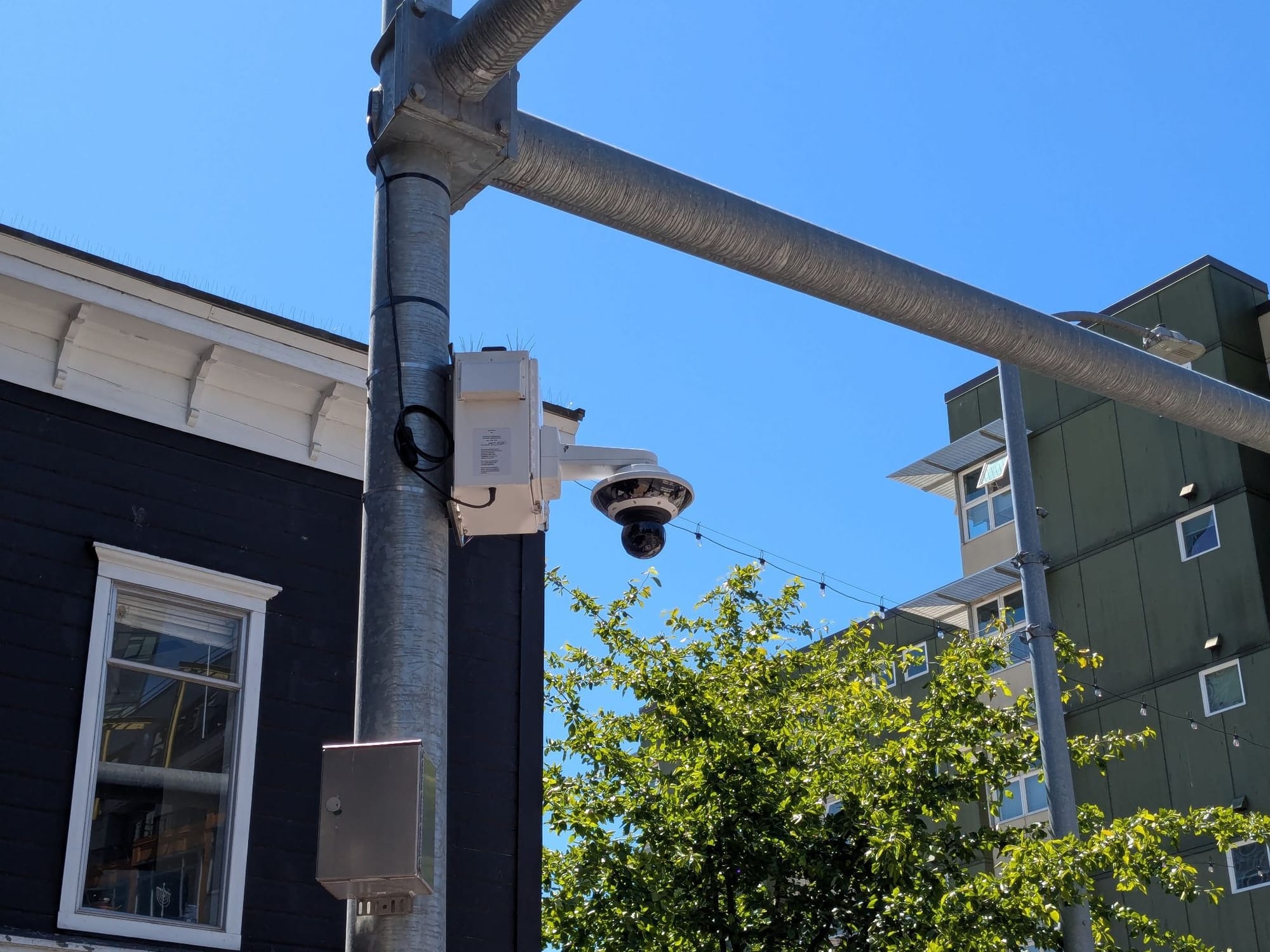
Today’s roundup: The Seahawks head to Las Vegas with a record-length injury list, while the Mariners have a finalist for two of MLB’s top awards in Parker Messick. Meanwhile, Seattle Mayor Katie Wilson has expanded the police surveillance program despite her own promises and the findings of an audit.
Seahawks head to Las Vegas with seven players missing practice—but there’s good news too
Seattle heads into this week’s game against the Raiders with a substantial injury list that could significantly affect the balance of the matchup. On Wednesday, the team released its first injury report of the week, and it made for grim reading: 15 players were listed, seven of whom did not take the field at all. Among those who missed practice were players Seattle has long relied on as cornerstones of the team: defensive tackle Leonard Williams (a stinger, caused by nerve irritation in his arm), quarterback Sam Darnold (ribs and quadriceps), tackle Charles Cross (ankle), guard Quinton Nelson (knee), and defensive tackle Brandon Pili (back). All five also sat out last Sunday’s game, when the Seahawks beat the Cardinals.
Head coach Mike Macdonald indicated as early as Monday that neither Darnold nor Nelson was likely to recover in time for Sunday. That means Drew Lock is expected to start at quarterback again, making this his second consecutive start in place of Darnold. But Lock himself was only a partial participant in Wednesday’s practice, as he deals with a right elbow injury and abdominal muscle issues. It’s an uncomfortable situation: the backup quarterback expected to lead the team in Las Vegas is also listed as limited.
The one genuinely positive sign came from wide receiver and return specialist Rashid Shaheed, who took part in the full practice. He missed the last two games with a knee injury and did not practice at all last week, so his return to full participation is an important step. Tight end A.J. Barner (finger) also practiced fully. 【meta:】
Also limited were guard Anthony Bradford (knee), linebacker Derick Hall (back), linebacker Uchenna Nwosu (ankle; he missed last week but was limited on Wednesday), Patrick O’Connell (toe), and Connor O’Toole (foot). Two players missed practice for reasons unrelated to injury: wide receiver Jaxon Smith-Njigba was given a rest day, while defensive tackle Jarran Reed was absent for personal reasons. It’s worth noting that “resting player” in an injury report does not mean the player is injured. It is a routine NFL practice in which a veteran is given time to recover, so a DNP listing for that reason is no cause for alarm.
By comparison, the Raiders (4-5) have just four names on their report: defensive tackles Thomas Booker (ankle) and Fadol Brown (shoulder, back), as well as center Trey Zun (concussion), were limited, while tight end Ian Thomas (ankle) practiced fully. 【meta:】 The contrast is striking: Las Vegas comes into the game considerably healthier, and given Seattle’s personnel problems, that is a risk factor in its own right.
A few details may not be obvious to those who don’t follow the NFL closely. DNP in injury reports stands for “did not participate,” meaning the player did not practice; “limited” means partial participation, while “full” means a full practice without restrictions. Leonard Williams’s “stinger” is an injury to the brachial plexus or nerves in the neck, causing a burning sensation and numbness in the arm. It often clears up on its own, but can sometimes linger and calls for caution on contact. It is also important to remember that Wednesday’s status is only a starting point: final decisions on game participation are made after Thursday and Friday practices, and for Sunday’s game the team must follow the league’s injury protocols, especially for concussions, such as the one sustained by Raiders center Zun.
The report’s key takeaway is simple: Seattle’s offense remains in the most vulnerable position. Darnold’s and Nelson’s absences leave two key figures out of the lineup, while Lock’s limited availability raises questions about the stability of the quarterback position itself. The defense is also weakened: without Williams and Pili, and with Nwosu limited, its ability to pressure the opposition could suffer. Shaheed’s return gives the team another option on special teams and in the vertical passing game, but one player is unlikely to make up for losses among the starters. The game in Las Vegas kicks off at 1:05 p.m. local time, while the Seahawks Radio Network broadcast begins at 11:00 a.m. with pregame coverage.
With the Seahawks at 5-4 and fighting for a playoff spot in a crowded NFC West, every road loss could prove costly. That makes Friday’s injury report more important than usual: it will show whether Lock can take the field without restrictions and whether at least some of the injured players will return by Sunday. For now, Seattle enters the week with the longer list of absences of the two teams—and that is a worrying backdrop to a road game against an opponent that, unlike the Seahawks, has almost no personnel problems.
Parker Messick: How a Mariners rookie became a finalist for two top awards in his first season
Sometimes a baseball career takes an unexpected turn, defying the usual rules. Parker Messick, a pitcher for the Seattle Mariners, had such an outstanding debut season that he became a finalist for two prestigious awards: Rookie of the Year and the Cy Young Award, given to the league’s best pitcher. These categories usually occupy different worlds: rookies rarely compete with established pitching stars, and the top-pitcher award almost always goes to someone with years of consistent performance behind them. Messick upended that pattern. In a conversation about his first season, published on the official MLB website, he explains what made it possible.
Messick’s biggest weapon is his changeup, a pitch considered one of the hardest in baseball to master—and one of the most devastating for hitters. The idea is that the pitcher uses the same arm motion as on a fastball, but the ball itself travels noticeably slower. The hitter sees the familiar mechanics and prepares for a fast pitch, but instead gets a slower one that also drops slightly at the last moment. As a result, the hitter either swings too early or misses altogether, and the ball winds up on the ground. For Messick, this pitch is not just one part of his repertoire but the foundation of his game: it helps him make up for a fastball that isn’t particularly fast and keeps hitters constantly guessing. It is variety and the ability to change speeds, rather than raw power, that have taken him into the elite ranks.
It is worth explaining the awards themselves. The Rookie of the Year award goes to the season’s best rookie, as determined by a vote of journalists in each of the two leagues. The Cy Young Award, named for the legendary Cy Young, goes to the best pitcher, and being named a finalist is already a major honor. It is extremely rare for the same player to appear on both lists, because doing so requires a rookie to put up numbers befitting one of the league’s leading pitchers right out of the gate. The double nomination shows that the Mariners have found not just a promising rookie but a potential rotation leader for years to come.
According to the interview preview, Messick talks not only about technique but also about the experience of a debut season—how to manage the pressure of expectations, work on his pitches, and constantly adapt to hitters who quickly learn a rookie’s weaknesses. The key takeaway for the club and its fans is simple: Seattle has found a pitcher it can build a long-term strategy around. For Messick himself, that means next season will be even harder: opponents already know his changeup and will be preparing for it. But if he can keep his pitches under control and continue expanding his repertoire, talk of the Cy Young Award could become a regular fixture rather than a first-year sensation.
Seattle Mayor Wilson approves expanded surveillance despite her own campaign promises
Seattle Mayor Katie Wilson, who ran on an anti-surveillance platform, has announced the immediate expansion of the Seattle Police Department’s (SPD) video surveillance program. Her reversal came after she commissioned an audit from New York University’s Policing Project to assess the risks to civil rights. But the audit, as it turns out, did not so much justify the expansion as confirm activists’ concerns: the report explicitly cites “significant gaps” in the system’s governance, while the mayor seems to have chosen to hear only the findings that suited her.
The program centers on the Real-Time Crime Center (RTCC), which receives images from police cameras, Seattle Department of Transportation (SDOT) cameras, and even private cameras at commercial properties. Early in her term, Wilson paused the installation of new cameras in the nightlife district of Capitol Hill and around Garfield High School in the Central District, and allowed cameras in the Stadium District to be switched on only during World Cup matches. Those restrictions are now being lifted: cameras in the Stadium District are being activated immediately, and the purchase and installation of new ones in Capitol Hill and the Central District will proceed at full speed. In her statement, the mayor said that, “after reviewing the evidence, recommendations, and available safeguards,” she had come to believe in “the important and responsible role of the RTCC in Seattle’s public safety system”—a claim that sits uneasily with the report itself, which states in black and white: “Unless SPD fully ceases retention of RTCC data, it will not be able to fully eliminate the risk of such data being obtained and used for purposes prohibited by Washington law.”
It is worth explaining what the audit’s authors mean by “indiscriminate surveillance.” Unlike targeted monitoring of a specific suspect, a real-time crime center gathers information on everyone, including people suspected of no wrongdoing. And because the RTCC brings together multiple technologies, centralizing the data enables surveillance that is far more powerful and intrusive than any individual system. The audit was conducted by a team of lawyers, who made 19 recommendations they believe SPD should follow if it continues the program. They include a five-day data retention limit (which SPD reportedly already follows), a policy on retaining clips connected to investigations, publishing a list of tools in use twice a year, and regular internal reviews. However, as The Urbanist wryly points out, some recommendations merely tell SPD to meet commitments it made back in 2024—for example, creating a public dashboard on RTCC use and developing a “unified policy on surveillance technologies.” It is unclear why the city needed to pay New York lawyers $223,000 to tell the police to do what they had already promised to do.
Especially troubling is the fact that nearly a year and a half after the center began operating, on May 20, 2025, SPD still has not established basic policies for its use. Auditors noted uncertainty about whether surveillance can be used for minor offenses such as loitering or stealing a pack of diapers. The mayor declined to comment, citing a future University of Pennsylvania report that will not be published until the end of next year. The result is that the city may not have a clear understanding of how the police are using the system until two and a half years after its launch. Protests are another gray area: demonstrations are automatically captured by cameras if they take place in areas where cameras are installed. The audit recommends developing a policy on this, but imposes no specific requirements. During the World Cup, meanwhile, SPD opened a single case for the entire tournament, contrary to its own rules, and streamed live footage through the RTCC.
The story of the private cameras is also revealing. Twenty-three cameras at three commercial properties in Capitol Hill—the very neighborhood where Wilson had “paused” surveillance—were connected to the police center without notifying residents. Local nurse Ryan Thalen, a member of the Communities Not Cameras group, learned about it from a journalist at The Urbanist after a press conference: “This is a violation of our privacy.” SPD also bought about a hundred devices for integrating private cameras, although technology director Nick Zaichowski says they do not plan to distribute them for now.
The mayor tried to distance the program from comparisons with the notorious Flock, whose license plate recognition cameras have drawn criticism across the country: “Our system is operated by Axon, and while there are obviously similarities in the technology, I think Axon has a more responsive reputation.” Yet in 2025, Axon had $31.9 million in contracts with Immigration and Customs Enforcement (ICE), and last week it faced a class-action lawsuit alleging “egregious violations” of California’s data privacy laws. Local cybersecurity expert Noah Williams explains the difference: “Like its competitors, Axon sells a centralized, vendor-controlled system that municipalities rent. Unlike Flock, it gives cities a false sense of control over the recordings.” NYU did not analyze the cybersecurity risks of the data being collected at all, while the audit explicitly warns: “Once data exist, no city or agency can guarantee they will never be shared.” The possible channels for disclosure include public records requests, subpoenas served on the city or Axon, and, of course, illegal access.
The broader context makes Wilson’s decision especially controversial. She promised to “protect the city from Trump,” but now, in Thalen’s words, she is “giving him the key to the door”: ICE plans to launch an internal surveillance program in Seattle early next year, and access to the city’s camera archives could prove a convenient tool. The audit, for its part, acknowledges frankly: “While the potential benefits of the RTCC, as described by the city, are plausible, the current research base supporting these benefits is thin,” and research into the effects of conventional cameras on safety is “best characterized as mixed.” In other words, there is no scientific evidence that expanding surveillance will make Seattle safer—only assurances from the police. The city’s experience points to the same conclusion: previous audits, including an October report from the Office of Inspector General (OIG), have already documented SPD’s failure to meet its own commitments. For example, privacy zones have not been masked on all cameras, with the department citing a shortage of technicians and staff turnover. “A department that doesn’t follow its own rules cannot be trusted with more cameras,” Communities Not Cameras concludes. The group calls NYU’s recommendations “half-measures”: “More oversight, audits, and targeted use won’t change the fact that this system can and will be abused. Seattle has a long history of police violence and corruption and a short history of community healing. What will make us safer is addressing poverty, mental health, and the root causes of crime.” One hopes Wilson, who promised to ask “tough questions about protecting civil liberties under a federal administration attacking vulnerable communities,” will hear that argument—though her recent actions suggest otherwise.