A historic women's hockey match at Madison Square Garden, the tragic death of a gray whale in a Washington river, and the arrival of new orcas in Seattle waters.
Historic win and a new era: women's hockey conquers Madison Square Garden
On Saturday evening in New York, an event fans and players had long awaited took place: for the first time in history, a Professional Women's Hockey League (PWHL) game was held at the legendary Madison Square Garden. The New York Sirens hosted the Seattle Torrent in front of a sellout crowd, and the night became a symbol not just of athletic competition but a true breakthrough for women's sports.
The puck-drop ceremony that Saturday marked the beginning of a new era. As Queens resident Aymes Davis noted in a CBS News report: “Now we have women in space. We have women on the ice. Women are everywhere.” For many fans, such as season-ticket holder Patricia Fraiser-Morales, the sellout at Madison Square Garden was not a surprise but a long-overdue development. “Women’s sports have come a very long way, and it’s just an incredible feeling,” she said. Her sentiment was echoed by Myrna Morales-Fraiser, who pointed to other successful New York women’s teams — the Liberty (basketball) and Gotham (soccer) — to which hockey has now been added.
The occasion was made even more significant by the presence of tennis legend and equality icon Billie Jean King, a 39-time Grand Slam champion. She, whose career began at a time when women’s sports received little attention, was deeply moved. “My dream has always been to help women’s sports grow, because I come from a time when nobody cared about women in sports. It was awful. So when I see this, and I’m so happy I’m still alive to see it, you can’t imagine,” King said. Her words reflect the scope of the moment: the game was the Sirens’ first home match at the famed arena and the first women’s hockey game to draw such a huge crowd.
Young players were inspired as well, including members of the New Jersey Colonials youth team coached by Sirens’ mentor Greg Fargo. For players like Quinn Doherty, the game served as a beacon of possibility: “Maybe this will start to grow and grow, and will inspire more girls.” They dream of one day seeing their names among the banners of legends in New York’s premier arena. The win in this historic match was the perfect culmination for fans: the New York Sirens secured a thrilling 2-1 victory in a shootout, adding sporting drama to an already meaningful night. The evening proved that women’s hockey not only deserves a big stage — it’s ready to break records and inspire a new generation of athletes.
Death of a gray whale in the Willapa River: the story of a lost giant
The story of a young gray whale that became a sensation for several days after swimming 20 miles inland up a river in Washington state ended tragically. The animal, nicknamed on social media “Willapa Willie,” died, leaving questions about the reasons for its unusual journey and reminding people of the fragility of marine giants.
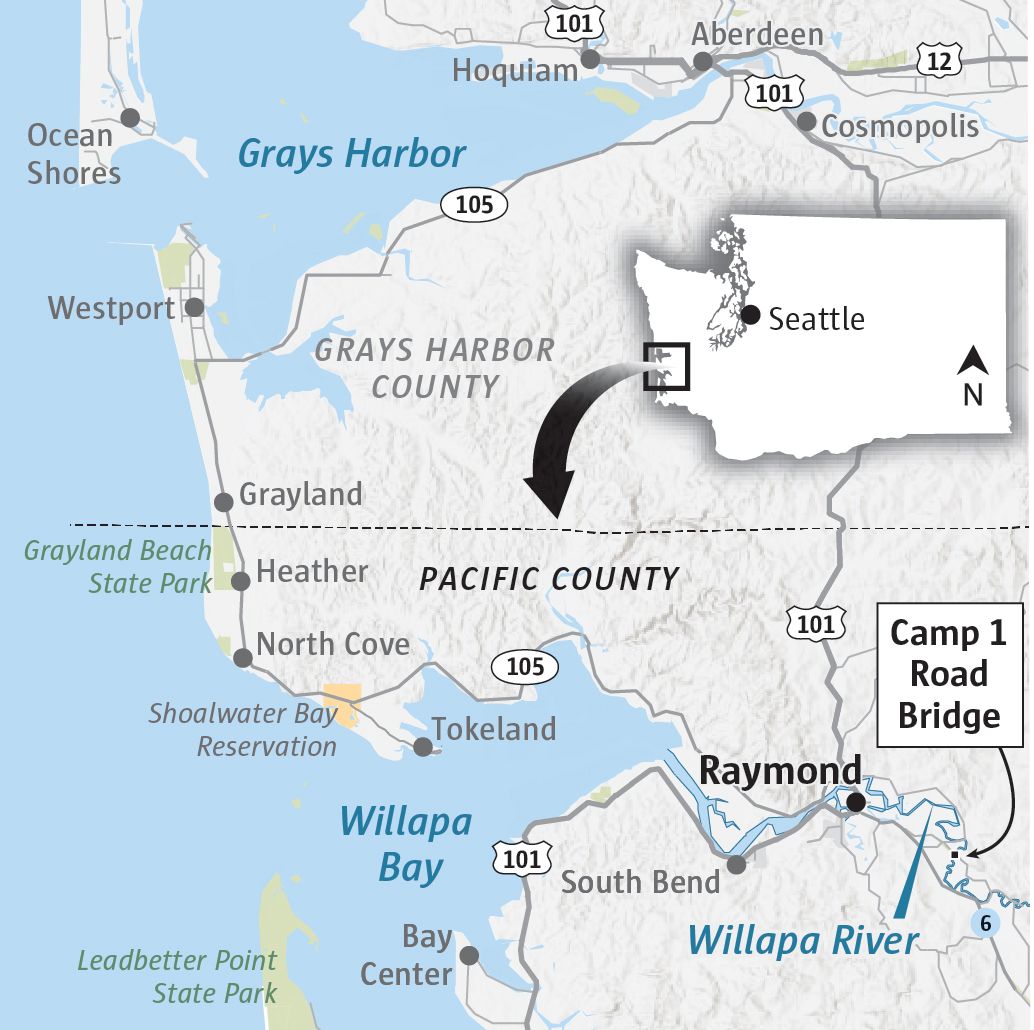
According to nonprofit Cascadia Research Collective in a Facebook post, the whale was first seen in the north branch of the Willapa River on April 1. Per The Oregonian, it entered the river from Willapa Bay and traveled east along Highway 101, passing the towns of South Bend and Raymond. The unusual sight quickly went viral: videos showed the enormous animal — at times nearly half the width of the river — periodically spouting through its blowhole, and its light-speckled tail appearing among reeds on rocky banks. Initially, researchers estimated the whale, though thin, was acting normally and had no visible injuries, so they decided to monitor it to determine whether intervention was necessary.
However, searches by researchers, the state Department of Fish and Wildlife, and representatives of the Chinook and Shoalwater Bay tribes were unsuccessful on Friday. On Saturday the young whale was found dead, floating in the river. Cascadia Research Collective urged the public to stay away from the area while specialists and local partners assess the safety of conducting an examination of the carcass. This incident was at least the third gray whale death on the West Washington coast in recent days — on Thursday two dead whales were found on Copalis Beach.
Whales entering rivers is uncommon, and experts explain that prolonged time in freshwater can cause health problems. Gray whales, according to NOAA Fisheries, typically inhabit only the northern Pacific Ocean. Their appearance so far upriver, away from their usual salty environment, itself signals distress. The Chinook Tribe, according to the Chinook Observer, will hold a private ceremony to honor the whale, and local authorities working with federal agencies are seeking permits to recover the carcass in accordance with tribal traditions, highlighting the deep cultural and spiritual significance of these animals to the region’s Indigenous peoples. This sad story is a reminder of the complex interactions between marine life and human environments, and of the importance of scientific monitoring and respect for cultural practices in such situations.
The mystery of three: unfamiliar orcas spotted in Seattle waters
Residents and visitors of Seattle witnessed a rare and thrilling sight: a previously unseen group of orcas appeared in Puget Sound against the backdrop of the city skyline. Their unexpected visits last month delighted whale watchers accustomed to a certain set of “local” residents. According to The Independent, three mysterious orcas, not listed in researchers’ catalogs, made a real journey that began off Alaska and brought them to the skyscrapers of the American metropolis.
For scientists who maintain detailed records of orcas in the Salish Sea (between Washington state and the Canadian province of British Columbia), the arrival of this trio was a surprise. Each animal is identified by unique markings on its dorsal fin and the saddle patch — the grayish pattern behind the fin. None of these three “faces” was listed in databases. After investigation, researchers from Orca Conservancy found photos of the same family taken last year in Alaskan waters. The group, officially designated T419, T420 and T421 (where “T” denotes “transient”), consists of an adult female and, apparently, two of her offspring, one of whom is already a large adult male.
One key clue indicating the visitors’ distant origin was unusual scars on their bodies — round bite marks from cookiecutter sharks, also called “cookie sharks.” These small parasitic sharks inhabit the open ocean, attach to large animals and remove chunks of flesh, leaving characteristic wounds. Such scars aren’t seen on local orcas, which usually stay closer to shore. “We can’t say with 100 percent certainty exactly where they came from, but the leading hypothesis is that they’re from Alaska, possibly the Aleutian region,” Orca Conservancy’s Shari Tarantino wrote in an email.
What brought these predators so far from home? Experts say the reason may be fairly “culinary.” This group belongs to so-called transient (or migratory) orcas, which prey on other marine mammals — seals, sea lions and porpoises. Unlike the endangered resident orcas that feed almost exclusively on salmon, transient orcas follow their prey. Seal-rich waters of the Salish Sea may have offered an appealing target for a sort of “culinary expedition.” “They very quickly became everyone’s favorites,” Tarantino notes. “People spend their whole lives hoping to see an orca from shore, and these three gave them that opportunity in spades.” Enthusiast photographer Hongmin Zheng, who spent ten hours searching for the mysterious family, called the encounter “epic.” Their appearance against an urban backdrop is a vivid reminder of wildlife that sometimes appears in the most unexpected places, giving people unforgettable experiences and presenting scientists with new puzzles to study.