News from Seattle: a basketball club is losing players to injuries, the city faces a housing affordability crisis, and the women’s team keeps its star center for future success.
Desmond Claude leaves Washington basketball program
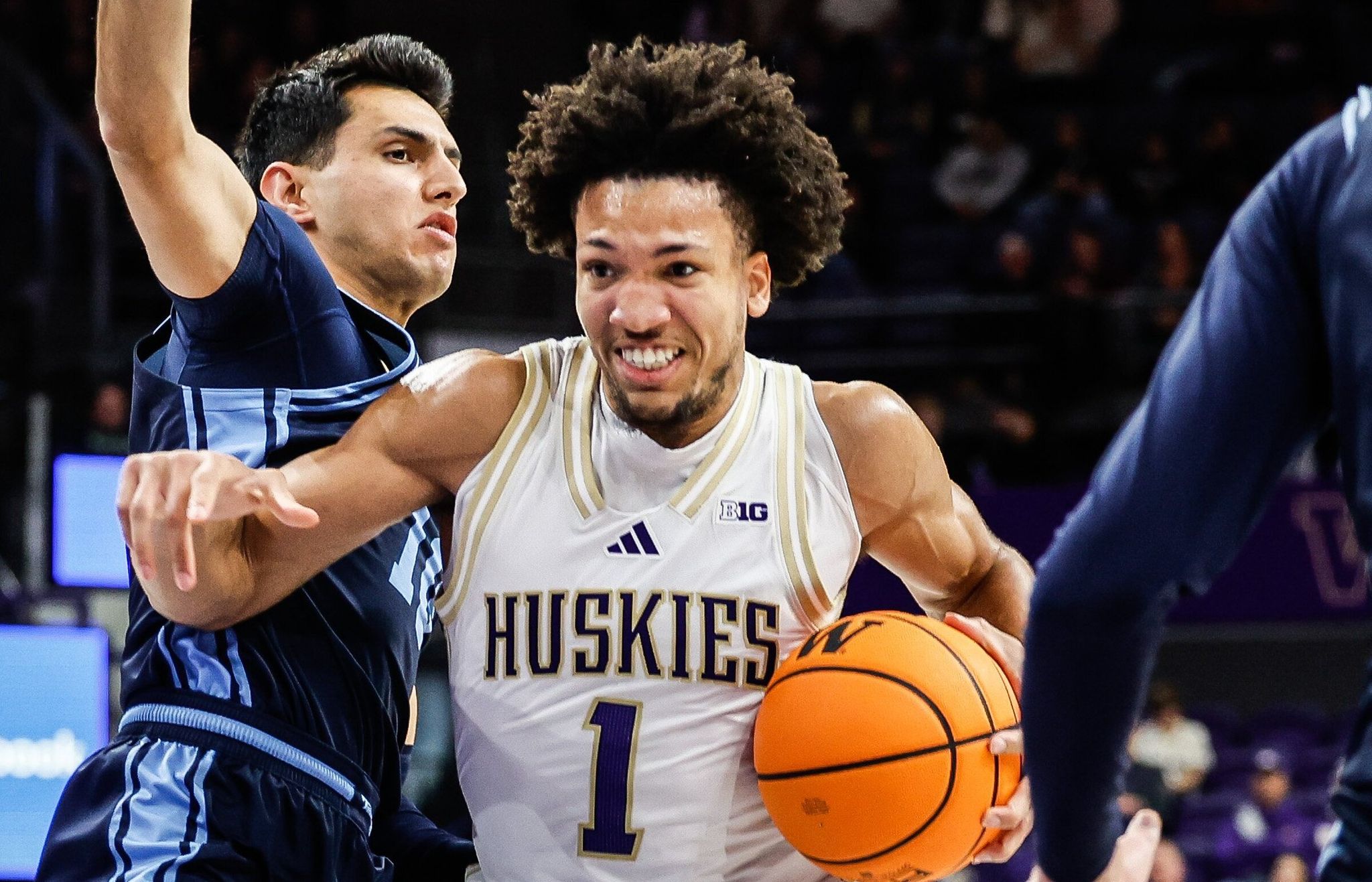
The Washington Huskies basketball team continues to lose players through the NCAA transfer portal. The latest is senior guard Desmond Claude, whose departure is complicated by a serious injury and a decision to focus on his health. This story is more than another line on the transfer list — it illustrates how the pressure to return and the desire to help the team can conflict with medical advice.
According to reports, Desmond Claude, who played just 12 games for the Huskies last season, has entered the transfer portal and will seek a medical hardship waiver to gain a fifth season of college eligibility. In a social-media statement cited by The Seattle Times, Claude traces the roots of his departure to a severe ankle injury sustained in the preseason. He was diagnosed with a Grade 3 sprain with two fully torn ligaments and one partially torn ligament. Doctors recommended at least 12 weeks of recovery, but the player and coaching staff, motivated by a desire to help the team, decided to attempt a return after just five weeks. That premature comeback, Claude explained, led to unbearable pain, swelling, and a subsequent knee injury that ultimately forced him to stop playing and concentrate on rehabilitation. His last game for Washington was against Michigan on Jan. 14, when he logged eight minutes and did not score.
For context, two terms are important to explain. The NCAA Transfer Portal is the official database where a student-athlete posts their name to notify other universities of their intent to change teams. It does not guarantee a transfer, but it opens the process of seeking a new program. A medical hardship waiver is a petition a player can file with the NCAA to obtain an extra year of eligibility if they missed a significant part of a season due to circumstances beyond their control, such as a serious injury. A successful waiver would allow Claude, despite his senior status, to play a fifth season at another school.
Claude’s departure is the fifth instance this spring of a player leaving the Huskies program via the transfer portal, following Zoom Diallo, J.J. Mandakwit, Bryson Tucker, and Cortland Maldrue. This is a major blow to a roster that finished last season with a losing record (16–17). The coaching staff now has only seven scholarship players available: Hannes Steinbach, Wesley Yates III, Frank Kepnang, Lathan Somerville, Jasir Rencher, Nikola Jepina, and Madi Traore. Such a mass roster turnover presents the team with a huge task of recruiting new players in the offseason.
Claude’s career stats across four college seasons at Xavier, USC, and Washington are solid: averages of 12.4 points, 3.3 rebounds, and 2.9 assists per game. However, his brief, injury-marred tenure in Seattle prevented him from having the impact all parties had hoped for. His story raises important questions about balancing a team’s short-term competitive goals with the long-term health of the athlete. Claude’s decision to pause his career for recovery, though forced, appears responsible. His immediate goals are full rehabilitation and finding a new program where he can finally fully show the potential he demonstrated, including at title-winning Xavier. For the Huskies, a critical period of rebuilding a new core has begun.
Seattle and Washington state affordability crisis
Overview: Rising costs for basic needs like housing and childcare are creating growing economic anxiety among residents of Seattle and across Washington state. Political analysts say this issue is moving to the top of the political agenda, fueling tensions and shaping election outcomes at all levels.
According to analysis by former state senator and KING 5 political commentator Reuven Carlyle, Washington state — and especially Seattle — is facing an acute affordability crisis. The cost of living is rising rapidly, with prices for key expense categories such as housing and childcare having literally “skyrocketed.” For example, housing in Seattle increased by roughly 15% in just one year. This financial pressure is compounded by rising gasoline and grocery prices, creating a growing sense of economic anxiety among the population.
As Carlyle notes in a piece for KING5.com, this phenomenon is not purely local — global economic forces are also at play. However, public frustration increasingly turns toward political leaders, producing a “blame game” over who is responsible for the crisis. That frustration has become powerful political fuel. Affordability has played a notable role in recent campaigns, including the Seattle mayoral race, and was even a factor in the 2024 U.S. presidential election. Growing pressure from voters seeking simple explanations for complex economic problems is feeding political populism.
Parties are proposing diametrically opposed solutions. Democrats typically favor public investment in affordable housing construction, expansion of childcare infrastructure, and a transition to renewable energy. Republicans point to high taxes and excessive regulation as the root causes that, in their view, restrain the economy and raise costs. Carlyle emphasizes that the problem is indeed complex, shaped by both market forces and policy choices.
The analyst also warns of potential risks associated with some proposed measures. For example, initiatives like a “millionaire tax” in Washington raise concerns about possible business flight and job losses. Affordability is closely linked to labor-market health. Over the past two years, an estimated 35,000 tech-sector jobs were affected by cuts or restructuring, and overall employment growth is shifting away from Seattle and Washington state to other regions. Thus, the affordability crisis is not merely a matter of high prices but a complex problem affecting the region’s economic competitiveness and future prosperity.
Star center Ezi Magbegor stays with the Seattle Storm
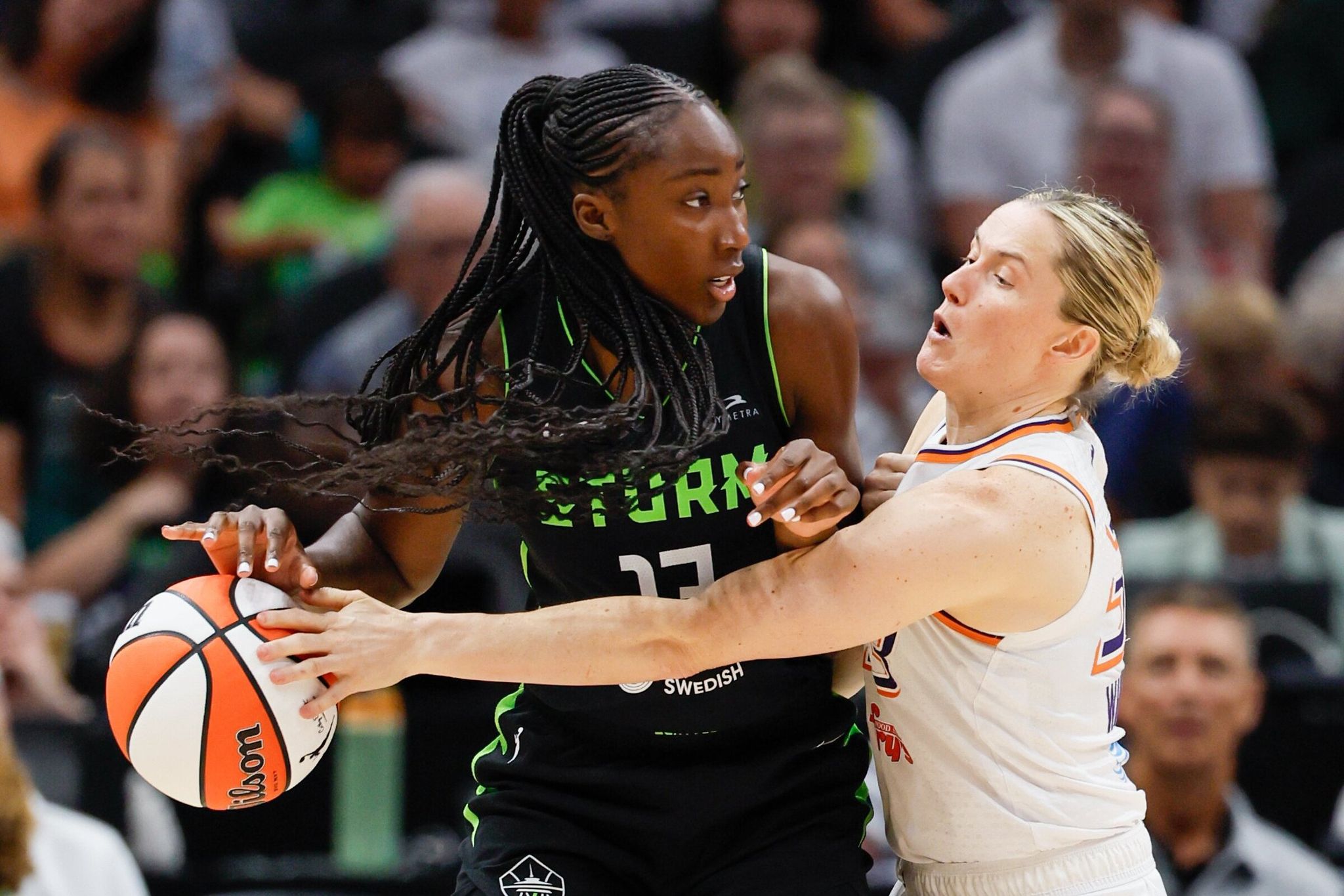
In women’s basketball, one team has achieved an important measure of stability. The Seattle Storm have retained a key piece of their roster — center Ezi Magbegor — a significant development amid a large-scale roster overhaul. Details of the agreement were not disclosed, but the fact that the deal was reached speaks volumes.
Ezi Magbegor, an Australian player selected by the Storm in 2019, will officially continue her career in Seattle. The Seattle Times reports that the club used a special “core designation” right to secure exclusive negotiating rights with the player, which led to the successful deal. For Magbegor, Seattle has become a real home. “When I think of home, I think of Seattle. I’m so excited to be back in the city and the organization that mean so much to me,” she said. This is especially meaningful given that she is the only player remaining with the team from their last championship era (the article mentions 2019 as her draft year and a championship connection; in reality the Storm won the WNBA title in 2020, not 2019, but the article refers to the player’s link to the franchise’s championship past).
Keeping Magbegor appears to be a strategic anchor for the Storm, who are undergoing major changes. After finishing last season 23–21, the team lost its top five scorers in free agency, including stars such as Nneka Ogwumike, Skylar Diggins-Smith, and Brittney Sykes. In that context, retaining the 26-year-old center, an All-Star in 2023, signals an intention to build a new competitive team around a proven leader. General manager Talisa Rey emphasized the move’s importance: “From the start, bringing Ezi back to Seattle was a priority for us. She means a lot to this organization and our city.” Rey also highlighted Magbegor’s growing impact: “On the court she makes a real difference defensively with her ability to control space, defend the rim, and disrupt offenses. She’s our backbone. Equally impressive is how she’s expanding her game and her voice. The next chapter is about fully stepping into that role.”
Statistically, Magbegor is one of the league’s top defenders. Last season she led the WNBA in blocks (96), earning a spot on the All-Defensive Second Team. Her averages were 9.7 points, 6.0 rebounds, 1.7 assists, and 1.7 blocks per game. Her presence in the paint and ability to “shut down” the rim make her indispensable to the team’s defensive schemes. Now, with new head coach Sonya Raman, the Storm plan to build around a young core: in addition to Magbegor, that includes 20-year-old Dominic Malonga, 24-year-old Jordan Horston, and incoming rookies the team will select at No. 3 and No. 14 in the first round of the upcoming WNBA draft. The club has also been active in free agency, signing guard Natisha Hiedeman to a two-year, $1.5 million contract and reportedly adding center Stefanie Dolson. All of this indicates the Seattle Storm are not merely trying to tread water after losing stars, but are deliberately creating a new, balanced team with experienced and ambitious Ezi Magbegor as the foundation for the franchise’s next success.