
Three wildfires burn on the outskirts of Spokane — the second-largest city in Washington state — after they surged over the weekend. Hundreds of structures have been damaged, and tens of thousands of people have been forced to leave their homes. As of Monday morning, all three fires — Old Trails, Autumn Lane, and Fairview, known together as the Spokane fire complex — had 0% containment.
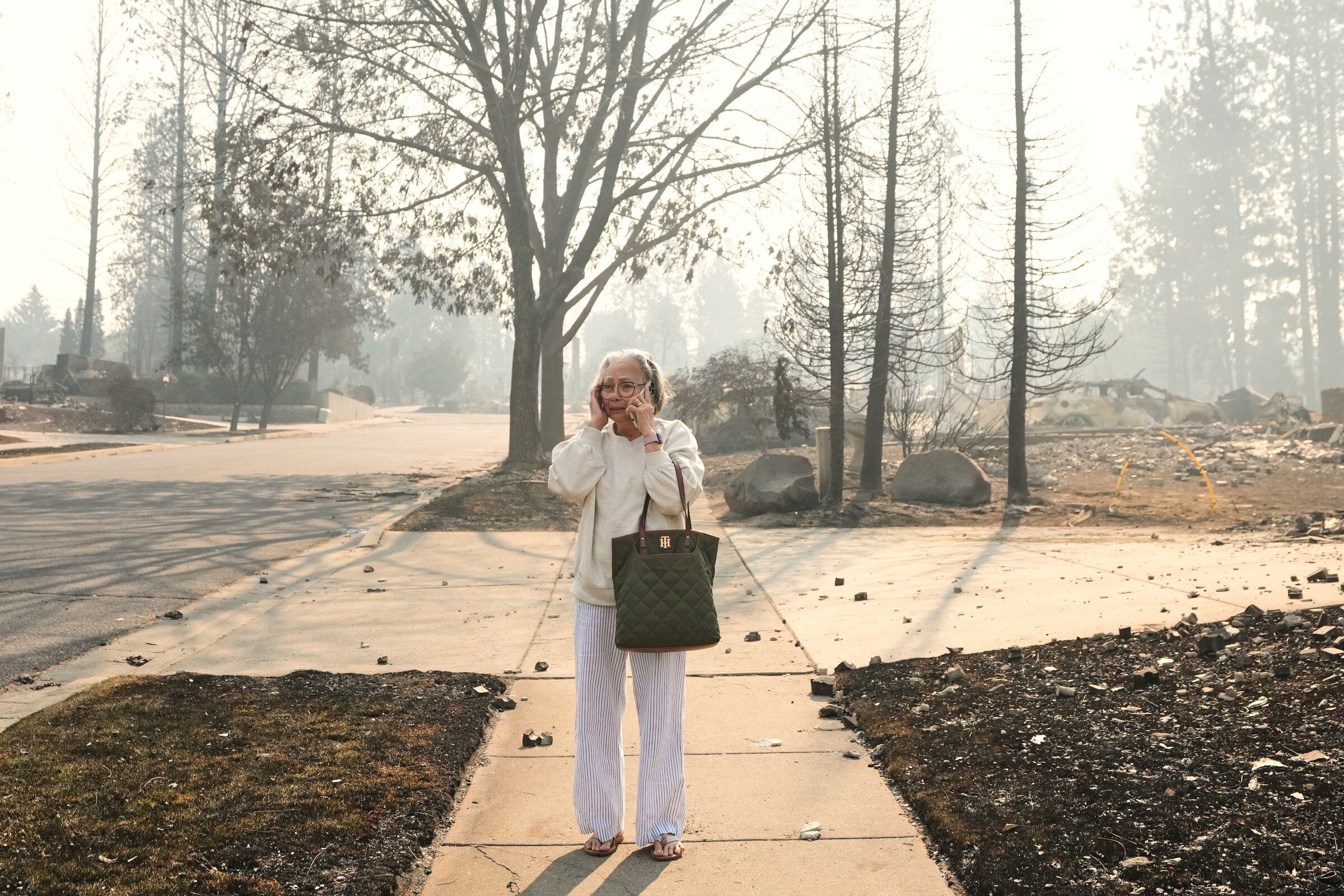
The scale of the disaster is enormous: more than 60,000 people have been ordered to evacuate immediately, and about 700 buildings, including homes and outbuildings, have been damaged. Thousands of people are without power, and officials have issued the city’s highest evacuation level, “Go Now!” for the northern parts of Spokane. At this time, there have been no confirmed deaths or injuries, but officials are already calling the blaze likely the most destructive disaster in Spokane’s history.
The fires began on Saturday in the vegetation and, within minutes, became an inferno due to strong winds. Two of them crossed the Spokane River and, within hours, swept through suburban neighborhoods, leaving a trail of devastation behind. The cause of the fires is under investigation, but according to the incident coordination center, the source of the flames is “human.” That doesn’t necessarily mean arson, only that the fire was not caused by lightning. Weather was hot, dry, and windy — conditions meteorologists described as an “especially dangerous situation.”
The fires are massive: Old Trails has grown to 3,619 acres, Autumn Lane to 3,351 acres, and Fairview to 1,056 acres. By Sunday evening, firefighters had stopped the advance of Old Trails, but the battle continues. About 900 firefighters from across the country are fighting the flames, using airplanes and helicopters to drop water and fire-retardant chemicals. FEMA has provided funding for the firefighting effort, and the governor has requested additional help — food, housing, and search-and-rescue teams. Smoke from the fires is expected to reach the Seattle area from Tuesday through Thursday, worsening air quality. Although Seattle is separated from Spokane by the Cascade Mountains, that doesn’t guarantee protection: in Washington, winds usually blow from west to east, pushing smoke away from Seattle, but under certain conditions — such as easterly winds — smoke can cross the range through passes such as Snoqualmie or be carried at high altitude and then sink into the lowlands. The Cascades are not a solid wall, so smoke particles can also get around from the north or south and spread under the influence of atmospheric circulation.
On Monday, the main effort is focused on the Autumn Lane fire, which continues spreading east and southeast, threatening new structures in rough terrain and residential areas. The Fairview and Old Trails fires are likely not to grow further, but smoldering continues there, and firefighters will still have to extinguish individual hot spots. Major surges in fire spread have slowed thanks to more favorable weather, but warmer, drier conditions are expected to return later in the week. “It’s going to be a dynamic couple of days,” experts say.
This is the fourth consecutive year of serious drought in Washington, which has created ideal conditions for fires by drying out grass, shrubs, and trees. Across the state, at least a dozen other fires are burning as well, many of which expanded significantly over the weekend. Scientists have repeatedly warned that destructive wildfires like these will occur more often: as winters warm, rain is increasingly replacing snow, and in summer — when moisture is most needed — precipitation becomes dangerously scarce. Snowpack in the mountains acts as a natural reservoir, slowly feeding rivers and moistening soil in spring and summer; when snow is low, it melts earlier and faster, leaving land and vegetation dry by mid-summer, with grass and shrubs becoming easy to ignite. That extends the fire season and makes wildfires more intense, because more dry vegetation accumulates.
Spokane is in eastern Washington, a region that is traditionally more prone to wildfires than the west, where Seattle is located. Western Washington receives a lot of moisture from the Pacific Ocean, so the climate is mild and wet, and dense forests are less likely to dry out. The Cascade Mountains block clouds, creating a “rain shadow”: to the east of the range, precipitation is dramatically lower. The east is semi-arid grasslands and open forest areas with dry grasses and shrubs that dry quickly in summer and are easy to catch from lightning or human activity. That’s why eastern Washington is more fire-prone — and the current fires around Spokane are a vivid confirmation.
There are several ways to help those affected. The city of Spokane has opened the H.O.M.E. Starts Here Fund to accept donations, activating it specifically to support wildfire victims. Fundraising is also being carried out by nonprofit organizations, including Innovia Foundation’s Fire Response Fund and the American Red Cross. Additional ways to help are available at st.news/spokanehelp.
Based on: What we know about the Spokane wildfires on Monday