
Residents of a small neighborhood in South Park, in south Seattle, have spent years pushing for major changes to Highway 99, which in the 1950s and 1960s cut their community in half. What started as an almost hopeless initiative by local activists has now turned into a serious study by city officials. A recent report says the highway is a major source of environmental problems and worsening residents’ health.
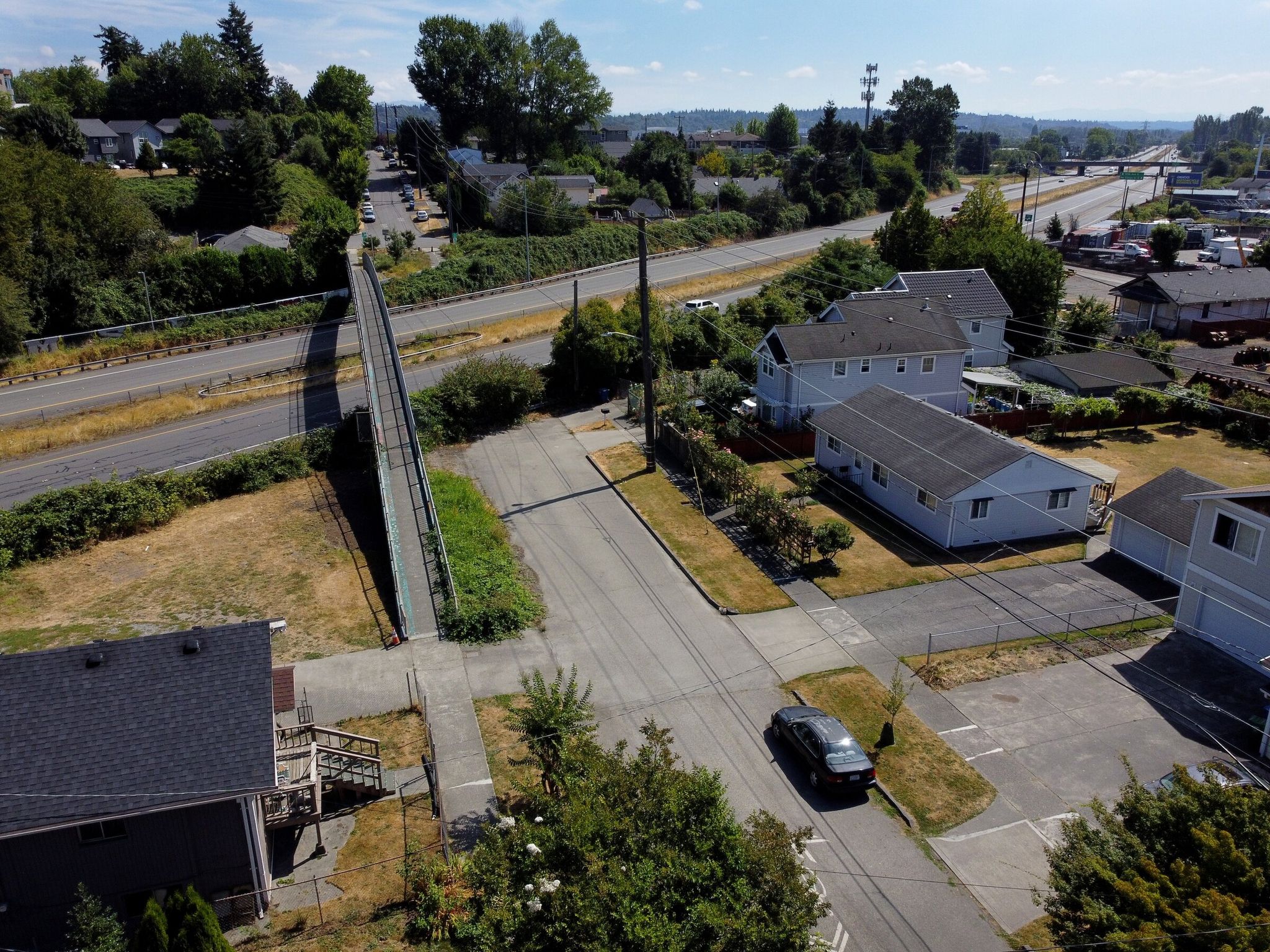
South Park is one of the smallest and most diverse neighborhoods in Seattle. There are many renters, incomes are below the citywide average, and residents are largely Latino, Asian, and Black. This settlement pattern is not accidental: as far back as the mid-20th century, cheap housing, proximity to industrial areas, and agricultural land — in particular berry fields — drew Mexican and Central American workers employed in factories and farming. Low land costs and distance from downtown helped lock in the neighborhood’s ethnic makeup. Highway 99 cuts diagonally through the area, creating 22 dead ends and separating schools, parks, and libraries from one another. According to the city, residents’ health suffers more here than in 99% of other neighborhoods: rates of asthma, diabetes, and obesity are higher, and life expectancy is lower.
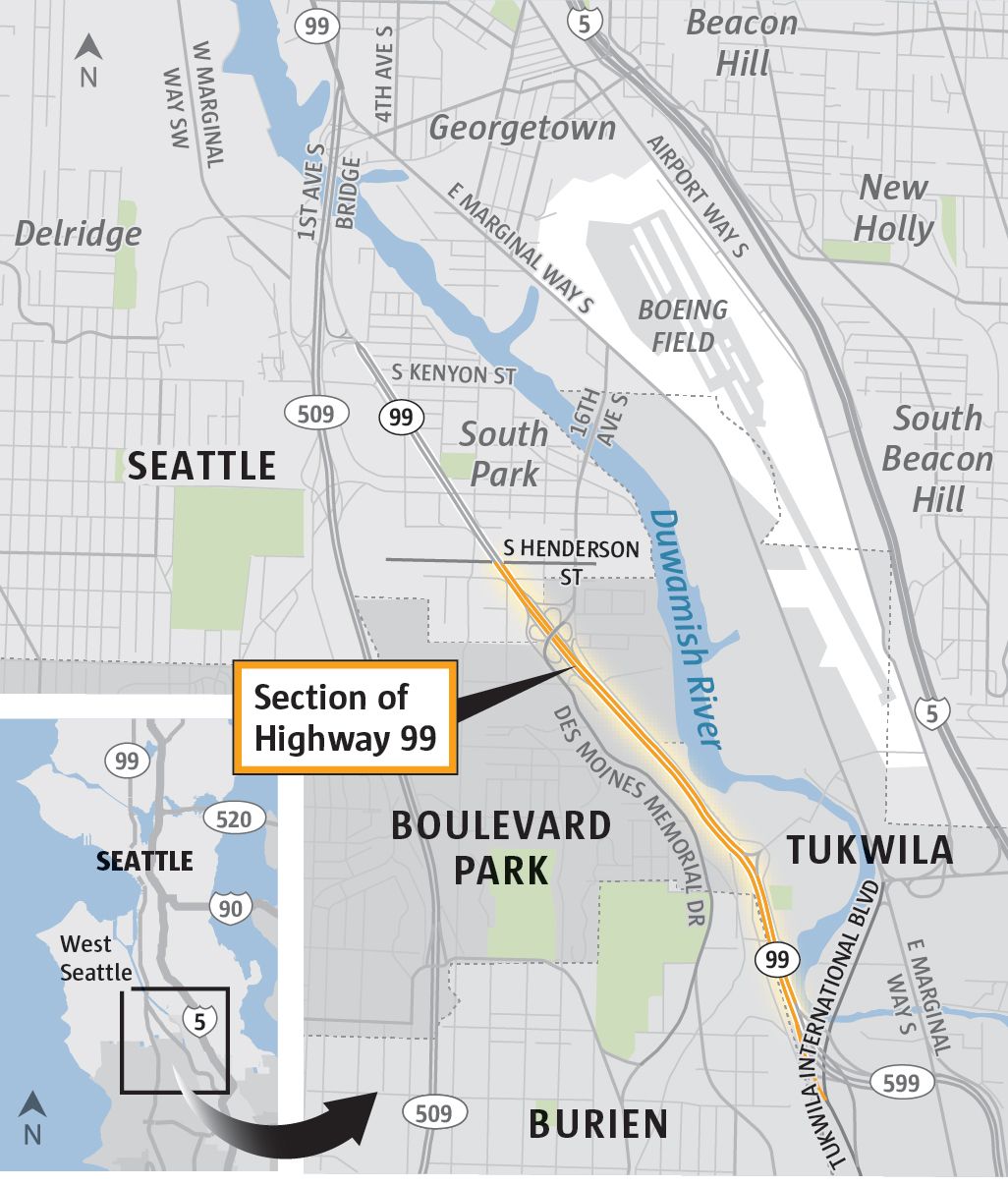
The report, prepared by the city’s Department of Planning in partnership with a community coalition, Reconnect South Park, lays out four scenarios for changing a six-mile stretch of the highway between South Henderson Street and Tuckwila Boulevard. Each would require substantial investment and approval from state authorities, but each offers a different view of what South Park’s future could look like.
The first and most radical option is the complete removal of the highway. The freed-up land (117 acres) is planned to be turned into parks, residential blocks, and areas to protect the river’s shoreline around the Duwamish River. The river has immense cultural significance: it is considered a sacred place for the Duwamish Tribe (Coast Salish peoples), which has used it for fishing and rituals for centuries, and it is also an important salmon spawning habitat. But due to 20th-century industrialization, the river became contaminated with toxic waste — PCBs, mercury, and petroleum products — leading the U.S. Environmental Protection Agency to list it as a Superfund site (priority cleanup area). Under this scenario, 59 acres would be set aside for shoreline protection and another 41 acres for parks and housing.
The second and third scenarios would turn Highway 99 into a typical city street — with either two or four lanes, sidewalks, and intersections. In both cases, traffic through the neighborhood would drop by about half, and the city would gain a full street network rather than a limited-access highway. The fourth option is the most conservative: the highway would remain, but pedestrian and bicycle bridges would be built over it, trees would be planted along it, and noise barriers would be installed. This approach would not change traffic flow, but it would improve neighborhood connectivity.
The report does not specify the exact cost of each option, but it emphasizes that the highway is already outdated, requires ongoing repairs, and still has unresolved seismic issues with the bridge over South Cloverdale Street. Built in the 1950s, the bridge rests on weak soils that are vulnerable to liquefaction during an earthquake and does not meet modern seismic standards. In the event of a major quake, load-bearing columns could collapse, blocking a critical transportation corridor and making it harder for emergency services to reach people. At the same time, a large share of vehicles on this stretch are through-traffic and freight: only about 10% of traffic belongs to local residents. Each day, 35,000 to 44,000 vehicles travel along the highway, including 3,500 to 4,500 trucks.
It is the freight traffic, in particular, that is the main sticking point. Highway 99 connects Seattle’s industrial area and the Port of Seattle — one of the largest seaports on the U.S. West Coast, handling trade with Asia and generating tens of billions of dollars in annual economic impact. The port supports tens of thousands of jobs directly or indirectly, and any blockage of the highway — whether due to seismic risk or repairs — threatens serious congestion, shipping delays, and a loss of competitiveness. Port officials said they are “highly dependent” on the road, meaning any route changes must take logistics and industry interests into account.
The funding for the study ($1.6 million) came from the federal Reconnecting Communities program, launched by the Biden administration to reconnect neighborhoods that were separated by transportation infrastructure. The program is inspired by successful projects in Milwaukee, Rochester, and Portland, where surface highways were replaced with boulevards, parks, and pedestrian areas. But a new BUILD America 250 bill being advanced by the Trump administration would eliminate the program, putting funding for future phases in doubt.
At the state level, Washington’s Legislature has already helped fund the study, but any real changes would require separate approval. A representative from WSDOT (the Washington State Department of Transportation) indicated that the project is not a priority for the agency: “This is just the first step in a long journey — there will be no physical changes in the near term.” For now, South Park residents are left to hope for public pressure and long-term political will.
Based on: Seattle considers removing Highway 99 in South Park — or doing nothing