
The Sound Transit Board of Directors approved a $30,000 deferred bonus and a base-pay increase for CEO Dow Constantine. The decision, made Sept. 24, concludes the saga over Constantine’s 2025 compensation, which he had asked to defer until the opening of continuous light-rail service between Seattle and the Eastside. Trains crossed Lake Washington on March 28 — the first rail service in the world to run across a floating bridge.
When Constantine took over Sound Transit on April 1, 2025, his starting annual salary was $450,000. His contract immediately provided for two stages of growth: first, an adjustment to the average pay level for executives at comparable transit systems, followed by a 3% to 6% increase based on a performance evaluation. A market study conducted late in 2025 set the benchmark at $474,276.
In December of last year, the board rated Constantine’s performance outstanding, but at his request deferred both the cash bonus and the merit increase for 2025. That delay has now ended: the CEO’s base salary will rise to approximately $502,700 a year, and he will receive a separate payment of $30,000. Formally, the amount is called a contribution performance award — a bonus for completing goals agreed upon with the board.
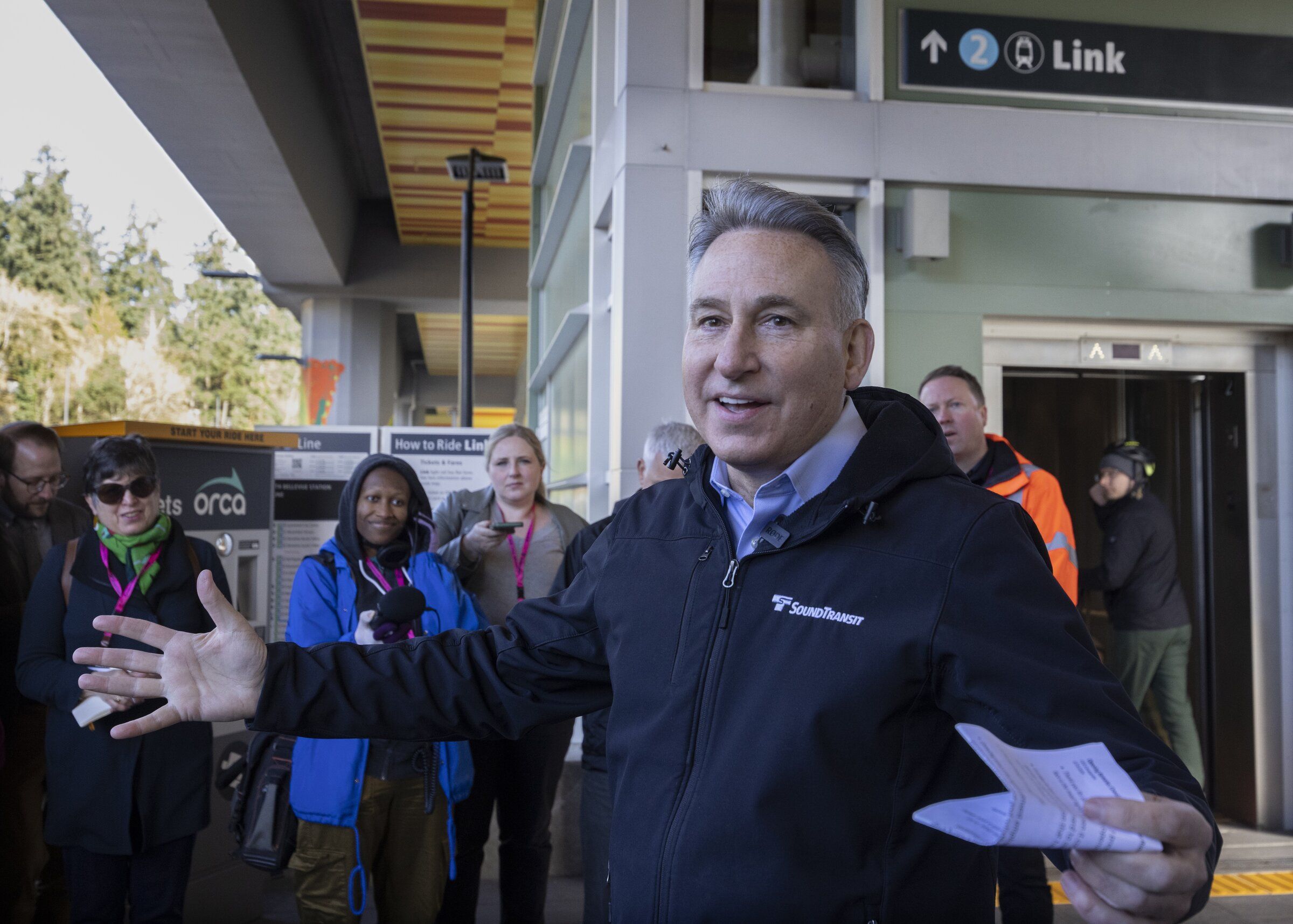
The decision is difficult to separate from the March opening of the Crosslake Connection, the final seven-mile segment of Link 2. It connected the International District/Chinatown stations in Seattle with Mercer Island and the Eastside, completing continuous service to Bellevue and Redmond. The Link system now has 63 miles of track and 50 stations; during peak hours, the new stations are served about every eight minutes, while trains on the shared segment between Lynnwood and downtown Seattle arrive every four to five minutes.
The opening was more than another line on a map. Construction of the connection across the lake was delayed for years by engineering problems on the Interstate 90 bridge, and the launch was a rare occasion when Sound Transit could offer residents a completed trip across the water rather than a distant plan. In March, Constantine called the day the culmination of decades of planning, votes and work by thousands of builders, engineers and transportation workers.
But the payment comes as the agency’s achievements coincide with its most difficult financial conversation. In the spring, the Sound Transit board revised the ST3 expansion program after the agency estimated that fully carrying out the original plan would require roughly $34.5 billion more in future-year dollars than available. The reasons cited included construction inflation, rising land and design costs, operating expenses, weaker forecasts for tax and fare revenue, and the cost of borrowing.
Under Constantine’s new goals for 2026, opening the Crosslake Connection was only the first item. He has been tasked with opening Pinehurst Station in North Seattle, ensuring reliable service during the FIFA World Cup, moving closer to four-minute intervals on key segments and keeping unplanned service disruptions to an average of no more than 10 hours a month. At the same time, he must lead the so-called Enterprise Initiative — an effort to bring promised projects into line with actual resources.
Constantine’s contract initially runs through Dec. 31, 2026, and allows the board, at its discretion, to extend it for two additional one-year terms. The current decision is therefore not only payment for a line that has already opened, but also a vote of confidence in the leader who must explain to the region which parts of the once-promised transit map can be built on time — and which will have to wait.
Based on: Sound Transit CEO claims his $30K bonus and wins a pay raise