In today’s digest: a Seattle soccer player competes for the Palestine national team and dreams of a World Cup; business owners hope to keep downtown clean after the Club World Cup; and a warning about traffic due to Seattle — Portland’s annual bike race.
A Seattle soccer player competes for the Palestine national team and dreams of a World Cup
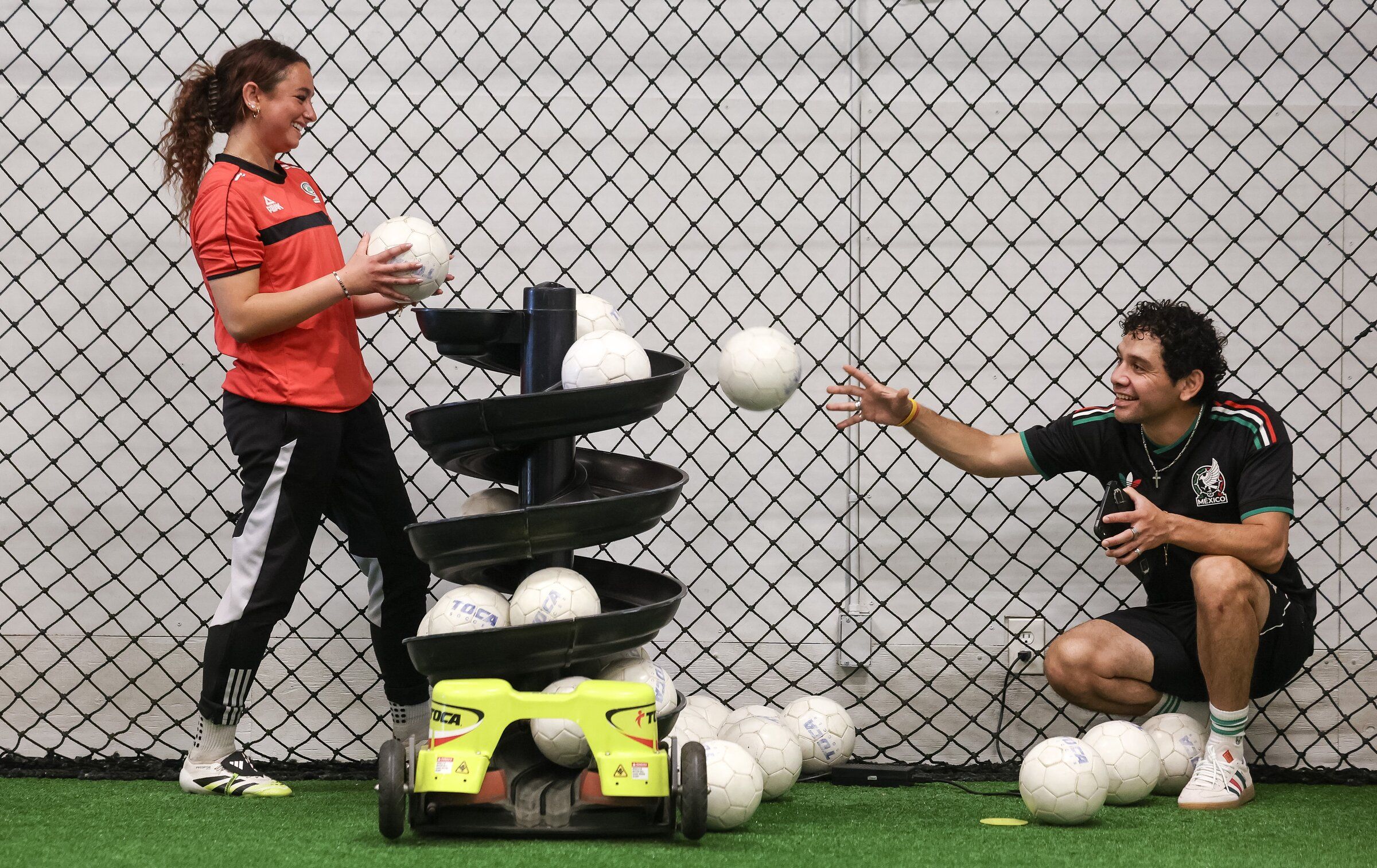
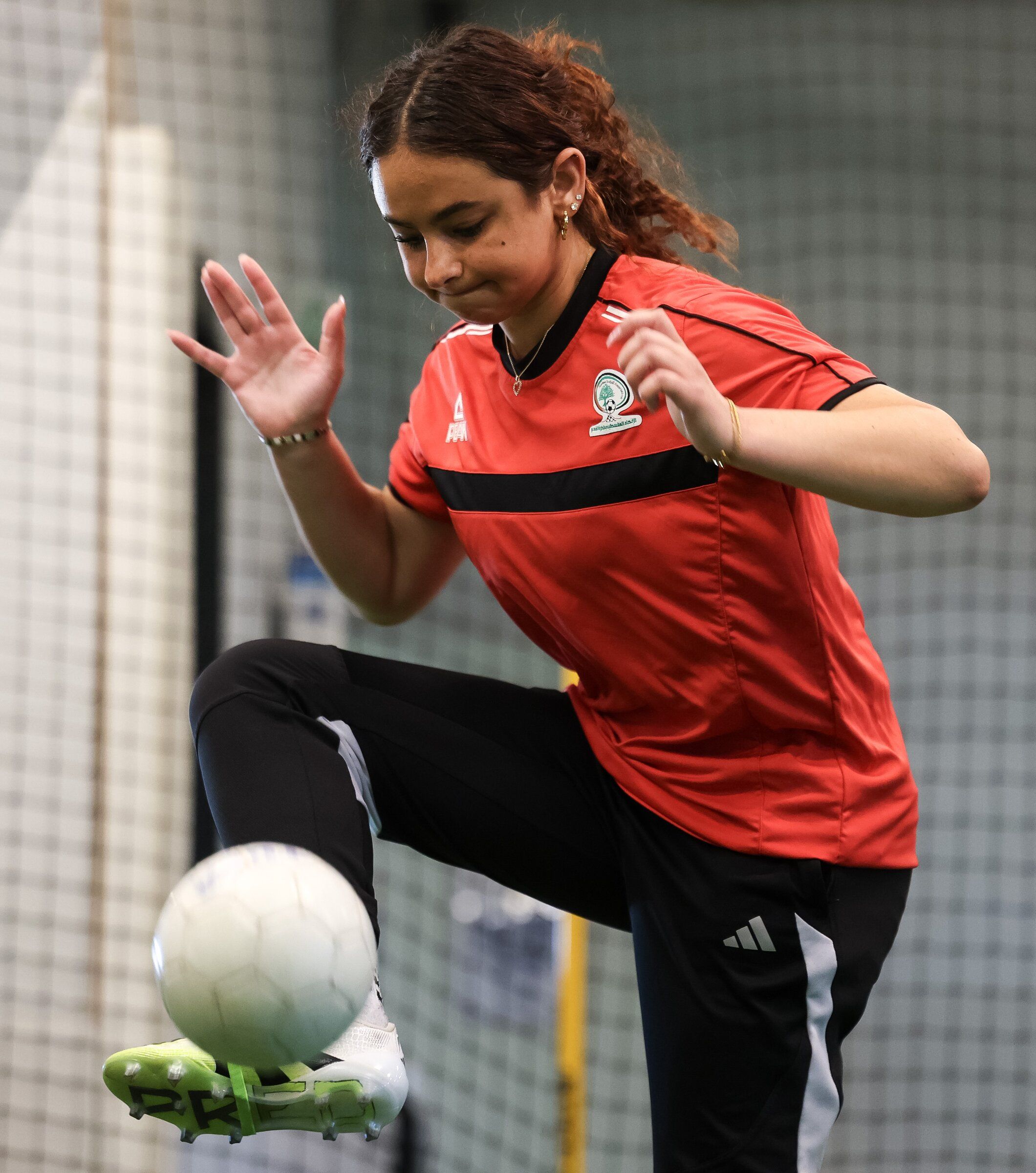
Every young soccer player knows the feeling: you step onto the pitch with your national team badge on your chest, hear the roar of the stands, and smell the grass. For most, that remains a dream—but for 22-year-old Zjada Baydass from Issaquah, Washington, it is a real goal she’s willing to fight for despite serious obstacles. The young woman plays for the Palestine women’s national soccer team and, at the same time, coaches kids and organizes pickup matches in the Seattle area. “I’m not going to stop until we make it to the World Cup,” she said during a break between shifts at her job in Tukwila. “It will be history.”
Zjada has an unusual path into sports. She grew up in Seattle and the United Arab Emirates in a family with a Lebanese-Palestinian father and an American mother. She started playing soccer only at 13—not on a school team, but just to spend time with her dad. “He came with me onto the field, coached me, and saw potential in me that I didn’t even notice,” she recalls. Her progress was so fast that the Palestine Football Association took notice. The family didn’t even know a national team existed until a faraway acquaintance suggested where Zjada could reach out. When she was 18, she received a call inviting her to a youth national team tournament, and her father initially thought it was a prank.
The tournament was postponed because of the pandemic, giving Zjada time to prepare. She completely changed her training routine, tailoring it to the style of play of midfielder Kevin De Bruyne, known for his precise passing. In 2023, she finally traveled to Ramallah to play with the youth team. It was her first trip to her father’s homeland—no one in his family had returned to Palestine since 1948. “It completely reshaped the way I see everything I do and everything I’m a part of,” Zjada says.
The atmosphere at the camp where the team trained was harsh: near Israeli settlements, to the sounds of gunshots, with tear gas in the air. But it was there that she saw an incredible devotion to the game: “Pride, passion, and commitment that I had never seen in the U.S. For them, soccer is everything—an escape from reality.” In 2024, Zjada was moved up to the senior women’s national team, and she took part in a major tournament of the West Asian Football Federation held in Saudi Arabia amid the war in Gaza. The team earned wins over Syria and Iraq, securing a chance to qualify for the 2027 Women’s World Cup, but then lost to Jordan.
Playing for the national team, Zjada says, became a way for her to show the world the human side of Palestinians. “I want people to see that we’re just like everyone else,” she says. After the tournament, she faced serious injuries: first, a fractured foot bone sidelined her for a year, and then, in January, she broke her kneecap. Her recovery delayed plans to play abroad, but she has not lost touch with the Palestinian team and continues her active involvement in Seattle.
In December, Zjada graduated from the University of Washington with a degree in environmental studies and interned with the nonprofit The Nature Project, which helps teenagers improve their mental health through sports and connections with nature. The organization’s executive director, Jane Birman Zeibel, calls her a spark: “Her drive and passion for sports permeate every area of her life.” At the same time, Zjada organizes local soccer tournaments in support of Palestinian children, and she also coordinates pickup street games on hard surfaces at Judkins Park in Seattle’s Central District. For her, soccer is a universal language that brings together people from different cultures.
Recently, she started working as a coach at the huge new indoor facility Elite 90 near the Southcenter mall. They broadcast matches from the men’s World Cup there, which only fuels her ambitions. “It only strengthens my desire to succeed on the world stage,” Zjada says. “I feel like one day we’ll be there.” As noted in an article by The Seattle Times, her story is one of the most remarkable in Seattle soccer: a path from neighborhood training with her father to a national team player who isn’t afraid of either injuries or political challenges.
Cleanliness during the World Cup: Seattle business owners hope for lasting improvements downtown
After the Club World Cup wrapped up in Seattle, local business owners and advocates began thinking about how to preserve the cleanliness and safety gains achieved downtown. The temporary measures taken for the arrival of international tourists produced an impressive result, but now business leaders are pushing for long-term solutions that could permanently improve the situation. As KOMO notes, during the tournament downtown was transformed: the streets became noticeably cleaner, the number of people experiencing homelessness decreased, and safety improved significantly.
“The cleanup was seven stars—the best that’s possible. Safety was also top-notch,” says Moxud Chowdhury, co-owner of International Cigar & Tobacco at the corner of Third Avenue and Pine Street. It’s exactly in this area—normally associated with problems—that the World Cup brought an influx of international visitors, and city officials made every effort to leave them with a good impression. But now that the tournament is over, the focus shifts to how to prevent a return to the previous state. Chowdhury emphasizes: “We’re still looking for a permanent solution. People need housing, they need rehabilitation programs, and they need jobs—because right now they’re just being moved from one block to the next.”
Volunteers with We Heart Seattle, who do street outreach work downtown every day, confirm that some areas were cleaned up for the tournament, but others were left untouched. “We live here. We want to see the same approach year-round, not just during big events. For us locals, who pay taxes and want to enjoy our neighborhoods, it’s a real blow to see everything go back to chaos,” says Andrea Suarez of We Heart Seattle. She calls for tougher legislative measures that would hold accountable those who repeatedly break the law. “Three violations and you’re out: either a charge for a serious crime or six months of involuntary treatment. Until we see real consequences for those offenses, we’ll just keep people trapped in an endless, meaningless cycle,” Suarez adds.
Alongside that, daily cleanliness efforts continue: specialized crews regularly wash sidewalks and remove graffiti. According to the Downtown Seattle Association, more than 14,000 graffiti tags have already been removed from the streets this year. Still, in the view of business owners and advocates, temporary measures alone aren’t enough. They urge city leaders to develop a comprehensive strategy that would include building affordable housing, expanding addiction treatment programs, and creating jobs for people experiencing homelessness—along with stricter penalties for repeat offenders. Without those steps, the achievements of recent weeks could end up only being a bright but short-lived chapter in Seattle’s life.
Seattle — Portland annual bike race: traffic is inevitable, but the spectacle is worth it
This coming weekend, July 11 and 12, residents and visitors across Washington and Oregon should brace for major traffic disruptions: more than 6,000 cyclists will take to the roads for the classic Seattle to Portland (STP) ride. The event is the largest multi-day cycling happening on the entire U.S. Northwest, and its 207-mile route (about 333 kilometers) with a total elevation gain of more than 1,500 meters will run along major highways and local roads. Organizers and road authorities warn drivers to expect delays, especially during the morning hours on Saturday and Sunday.
The race begins at the University of Washington campus in Seattle. Then the cycling column heads south, crosses the Columbia River on the Lewis and Clark Bridge, and finishes in downtown Portland at Holladay Park. The entire route follows state highways (State Routes) and local streets; cyclists do not fully close roads, instead sharing them with cars—creating additional traffic congestion. Based on data from previous years, the first major delays are expected early Saturday morning on SR 7 in Pierce County, and then on Sunday morning the congestion will shift to SR 411 from Castle Rock to Longview. Special attention should be paid to the Lewis and Clark Bridge—the cyclist flow will be at its thickest there as riders move into Oregon.
For anyone who finds the term “5,000-foot elevation gain” abstract: over the full distance, cyclists will cumulatively climb more than twice the height of Burj Khalifa. Most of the climbs are on hilly stretches between states, which helps explain why the race lasts two days. Throughout the route, organizers and traffic officers with the road patrol will be on duty to manage traffic. A full map of the route is available on the official STP website.
The key takeaway for motorists: traveling through the southern suburbs of Seattle and the northern areas of Oregon this weekend will require extra time. Even if you’re not planning to participate, it’s best to avoid stretches of SR 7 and SR 411 and the area around the Lewis and Clark Bridge during peak hours. At the same time, for spectators it’s a great chance to watch both enthusiasts and professionals tackle serious distances—STP has long become a symbol of the summer season in the Pacific Northwest. As noted in a KOMO piece, organizers are urging everyone driving and biking to show mutual respect and stay alert.