
This weekend, major wildfires erupted across Eastern and Central Washington amid strong winds and hot weather. The fires have destroyed more than 700 structures, and more than 60,000 people have been evacuated from Spokane. Large hotspots are also burning near the Colville Reservation and Lake Chelan. The Colville Reservation is one of the largest in the state—land of the Confederated Tribes of the Colville Reservation, with extensive forest areas that often suffer from summer fires. Lake Chelan is a long, deep glacial lake in the foothills of the Cascades, popular with tourists. These fires affect the entire region: they worsen air quality, force residents to evacuate, and require firefighters from across the state.
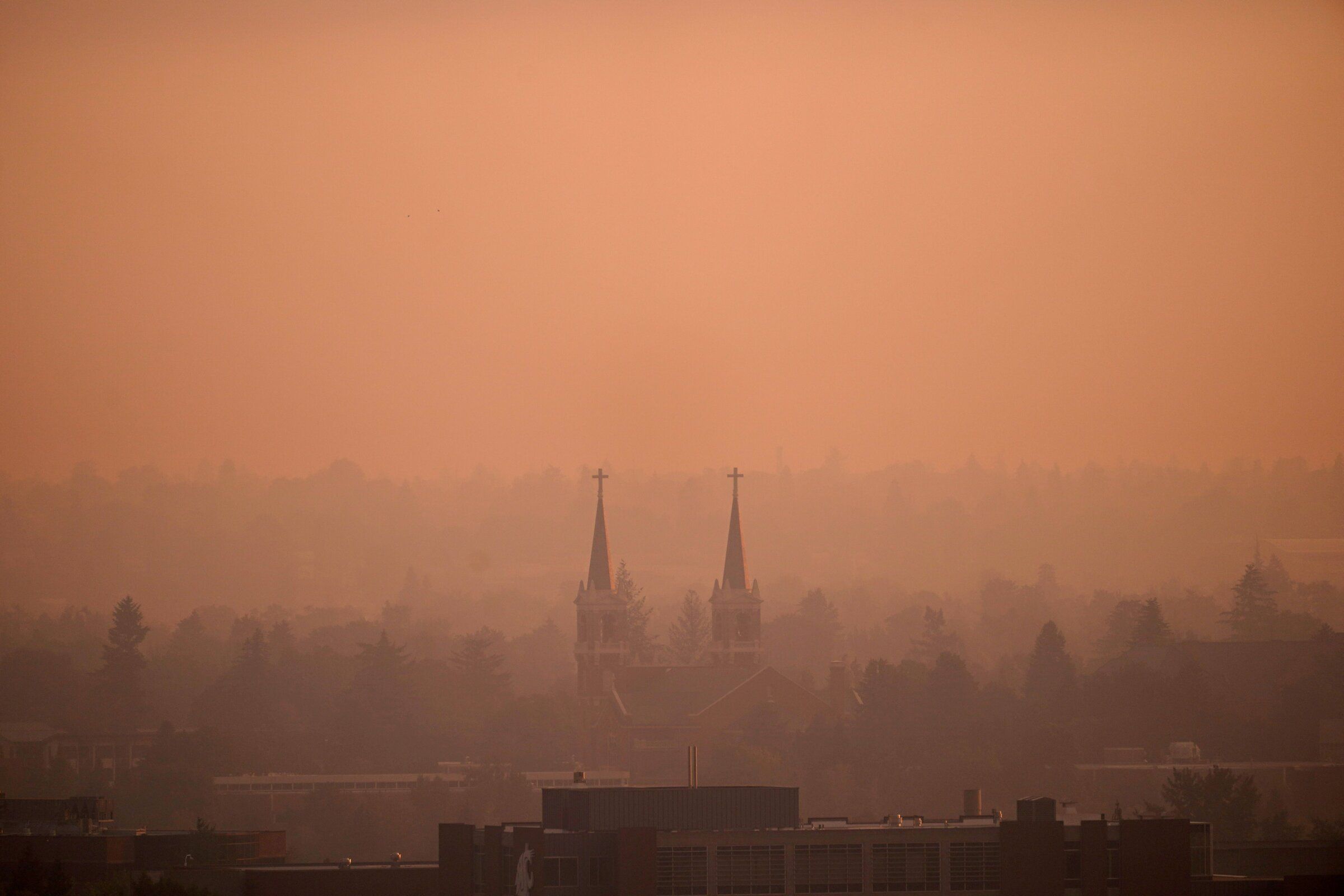
According to weather forecasts, the wind may change as early as Tuesday, and the smoke could reach Western Washington, including Seattle. Although the city is separated from the Cascade hotspots by mountains, for large fires it is no barrier: smoke rises to several kilometers in height, where strong air currents carry it over the ridges. In addition, the Cascades have low passes— Snoqualmie, Stevens, and White Pass—through which smoke seeps into the western part of the state, especially when winds blow from east to west. Experts warn that air quality may become dangerously unhealthy and visibility will decline. This situation is likely to persist at least until Thursday.
Smoke irritates the lungs and can trigger inflammation, making it especially dangerous for children, older adults, pregnant women, and anyone who has to spend long periods outdoors. To protect yourself at home, it’s best to go outside as little as possible and keep doors and windows closed. Prepare a “clean room” in advance with a portable air purifier—for example, one with a HEPA filter—or use a DIY filter. Clean up with a wet mop or cloth rather than sweeping, so you don’t send smoke particles back into the air.
If you do need to go outside, you’ll need respirators such as N95 or P100—available at hardware stores. Single-layer paper masks, surgical masks, and ordinary cloth coverings do not provide sufficient protection from smoke. It’s important that the mask fits tightly against your face; otherwise it won’t work as intended.
If you don’t have a portable air purifier on hand, you can make one: tape a Class MERV 13 or FPR 10 furnace filter onto a standard floor fan. Research shows this setup can reduce the level of some types of air pollution by 90%. However, there are caveats: a DIY device may overheat, so it cannot be left running while you’re asleep or when you’re not at home. Every 30 minutes, you need to turn off the fan so it can cool down.
Stock up in advance on groceries and other essentials so you don’t have to go out more than necessary. A car should not be used as the primary shelter from smoke. If you need to wait out the dangerous period somewhere else, look to libraries, museums, shopping malls, and senior centers—places that usually have air conditioning and air-filtration systems.
Based on: How to prepare for wildfire smoke in WA