Overview of Seattle news: DocuSign is leaving its namesake tower, a 70-year-old woman drove onto a light-rail platform following GPS, and a Los Angeles mayoral candidate threatens to send homeless people to the city.
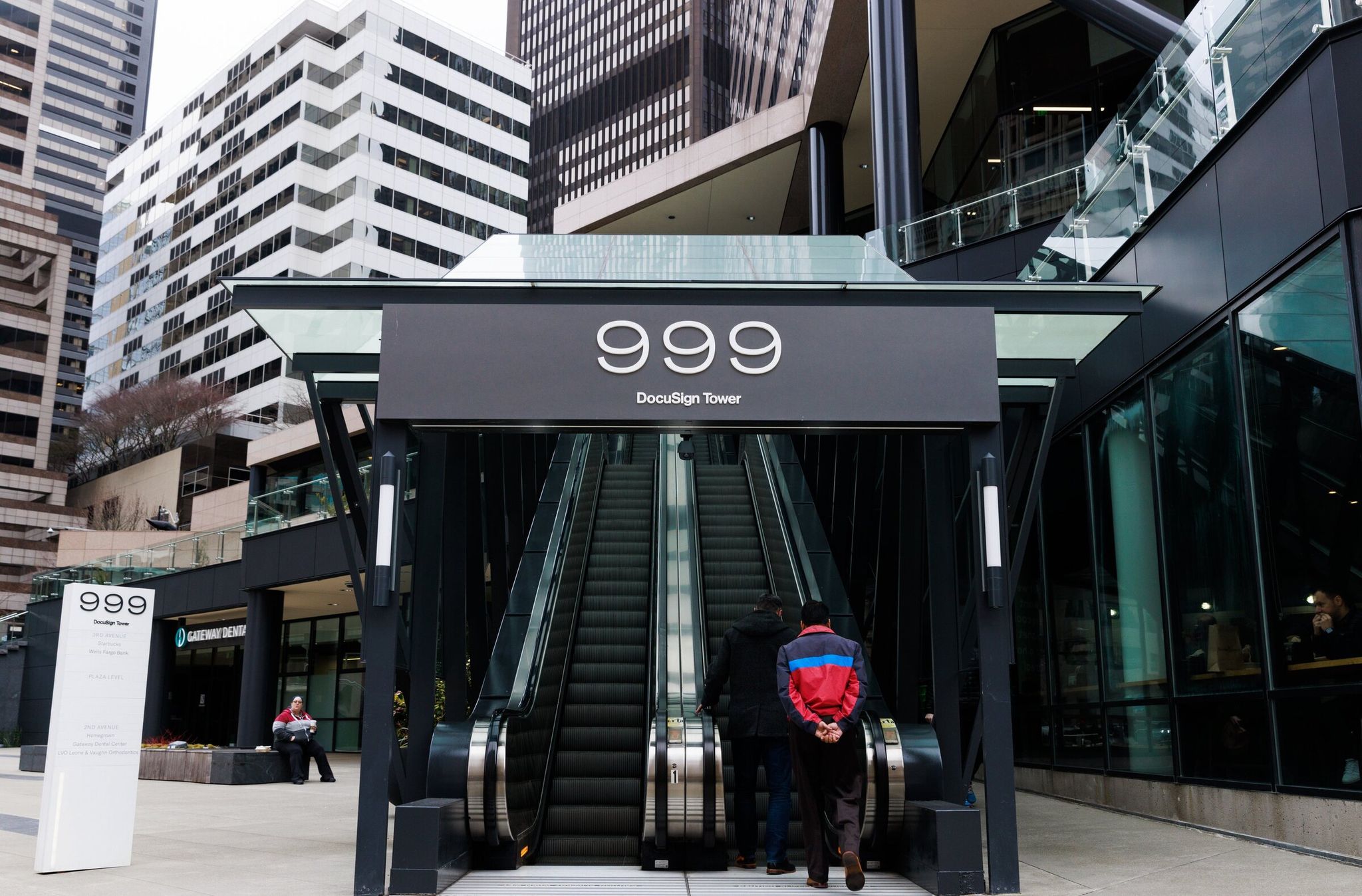
DocuSign leaves its namesake skyscraper in downtown Seattle: what's behind the move and how it will affect the office market
DocuSign, known for its e-signature solutions, has decided to relocate within downtown Seattle, vacating the tower that bore its name. The move is reportedly neutral for the city’s office market overall, since the company is not moving to the suburb of Bellevue and already cut staff in 2023. However, it will be a serious blow to the building’s owner, investment giant Blackstone: vacancy in the DocuSign Tower will rise to 56%. DocuSign confirmed it signed a lease for 115,000 square feet at the JPMorgan Chase Center at 1301 Second Ave. The company plans to begin work in the new office next summer when its current lease expires. DocuSign did not say whether it will retain naming rights to the tower it is leaving.
The tower’s history, formerly known as the Wells Fargo Center, is telling. In 2020 DocuSign, founded in Seattle in 2003, secured naming rights as it expanded its footprint. At its peak the company leased about 227,000 square feet, roughly 25% of the building. After staff cuts in 2023 its office footprint shrank significantly, and now, in moving, DocuSign is leasing exactly what it occupies today — 115,000 square feet. That indicates the company is not merely changing location but deliberately optimizing real estate costs by choosing a more modern building. The JPMorgan Chase Center, built in 2004, is two decades younger than DocuSign’s current HQ (built in 1982), fitting the broader market trend of a “flight to quality,” where companies swap older offices for newer, tech-enabled spaces while often reducing area.
Although DocuSign is a California company, Seattle remains a key engineering hub. Two senior executives are based in the city: Chief Product Officer Graham Sheldon and CFO Blake Grayson. In his statement Grayson emphasized, “Seattle is where DocuSign got its start, and it will remain a key place for us as we write the next chapter.” The company did not disclose the exact number of employees in the city, but the fact it is relocating rather than moving staff elsewhere underscores the strategic importance of the Seattle hub. It’s also notable that DocuSign is actively adopting AI — the company recently introduced AI assistants that help analyze and parse complex legal documents and contracts.
The move will add to Blackstone’s headaches, which has already faced trouble in Seattle’s office market. Bloomberg reports the investment firm recently sold the US Bank Center for about $280 million — less than half of what it paid seven years earlier. Moreover, last year Blackstone refinanced the DocuSign Tower, and now, according to Bloomberg, a lender is trying to sell part of the building’s mortgage debt. That means a potential buyer could purchase a piece of the unpaid loan and receive partial payments. For comparison: Blackstone bought DocuSign Tower in 2013 for $389 million, and its peak estimated value reached $533 million in 2020. Today, according to King County records, the tower is assessed at nearly $225 million. A drop of more than half in four years is a stark illustration of the office-market crisis.
The DocuSign situation is just part of a broader problem. Downtown Seattle’s office market has recovered from the pandemic more slowly than other cities. Vacancy in the central business district is about 35%, according to a Kidder Mathews report. Companies with leases expiring are aggressively shrinking footprints and moving to newer buildings, as law firm Perkins Coie did when it left 1201 Third and relocated to the same JPMorgan Chase Center, cutting its space in half. There are currently no large tenants ready to occupy the hundreds of thousands of square feet being vacated in older towers. That creates a vicious cycle: falling occupancy pushes building values down, making refinancing harder and properties less attractive to investors.
SUV on a light-rail platform: how GPS led a 70-year-old woman onto the tracks
A unique incident occurred Tuesday evening at Seattle’s Mount Baker light-rail station. A red Mazda CX-5 crossover with Utah plates slowly drove right onto the southbound platform, first baffling passengers and then causing complete chaos in train service. The episode went viral: videos showed a woman calmly exiting the vehicle under the astonished stares of bystanders and a transit security officer.
How did the car end up on the platform? Investigators say the key stretch is where the light-rail tracks run at street level — at the intersection of Martin Luther King Jr. Way and Walden Street, about half a mile south of the station. Witnesses say the vehicle left the road there and continued along the tracks. After that the tracks begin to rise onto an elevated structure reaching about 35 feet (roughly 10.5 meters). Witnesses reported a loud scraping sound — likely the car’s undercarriage dragging on rails and concrete. Nevertheless, the SUV managed to traverse the tricky section and reach the platform.
Seattle police, who are investigating, identified the driver as a 70-year-old woman. She told officers she was following a GPS navigator that somehow directed her onto the tracks. Sergeant Patrick Micho said the woman did not appear to be under the influence of alcohol or drugs but “took a long time to answer questions and was very confused.” After being examined by fire department medics she was taken to Harborview Medical Center. It was not disclosed whether she was arrested or cited.
Sound Transit staff reacted quickly. Service on the 1 Line was replaced with shuttle buses between Sodo and Othello, and the Mount Baker platform was evacuated. A speed swing — a multifunction vehicle with retractable wheels that can travel on both rails and roads — was used to remove the car. That equipment is usually used to move heavy loads, but this time it had to “remove an extremely lost Mazda,” Sound Transit spokesman Henry Bendon joked on social media. The speed swing lifted the SUV and towed it back to the intersection where the unusual journey began. Inspectors thoroughly checked the tracks for damage. By 9:15 p.m. 1 Line service was fully restored — just as fans were leaving the stadium after a Mariners baseball game.
Sound Transit noted this was a first in the agency’s history. Its incident database records 160 collisions involving transit vehicles from 2009 through 2025, but none where a driver intentionally or accidentally drove onto the tracks and struck a train. “This is definitely a first for us,” Sound Transit spokeswoman Amy Enbisk said. “We don’t want it to happen again. We ask drivers: please, do not drive onto the tracks.”
But the incident raises a broader question: how well protected are Seattle’s at-grade sections of light rail? Unlike fully separated elevated segments, stretches such as Martin Luther King Jr. Way sit at street level and are separated only by curbs or markings. This episode will likely prompt transit authorities to reconsider safety measures to prevent a repeat of such a unusual and dangerous event.
Mayoral war: Los Angeles threatens to send homeless people to Seattle
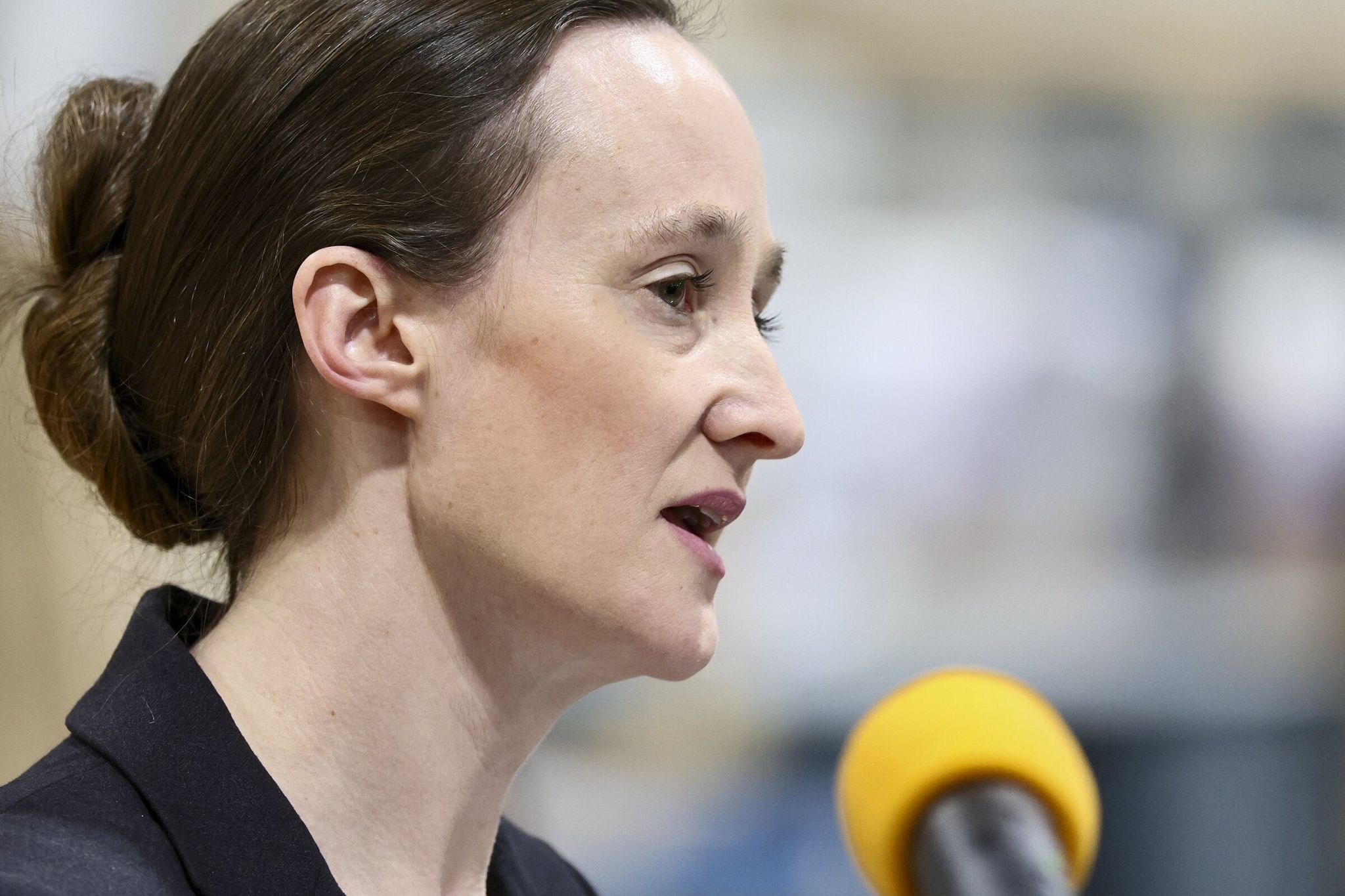
An unexpected controversy has flared in the Los Angeles mayoral race, straining relations between two major U.S. cities. Los Angeles mayoral candidate Spencer Pratt, who stands second in preliminary vote counts, said that if elected he would send all of L.A.’s homeless people to Seattle. According to Pratt, they would go there because Seattle’s mayor supposedly “welcomes” them and permissive drug laws make life there more comfortable. The remarks drew a sharp response from Seattle Mayor Katie Wilson, who chose not to directly spar with the candidate but focused on rebutting the substance of his claims.
Commenting on Pratt’s remarks on Fox 13 Seattle, Wilson emphasized that homelessness is rooted not in drug use alone, as the candidate suggests, but in the excessively high cost of housing. “There is a very clear correlation between housing costs and homelessness. That doesn’t mean drugs aren’t a factor — they certainly are,” the Seattle mayor said. In essence, she echoed findings from years of research, including a 2023 Pew Charitable Trusts analysis that showed housing costs explain differences in homelessness far more than substance abuse, mental illness, or weather. Wilson also stressed that ending the crisis requires more than a roof — it requires comprehensive support including addiction treatment and psychiatric care.
Pratt made the incendiary comments in an ABC News interview, calling the homeless “addicts who choose to live on the street” and promising to “disconnect” them from city infrastructure. He claims that after his election and tougher policies, homeless people will migrate en masse to Seattle because of its tolerance for drug use. Notably, Pratt’s campaign platform otherwise uses more measured rhetoric, promising to replace the current system with a “leadership recovery model” focused on treating mental illness and addiction. Yet his public statements, including posting photos of homeless people on social media, portray a different picture. He has also accused nonprofits without evidence of deliberately bringing homeless people to Los Angeles from other cities.
At present Pratt holds a solid second place behind incumbent Karen Bass, making him a realistic contender in the November general election. His anti-Seattle flourish is likely part of a strategy to court conservative voters upset by rising homelessness. But urban-planning and social-services experts agree the idea of mass “migration” of homeless people driven by local laws is contrived. In reality, data show homelessness is primarily a function of the housing market, and shifting blame to neighboring cities distracts from real solutions like increasing affordable housing and funding social services. As Mayor Wilson wrote in an op-ed for The Seattle Times, “Helping someone out of homelessness is not as simple as putting a roof over their head.”