
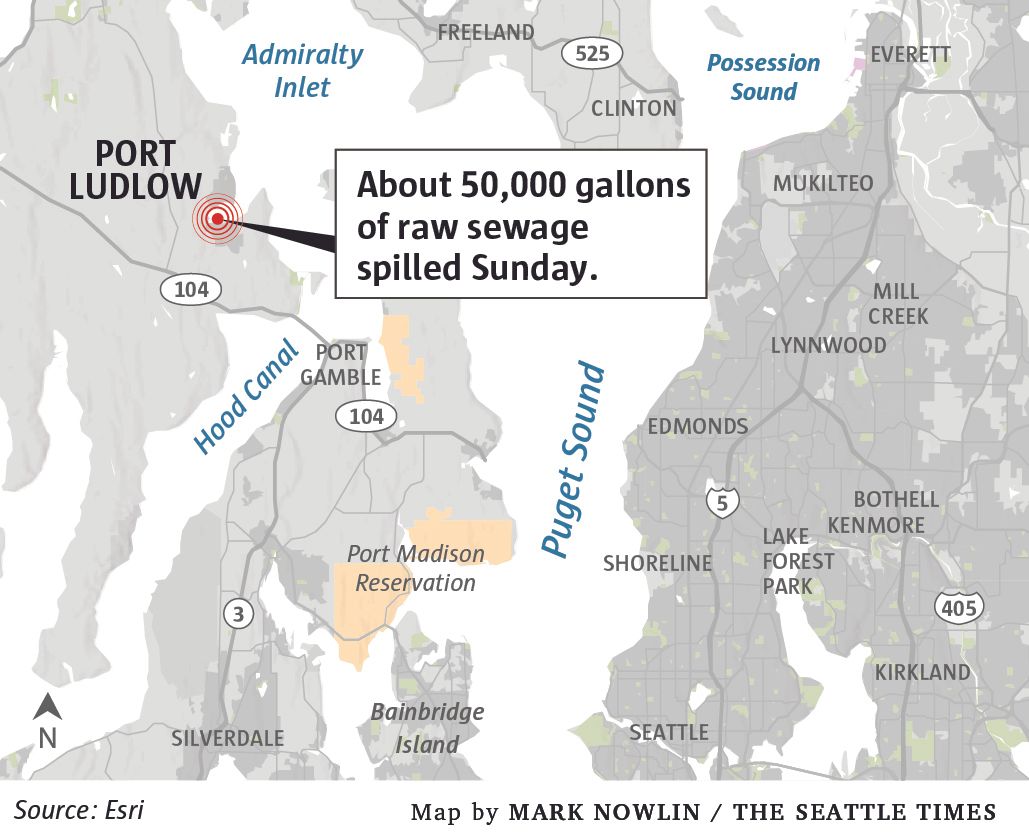
An indefinite ban on water contact has been imposed in Port Ludlow Bay, on the northeastern Olympic Peninsula, following a sewer main failure. According to operator Olympic Water & Sewer, about 50,000 gallons (190,000 liters) of untreated sewage entered the environment near Paradise Bay Road beginning Sunday, November 15. The leak continued for up to 34 hours and reached the bay via Ludlow Creek. Repairs stopped the discharge, but Jefferson County health officials have not yet said when the water will reopen.
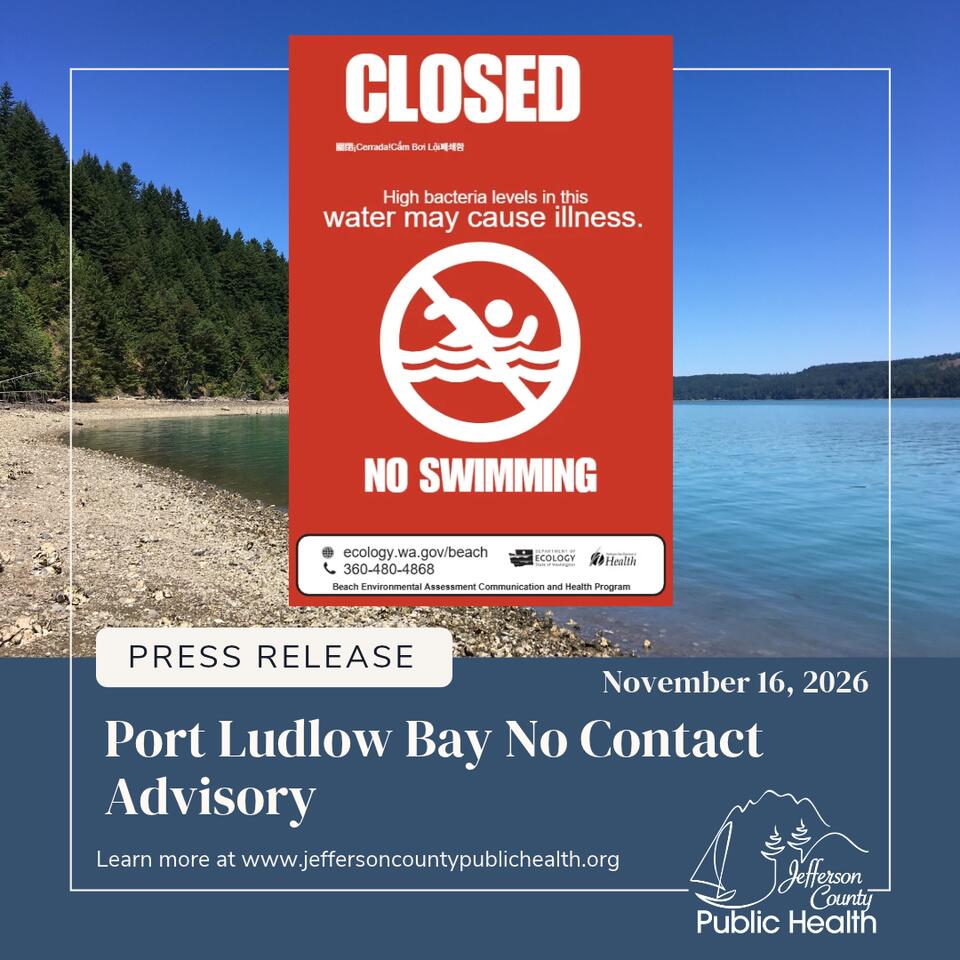
In Port Ludlow, the water is less a backdrop than part of everyday life: people launch kayaks, head out on paddleboards, walk along the shoreline at low tide, and look out over the harbor from the marina. Now warning signs stand at public shoreline access points. The county’s Department of Public Health advises people not to swim, dive, wade or walk along the shore, and not to go out on the bay in kayaks or paddleboards.
The cause was a break in a sewer line, Olympic Water & Sewer said. The private utility serves residential and commercial properties in the planned resort community of Port Ludlow. Sewage first spilled onto the road near Paradise Bay Road, then entered Ludlow Creek and flowed into the bay. The company fixed the immediate problem, but officials say a long-term engineering solution is still being developed.
The ban applies specifically to recreational contact with the water, not to the drinking-water system. Port Ludlow’s drinking water comes from separate underground wells and, officials stress, remains safe to drink. In this case, the hazard comes from bacteria and other microorganisms that may be present in untreated sewage. Exposure can cause anything from gastrointestinal illness and skin rashes to upper respiratory infections. Children, older adults and people with weakened immune systems are urged to take particular care.
For this small coastal community of about 3,000 people, this is not the first such scare. In January 2021, heavy rain caused a bypass discharge at the wastewater treatment plant: about 42,000 gallons of a sewage and stormwater mixture entered the bay, and the health advisory was lifted a week later. In June 2014, a mechanical failure at the plant also led to a discharge of partially treated sewage and a weeklong warning to avoid contact with the water.
The current incident is different because it happened not at the treatment plant itself but in the main line leading to it, meaning the discharge consisted of untreated sewage. The Washington State Department of Ecology requires licensed wastewater systems to report incidents like this. The agency then reviews the circumstances, the operator’s response and the measures needed to prevent a recurrence. The company’s previously announced high rating for the treatment plant’s performance in 2025 does not change the simple fact that network vulnerabilities often emerge far from tanks and laboratories—in a pipe beneath a road.
The duration of the ban will now depend on tides, wind, rainfall and water-quality monitoring results. Officials have not said when sampling will begin or end, or set a date for reopening the bay. Until further notice, Port Ludlow is a place where people can look at the water from shore, but should not touch it.

Based on: Sewage spill closes waters at popular WA boating destination