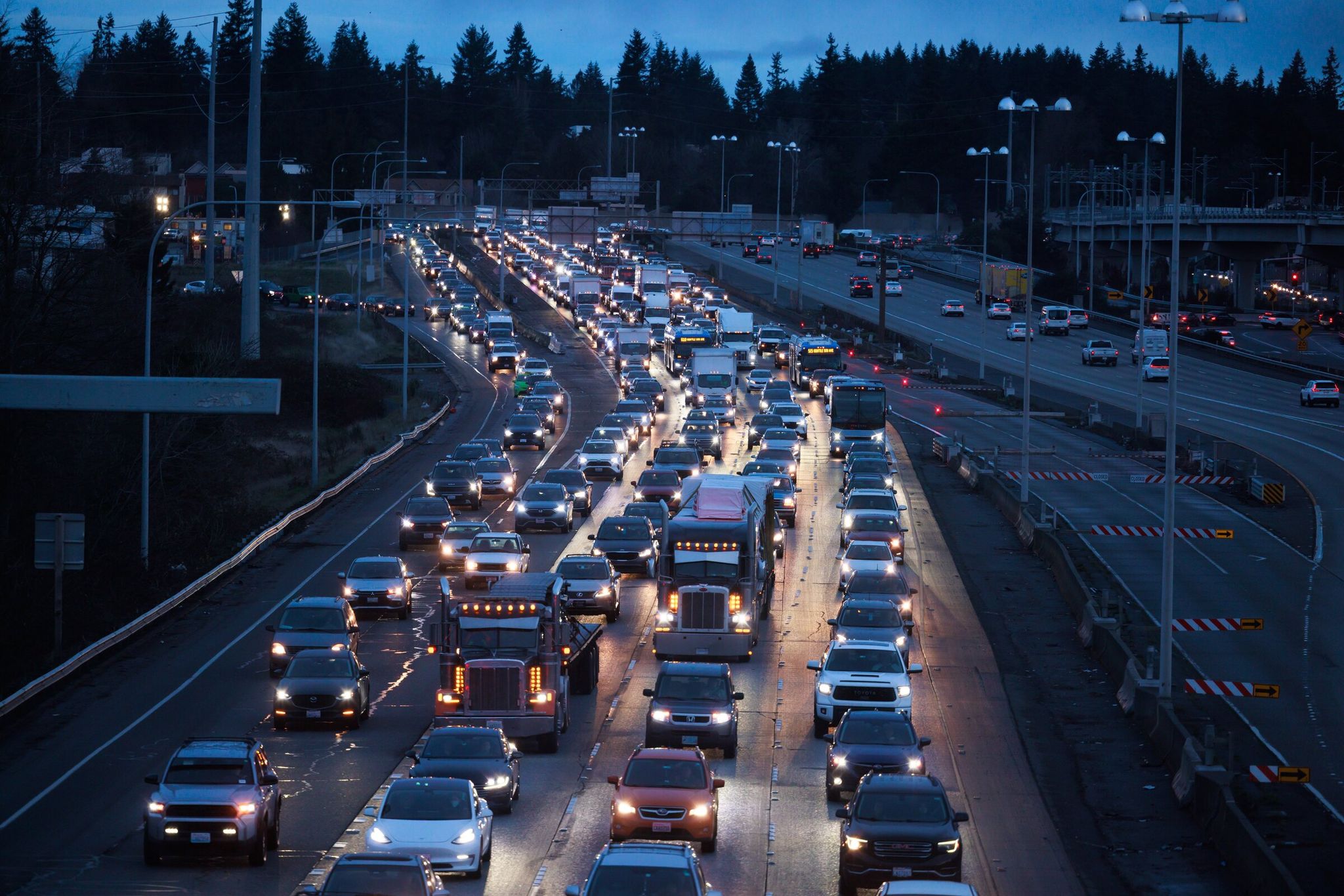
For several years U.S. census data showed that the number of cars in Seattle had virtually stopped growing. By 2023 that figure held at about 460,800 vehicles, and some experts began talking about the city having reached the “peak car” — meaning the highest level of per-capita personal vehicle use, after which use begins to decline. That peak fell in the early 2000s, and experts have actively debated it because Seattle is one of the first large U.S. cities where the trend is statistically evident. The rise of public transit, expansion of bike infrastructure, gentrification making parking expensive, and an influx of young professionals who prefer renting near work were cited as reasons. However, new data for 2024 have undermined the peak-car hypothesis.
According to fresh statistics, in 2024 Seattle households owned or leased 481,700 vehicles. That is 18,300 more than in 2023 and the first statistically significant increase since 2017. While a single year does not yet form a trend, such a jump after a long stagnation drew attention.
Interestingly, all of the growth was among renters. They added more than 20,000 cars: from 183,700 in 2023 to 204,200 in 2024. At the same time, homeowners slightly reduced their vehicle totals — from 279,600 to 277,500 cars.
The gap between owners and renters remains large. Among homeowners only 5% (7,400 households) have no car, whereas among renters that share reaches 31% (68,400 households). Renters are more likely to live in dense neighborhoods with good transit and are less likely to have parking spots. Seattle’s compact development is the result of geographic constraints (Lake Washington to the east, Puget Sound to the west) and local zoning policies that encourage taller construction downtown. Popular renter neighborhoods lie along the Link Light Rail line (Capitol Hill, University District, International District) and RapidRide bus routes (Fremont, Ballard). They offer quick access to downtown and tech campuses without needing a car.
The rise in car ownership among renters is explained by their wealth. Median renter income in Seattle in 2024 was about $88,000 — among the highest of large U.S. cities. Many can simply afford a car despite compact urban form. Seattle’s economy, especially tech companies like Amazon (headquartered downtown) and Microsoft (in suburban Redmond), has created a huge number of high-paying jobs in engineering, product management, and related services, drawing thousands of specialists with salaries often above $150,000 a year. Even renters not directly employed in tech benefit from rising wages citywide driven by competition for talent, pushing median renter income to one of the highest in the U.S.
In a national ranking of the 50 largest U.S. cities, Seattle is 10th from the bottom on motorization — 126 cars per 100 households. By comparison, New York’s figure is just 60, Washington, D.C.’s is 84, and San Jose’s is 199. Whether the 2024 jump marks the start of a new trend or proves to be a temporary anomaly will become clear after subsequent censuses.