
Seattle Mayor Kshama Sawant signed a landmark $4 billion agreement that will define the city's hydropower operations on the Skagit River for the next half-century. About half the amount — $1.8 billion — will go toward the maintenance and operation of the dams, and more than $1 billion is allocated for the restoration of endangered salmon and steelhead populations. The document also provides for returning water to a three-mile stretch of the river known as the Skagit Falls, which holds spiritual significance for the Upper Skagit people.
Construction of dams on the Skagit River began more than a century ago and helped fuel Seattle’s growth, but it inflicted serious harm on Indigenous peoples. The town of Newhalem was built on the site of the Upper Skagit village Dahvalib, and the first of three dams deprived the river of a sacred gorge by diverting water through a tunnel in the mountain to a power plant. That led to the destruction of villages with ancestral burials of the Upper Skagit and the near disappearance of salmon. Today the Skagit dams, including Ross, Diablo and Gorge, produce roughly 20% of all the electricity consumed by Seattle. Historically, control over them passed to Seattle’s municipal utility (Seattle City Light) in the early 20th century: rapidly growing U.S. cities aggressively secured water rights, made deals with the federal government and the state of Washington to build hydro projects in remote areas, and Seattle locked in rights to the Skagit River through federal licenses and its economic power.
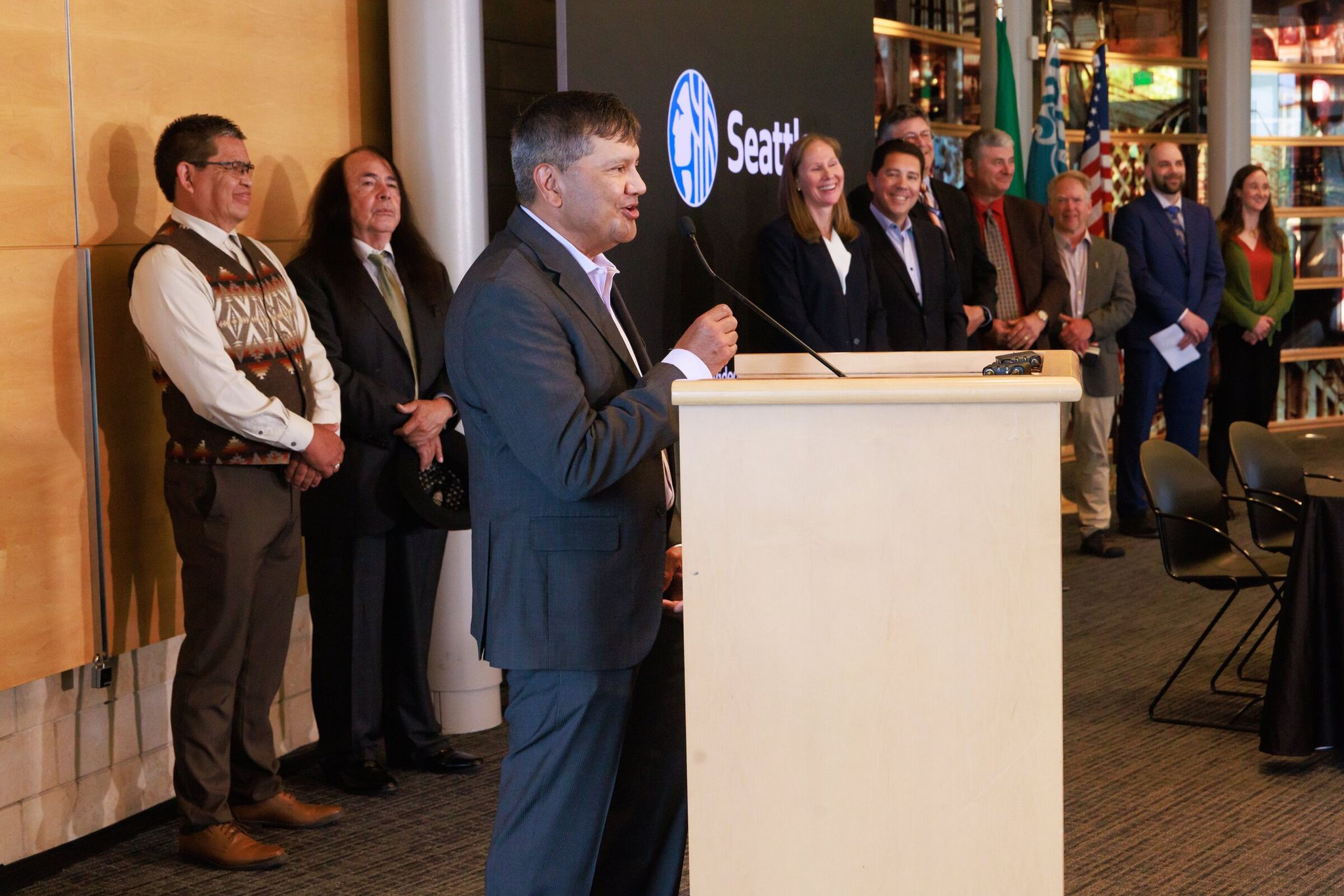
Upper Skagit elder Scott Shuyler, who led negotiations with city officials, noted that this journey began 124 years ago when his people had no voice or choice in the construction of the first dam. “Today, by signing this agreement, we see redemption,” Shuyler said. “From now on we have a voice.” Negotiations included tribal representatives, federal and local officials, and environmental groups, and Mayor Wilson emphasized that Indigenous leadership and expertise are reflected in the final document. The Upper Skagit Indian Tribe and the Swinomish Indian Tribal Community are federally recognized tribes in the state of Washington, whose legal status is based on Indigenous sovereignty recognized through treaties and laws such as the Indian Reorganization Act of 1934. That status gives tribes “government-to-government” rights, allowing them to negotiate with authorities as equals and to hold water rights secured in treaties.
For the Swinomish Tribe, whose chairman Steve Edwards was among the participants, the agreement carries deep cultural meaning. “Salmon are part of our culture, our traditions and our identity,” Edwards said. “Now the Skagit River has a future that will last for many generations.” He expressed hope that his children and grandchildren will not just read about salmon in books, but see them in person.
The signed document will be sent to the Federal Energy Regulatory Commission, and a new license is expected by 2030, although some work can begin now. Elder Shuyler stressed that the real celebration will come when water is returned to the channel, the first salmon make it past the dams, and fish populations begin to recover. “But most of all the Upper Skagit will celebrate when we return home — to Dahvalib,” he concluded.
Based on: $4B Seattle City Light hydropower deal gets Mayor Wilson’s signature