Due to strong winds at the Seafair festival, the Blue Angels show was canceled. Seattle Sounders are preparing for the derby with Portland: Kim Kee-hee in the starting lineup, Rusnak as captain. After a shooting in the city, a scandal erupted: the mayor had demanded the police chief’s resignation, and the city council expressed no confidence in the administration.
Blue Angels’ Seafair show canceled in Seattle due to wind
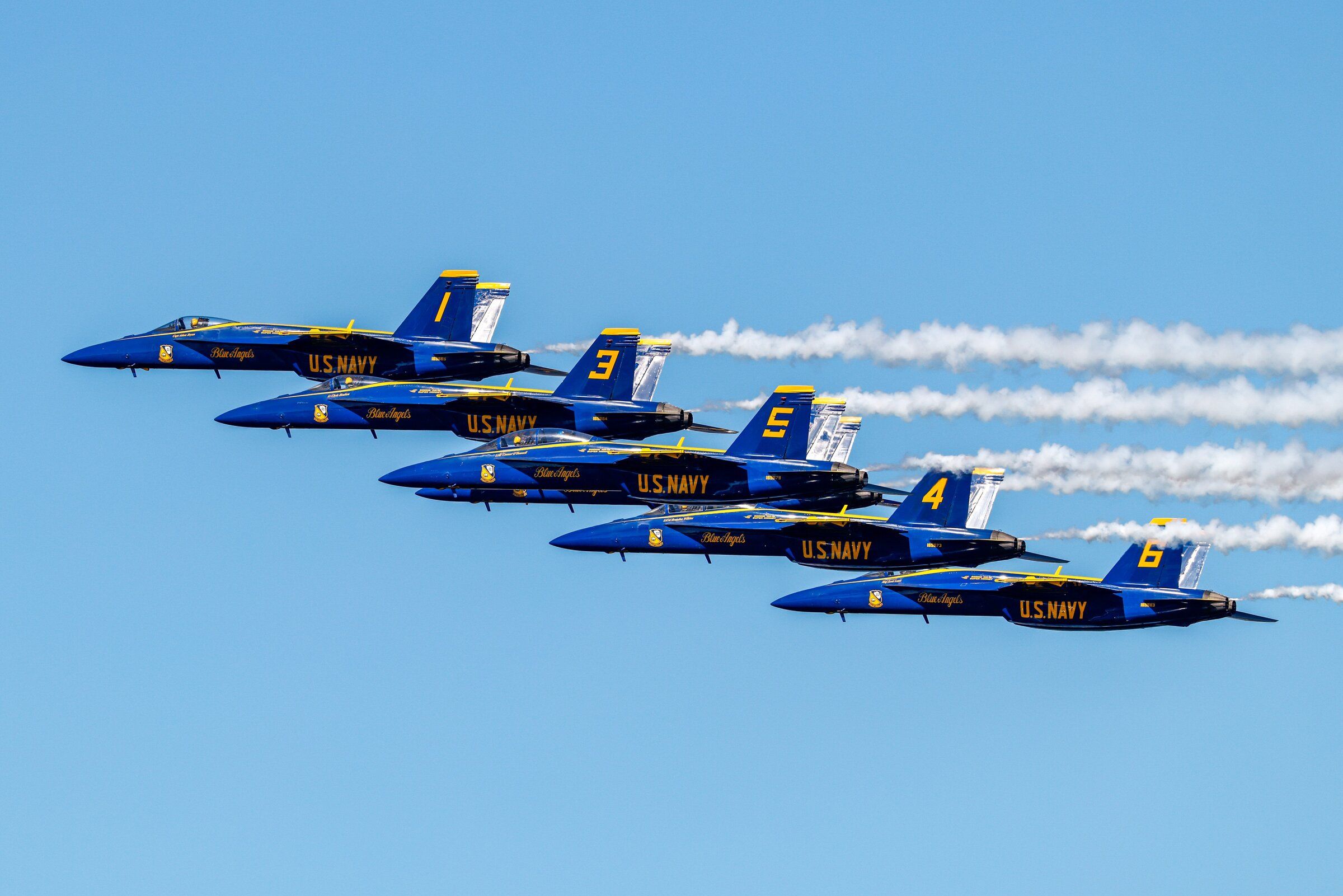
Organizers of Seattle’s annual summer festival Seafair announced the cancellation of Saturday’s air show featuring the famed U.S. Navy precision aerobatics team Blue Angels. The reason was strong winds that exceeded allowable limits for safe flight. The decision disappointed thousands of spectators gathered along Lake Washington’s shoreline, but the organizers emphasized that safety remains an absolute priority.
As reported by The Seattle Times, six F/A-18 Super Hornet fighter jets were scheduled to perform advanced aerobatic maneuvers in the sky over the lake, but weather conditions forced changes. According to the National Weather Service, wind gusts on the west side of Lake Washington, near Magnuson Park, were about 15 miles per hour, and the water in the lake was noticeably choppy. Seafair president and CEO Emily Cantrill explained that the air-show team had been monitoring the wind throughout the day and recorded the strengthening in the second half of the day. Five other aerobatics teams managed to perform safely earlier, but for the Blue Angels the gusts proved critical: they exceeded the threshold set in the team’s own technical specifications.
It’s also worth noting that Saturday was remembered not only for the cancellation of the main air performance. About eighty protesters gathered at the festival site to express their opposition to military pilots taking part in a civilian celebration. The rally, called “No Blue Angels,” brought together climate activists, opponents of war, doctors, and local residents. In their statement, they urged Seafair organizers to give up military air shows and find alternative ways to celebrate summer—celebrating the region’s waters and cultural traditions.
Despite the Blue Angels’ cancellation, the organizers said they were confident that Sunday, the festival’s final day, would go ahead as planned: the weather forecast offers hope that the wind will die down. In addition, Saturday morning’s seaplane races were canceled, but daytime boat events still took place. In this way, the festival continued—just without its most spectacular act.
For those unfamiliar with these events, it’s helpful to clarify: Seafair is a traditional summer festival in Seattle held since the early 1950s and featuring seaplane races, air shows, and a variety of entertainment along the waterfront. Blue Angels is the elite U.S. Navy aerobatics team, formed in 1946, that performs on F/A-18 Super Hornets and is known for its complex, synchronized advanced aerobatic maneuvers. The decision to cancel flights due to wind is not made at random: even if winds appear moderate at 15 miles per hour, gusts near ground level can seriously affect an aircraft’s handling when executing maneuvers at low altitudes—creating an unacceptable risk for both the pilots and spectators.
The lesson from this situation is clear: organizers of major air shows are willing to trade spectacle for safety, and that is the right approach. At the same time, the incident highlighted growing public tension around military displays at civilian events: protests against the Blue Angels in Seattle are becoming more visible, and organizers may in the future have to find a balance between tradition and changing public sentiment. For now, spectators can only hope for good weather on Sunday and the chance to see the legendary fighter jets in the sky over Lake Washington.
Kim Kee-hee returns to the lineup, and Albert Rusnak gets the captain’s armband: Seattle Sounders announce lineup for match in Portland
Seattle Sounders head coach Brian Schmetzer has finalized the lineup for the away match against the Portland Timbers, to be played at Providence Park. In an official announcement posted on the club’s website, it’s confirmed that the South Korean defender Kim Kee-hee returns to the starting XI, while the captain’s armband for this match goes to Slovak midfielder Albert Rusnak. The match itself is scheduled for 7:30 p.m. Pacific Time, and fans can follow it via Apple TV’s streaming service, as well as on FS1; on the radio at 93.3 KJR FM or in the Spanish-language broadcast on El Rey 1360AM.
For those not too familiar with soccer terminology, it’s worth explaining that “starting lineup” refers to the exact eleven players who take the field from the first minutes—not players who come on later from the bench. Kim’s return to the starting XI is an important signal: the experienced defender, whose inclusion in the start is not always guaranteed due to rotation and a packed schedule, is clearly being considered by the coaching staff as a key element of the back line specifically in this high-stakes rivalry match. Meanwhile, the captain’s armband Rusnak wears is not just a formality, but a sign of trust and recognition of the player’s leadership on the pitch. Typically, the captain serves as a link between the team and the referee, and also takes on extra responsibility for the emotional tone of teammates in a tough away environment.
It’s also notable that matches between Seattle and Portland always carry special weight: it’s a classic Cascadia derby in which not only the standings matter, but also the fierce rivalry between two U.S. Northwest cities. Playing on Portland’s home turf is traditionally a difficult test, as local supporters create an especially dense and loud atmosphere. That’s why coaching-staff lineup decisions in such matches are often decisive. The lack of lengthy tactical commentary in the announcement is, however, perfectly understandable: coaches usually prefer to reveal tactical details after the opening whistle, and until then they stick to a dry confirmation of facts.
In a club official note on its website, it’s also mentioned that the lineup is published as the “Delta Starting XI”—a sponsor name for the starting eleven, tied to the club’s partnership with the airline Delta. For careful observers, the choice of captain and Kim’s return to the starting XI provide plenty to think about: Schmetzer is likely leaning on experience and reliability in defense, while expecting Rusnak to take control of the midfield. Although the short preview includes neither detailed tactical breakdowns nor player comments, the lineup alone says a lot—the derby does not tolerate experiments, and the coach has opted for tried-and-true options in key positions. Ahead for Sounders fans is a tense evening, and now everything will depend on whether the team can deliver on the plan on the field.
A week of chaos in Seattle: the mayor and police lost control of the situation
Seattle is arguably facing the most severe crisis in city governance in years. After a mass shooting on Sunday that killed three people, the mayor and the police chief—rather than coordinating their response—got into a public back-and-forth that instantly eclipsed the tragedy itself. The city council, the police union, and local media all say the administration has completely lost their trust, while the main suspects in the killings are still at large. It’s a story of how political inexperience and inflated ambition turned a routine management failure into a large-scale crisis of trust—forcing even seasoned officials to dig up World War II-era military acronyms.
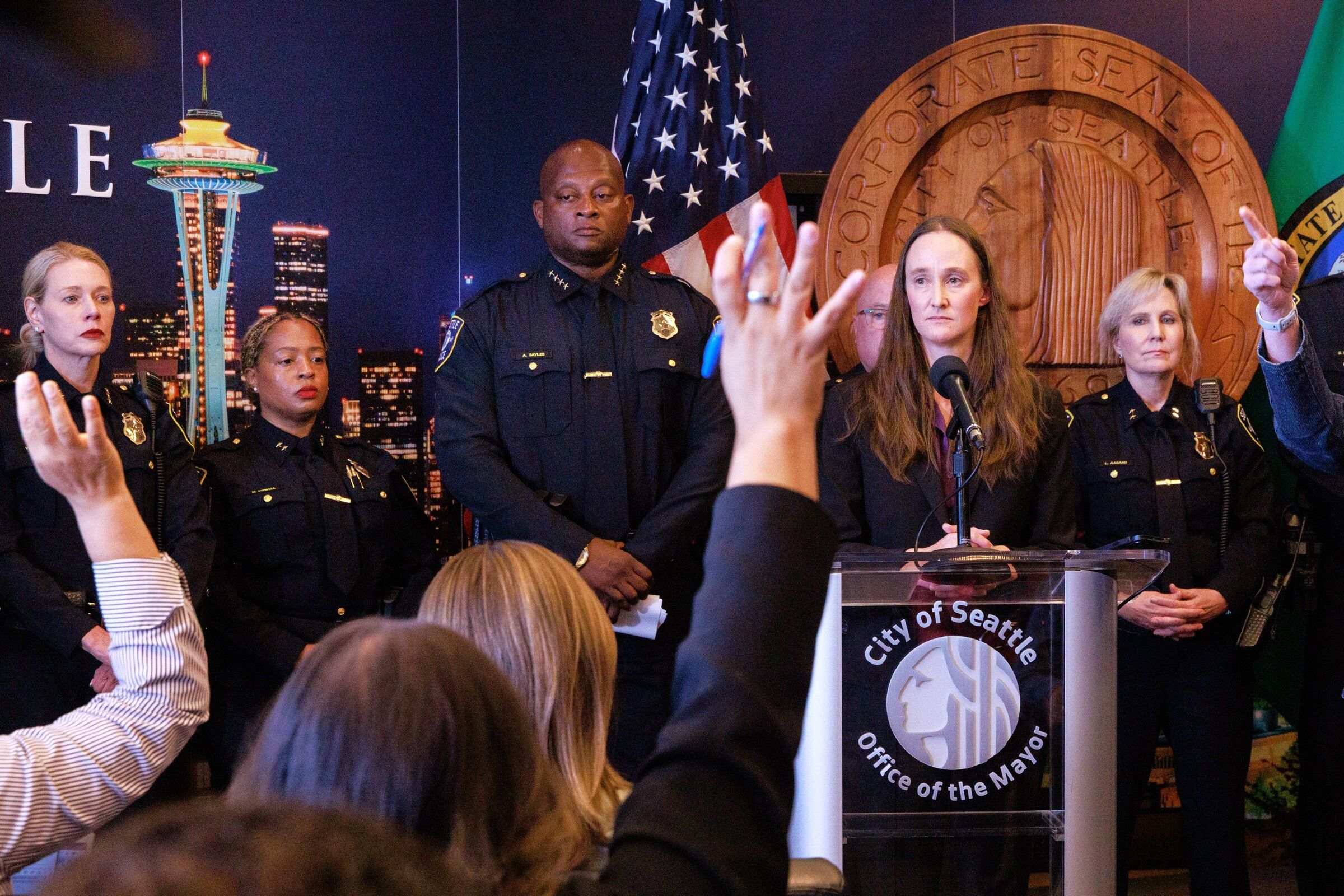
What happened in Seattle this week is hard to call anything other than a failure. On Sunday evening at the Bite of Seattle festival, unknown assailants opened fire on the crowd, killing three people. Police quickly arrested one of the alleged participants in the shooting, but the lead shooter—and, according to the new acting police chief, possibly several other suspects—disappeared. And that’s where things get most strange: city officials did not publish any information for several hours. Neither City Hall nor the police department was reachable while rumors of a Columbine-style terror attack shook the city. Social media filled with panicked questions, and residents demanded some clarification. When Mayor Cathy Wilson finally appeared on camera, she looked flustered and effectively admitted she hadn’t understood the scale of the information disaster. “At the time, I didn’t realize how little information had reached the public and the press since the incident at 6 p.m.,” she said. “If I had known, I would have insisted on an immediate briefing.” For a mayor with a huge staff, that lack of knowledge looks, to put it mildly, unusual—and it’s no surprise that her explanation only poured fuel on the fire.
But the real scandal erupted around Police Chief Sean Barnes. It turned out that during a major event he was outside the city, and rather than dealing with the situation, the mayor issued an order demanding his resignation. At the same time, Wilson never named clear reasons for firing Barnes—either at a press conference or in official statements. The council, which has seen four mayors and six police chiefs change over a decade, was in shock. “This is more than just mistakes or miscalculations,” councilmember Debora Juarez said in an interview with KOMO News. “I see a complete lack of leadership and, for some of us, a lack of trust in this administration.” Six of the nine council members, in one way or another, expressed no confidence in the mayor, and four released a joint statement warning that “changing police leadership at this moment puts the city in danger.” Councilmember Maritza Rivera spoke of “incompetence and bad decisions,” while Joy Hollingsworth called the mayor’s actions “irresponsible and reckless.” Even the police union, typically restrained in public assessments, accused Wilson of creating “chaos, confusion, and contradictory messages.”
The irony is that Barnes himself, judging by the available information, doesn’t appear to have been a bad chief at all. Crime conditions in Seattle improved under him, overall crime fell, and the city was clearly moving in the right direction. The issue of his travel was an elementary personnel-management matter the mayor should have handled directly with him—not carried out as a public execution. Local media outlet The Medium’s publisher Chris Bennett rightly noted that firing Barnes without explanation looks like an attempt to make him a scapegoat: “Seattle deserves a clear explanation based on his overall performance, not political circumstances or a desire to redirect public anger.” At a press conference on Friday, Wilson answered evasively: “As the head of the executive branch of the city, I see what other people do not.” But when asked what exactly she sees, she did not provide an answer.
This scandal isn’t just another episode in political fighting. It exposed a deeper problem in modern politics, which the article’s author calls a triumph of populism. The core idea is that voters—tired of mistakes and the bureaucracy of the establishment—are increasingly betting on “fresh faces,” people without experience managing government. That’s how Donald Trump came to power, and—according to a Seattle Times columnist—that’s how Cathy Wilson, a former activist who had never held elected office, became mayor of a major city. But governing a state isn’t a business or a public campaign where you can rely on enthusiasm and intuition. Here you need specialized skills, the ability to communicate, and decision-making in crisis situations—and this week in Seattle clearly showed what happens when those skills are lacking. While the mayor and council worked out who was to blame for the lack of information, the killers were still at large, and council members, in despair, reminded people, “We’re still in the middle of the crisis.” It’s hard to think of a more precise illustration of the famous military acronym SNAFU—“situation normal, all hell breaks loose.” All that remains is the plain question the author asks at the end of the piece: is it really too much to ask that the job just get done? Apparently, in Seattle, yes. You can read more about the course of the crisis in the original Seattle Times article.
The author deftly uses military slang to describe the atmosphere in City Hall. The term SNAFU (“situation normal, all hell breaks loose”) and its rougher cousin FUBAR (“totally fouled up, beyond all recognition”) emerged even during World War II to describe chronic confusion in the Army’s chain of command, when soldiers watch their own command’s ineffectiveness with cynicism and resignation. In the context of Seattle, these acronyms mean the crisis isn’t driven by external circumstances, but by a systemic inability of leadership to do its basic job. Particular attention is also due to a telling detail: neither City Hall nor the police were able to quickly dispel rumors of a Columbine-style mass shooting, even though police knew it involved clashes between street gangs rather than a terror attack. The fact was confirmed by the shooter who was detained within the first minutes. The information silence, combined with the subsequent fallout between the mayor and the police chief, meant that the main question—how to prevent something like this in the future—was completely pushed out of the agenda. Over the course of the week, city authorities spent enormous political capital and still did not give the public a clear answer about either the progress of the investigation or the reasons behind the personnel shake-up. For Seattle, where no mayor has been re-elected for a second term for two decades, this is an especially worrying sign: the city appears to be entering a new phase of chronic instability, and voters may be doomed to keep experimenting with untested candidates.