
On September 18, the Seattle City Council will discuss a proposal to temporarily reduce Mandatory Housing Affordability (MHA) fees, which help fund affordable housing construction. The initiative, introduced by land-use committee chair Dionne Foster, would cut fees by 80 percent for two years for projects that have already been approved but are stalled, and by 60 percent for new 2027 projects if they include enough family-sized apartments. The goal is to revive a nearly frozen construction market without abandoning the city’s affordable-housing program altogether.
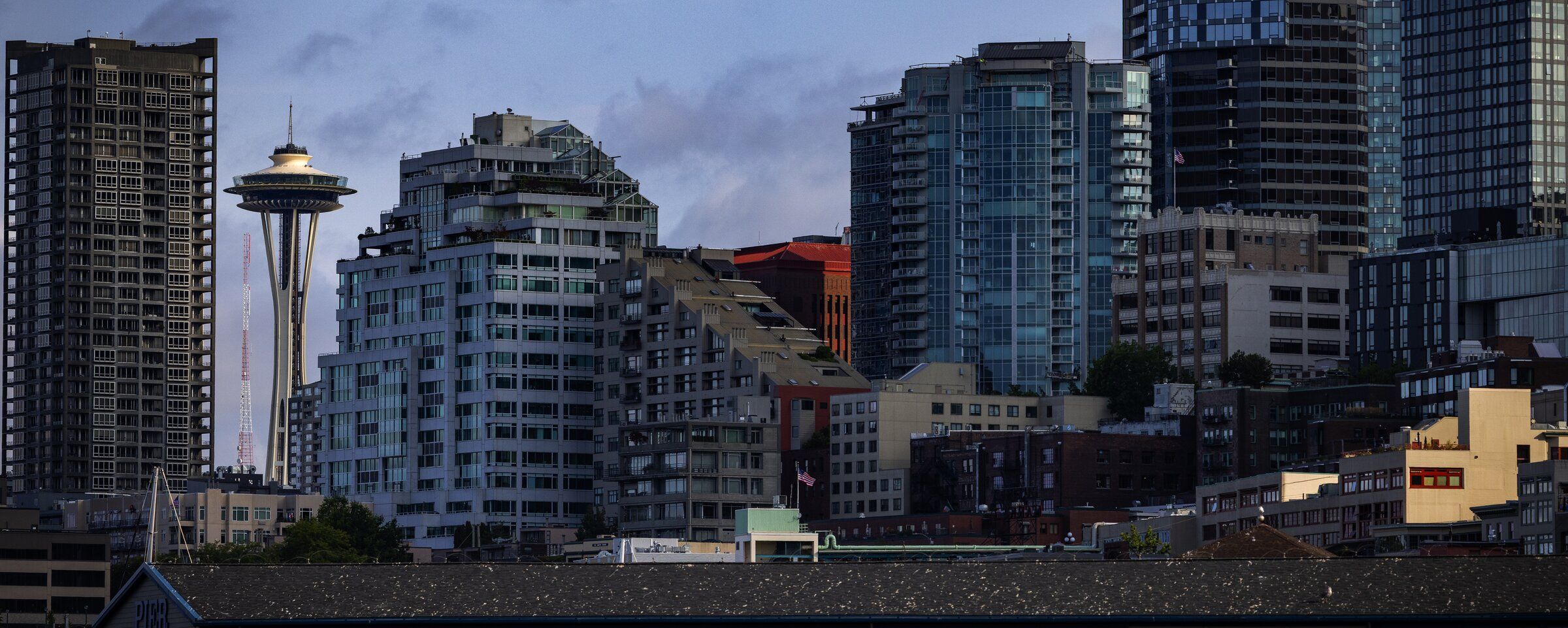
Seattle residents have long been accustomed to seeing tower cranes as part of the landscape, almost as constant as the rain over Elliott Bay. But the city is now facing a more troubling scene: permits for new apartment buildings are becoming less common, while projects that have made it through lengthy approval processes cannot secure financing. High interest rates, expensive labor and materials, and uncertainty in the rental market have turned many developers’ calculations into an unsolvable equation.
At the center of the dispute is the MHA program, introduced citywide in 2019 as part of Seattle’s previous housing strategy. In exchange for permission to build more densely or higher, a developer must either set aside some apartments at regulated prices or pay into the city’s affordable-housing fund. When the construction market was booming, the system generated significant revenue: fees reached $74 million in 2021. But the decline in new construction has reduced the flow of money. The city collected $47 million in 2025 and, according to industry estimates, about $7 million in the first eight months of 2026.
Foster’s proposal is called the Housing Accelerator. For roughly 35 projects with approved permits but no finalized financing, it would provide an 80 percent reduction in MHA fees for two years. In return, developers would have to reach foundation inspection within that period. The city is trying not merely to make paper projects cheaper, but to ensure that work actually begins at the sites. According to the Seattle Housing Roundtable, a developer coalition, more than 6,000 apartments fall into this category.
The terms are stricter for projects that have not yet received final permits. They would qualify for a 60 percent fee reduction only in 2027 and only if at least one-quarter of the apartments have two or more bedrooms. The requirement reflects Seattle’s longstanding problem: the market readily produces studios and one-bedroom apartments, but far fewer homes suitable for families with children. Such projects would have three years after receiving a permit to begin construction.
The compromise also has geographic limits. The incentive would not apply to new projects in the Central District, Chinatown–International District, or much of southeast Seattle—areas where the risk of displacing longtime residents is particularly high. MHA fees have historically been higher there because the program is based on the idea that new market-rate housing can accelerate change in vulnerable neighborhoods. Two of the stalled projects covered by the proposal are in those areas, but both are planned for vacant sites.
A similar effort nearly became official in the spring, but collapsed after nonprofit affordable-housing developers and their allies declined to support it. For them, MHA remains an important, albeit unstable, source of funding at a time when federal financing also looks uncertain. Critics ask whether the discount could become a giveaway to the private market without any guarantee that new homes will be built. Supporters counter that an unbuilt home creates no apartments, jobs, or affordable-housing revenue.
Mayor Katie Wilson has not opposed the current proposal, but has indicated that she will focus on the work of her housing-construction task force, which is expected to recommend a longer-term reform of MHA and other measures to prevent displacement. With the budget season beginning, a final vote on the accelerator will likely not take place before January. Until then, Seattle will have to decide what poses the greater risk: temporarily collecting fewer affordable-housing fees or allowing the construction slowdown to become the new normal.
Based on: Seattle revisits plan to spur housing construction by slashing fees