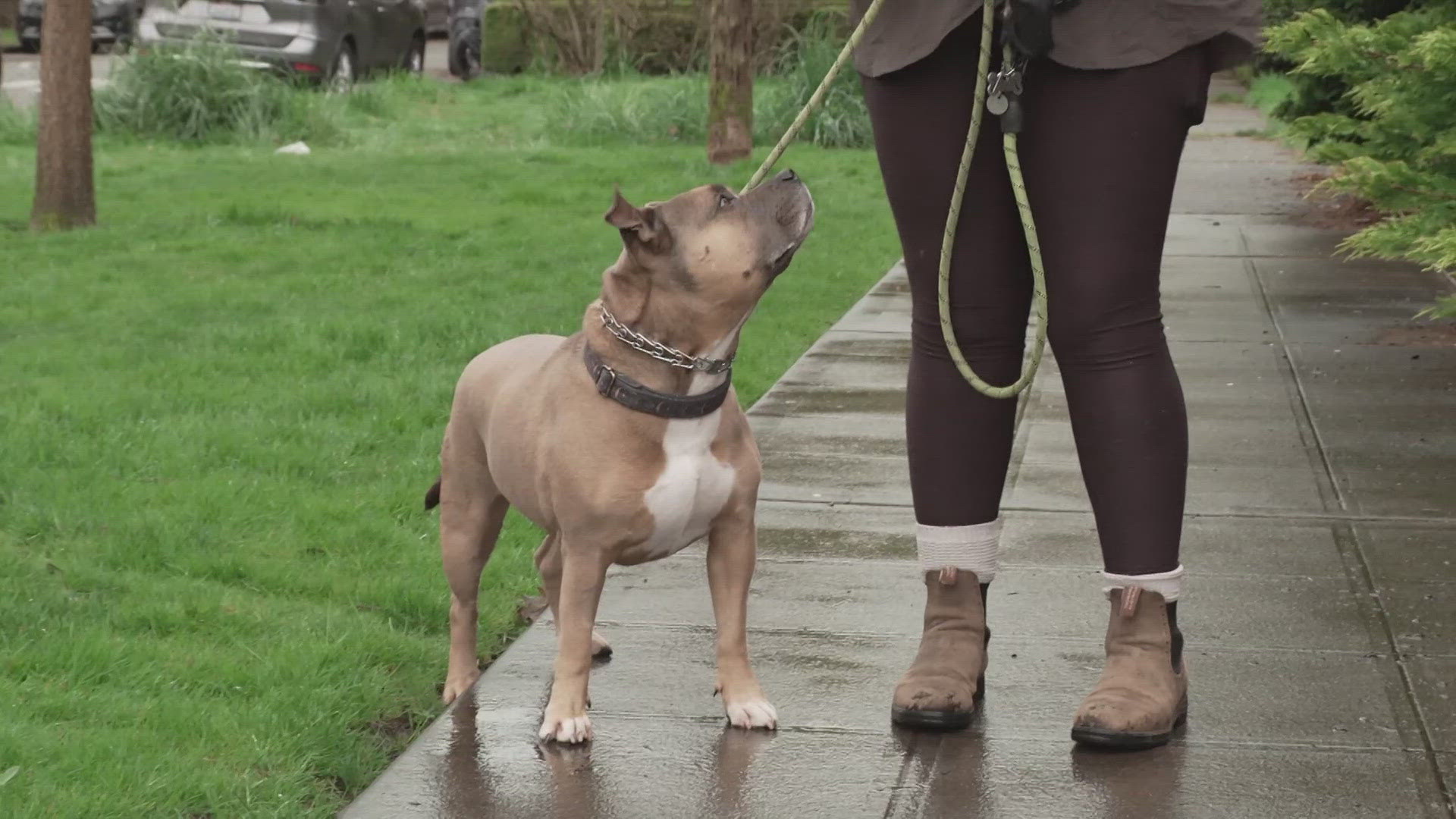
In Seattle, observers witnessed a rare waterspout, and dogs from a homeless encampment attacked a dog walker and pet. Authorities began clearing a large encampment in West Seattle, exposing the depth of the city’s crisis.
Unexpected visitor: a waterspout spotted over Puget Sound
Residents of western Washington were treated Wednesday to a rare atmospheric event. A waterspout was seen over the waters of Puget Sound near Seattle, the National Weather Service (NWS) reported. The event was part of a dynamic weather pattern for the day, when thunderstorms moved quickly through the region.
According to a post on the National Weather Service’s Seattle account on X (formerly Twitter), @NWSSeattle, the phenomenon was recorded Wednesday, April 15, 2026, at approximately 3:00 p.m. local time. The waterspout was observed about three miles west of the Magnolia neighborhood in Seattle, corresponding to the location “3 miles east-northeast of Winslow.” Forecasters described the funnel as brief and noted they received corroborating video from television stations. The event occurred amid active thunderstorm activity that brought rain, hail, and lightning to the region. A waterspout is essentially a tornado that forms over water rather than land. It forms when cold air from a thundercloud moves over relatively warm water, creating a rotating column that draws in spray and mist. While such spouts are generally less powerful and destructive than their land-based counterparts, they remain an impressive and uncommon sight for Puget Sound. As noted in the weather service’s post, the event was officially recorded in NWS reports. The incident is a reminder that even regions with relatively mild climates—such as the U.S. West Coast—can see surprising atmospheric events. Short-lived but intense weather phenomena like this thunderstorm with a waterspout underscore the importance of monitoring forecasts and being prepared for sudden changes in conditions, especially for those on the water or in coastal areas.
Dogs from homeless encampment mauled a dog walker and pet in Seattle
A tragic incident in Seattle has once again highlighted the complex problems of urban life: dogs belonging to residents of a homeless encampment attacked a dog and its walker, shocking the local community and raising sharp questions for city officials. The incident occurred in the Georgetown neighborhood, where about eight recreational vehicles (RVs) were parked along South Lucile Street. Two large dogs ran out from there, which witnesses described as Dobermans or Rottweilers. They attacked a seven-year-old American Bully named Frank and his walker. Witnesses compared the scene to wild animals attacking a deer.
Frank suffered puncture wounds nearly an inch deep (about 2.5 cm), requiring emergency surgery and resulting in a $2,500 veterinary bill. His walker, who was knocked to the ground by the dogs, sustained a wrist sprain, abrasions, and a mild concussion. She has not returned to work. Frank’s owner, Sarah Engstrand, said her walker didn’t even approach the encampment—the dogs ran across the street and literally dragged Frank into the roadway. Paul Waterson, the owner of a nearby business who was driving a truck, witnessed the attack. He slammed on his brakes when the dogs ran out in front of his vehicle. “They ran straight at that poor woman with the dog and immediately started tearing and ripping. I wouldn’t want to see anything like that ever again,” he said. According to him, a woman driving the opposite direction stopped and tried to stop the attack by kicking the dogs and grabbing their leashes. Eventually, a woman from the encampment retrieved the dogs and led them away, acting “as if nothing had happened.”
After the attack, Frank spent the first week at home on heavy sedatives, antibiotics, and painkillers. He has regained only about 30–40% of his usual energy, is anxious on walks, and startles at the sight of other dogs or people approaching from behind. Sarah’s partner, Bryce Aberg, wrote to the office of City Councilmember for District 1, Rob Saka. In a response, available in the KING5.com piece, Eric Schmidt, Saka’s chief of operations, acknowledged the encampment issue. He noted that Georgetown has the largest concentration of RVs in Seattle and that cleared parking areas often refill within days. “This is unfair to you and your community, and we recognize that,” Schmidt wrote. He also said the city is working to restore the parking enforcement officer unit, which is currently severely understaffed, and that within the next month or two a new safe RV lot on West Marginal Way will open with space for up to 70 vehicles. Saka’s office asked that RV residents from Georgetown be prioritized for relocation.
However, nearly 10 days after the attack, Aberg wrote Schmidt again saying animal control had still not assigned an officer to investigate the case. “The dogs involved in the attack are dangerous, and it’s only a matter of time before they injure another animal or person,” Aberg warned. Schmidt promised to forward the matter to the Department of Finance and Administrative Services, which oversees animal control. An investigation was later started, but Sarah Engstrand remains pessimistic about a long-term resolution. The incident highlighted not only the obvious risks associated with uncontrolled large dogs in encampments, but also Seattle’s systemic difficulties in managing the homelessness crisis and ensuring public safety. Frank and his walker’s story became a personal tragedy against the backdrop of a broader urban problem that city officials have struggled to solve.
Clearing the West Seattle homeless encampment: the result of a years-long crisis
Seattle authorities finally began clearing a large homeless encampment in West Seattle that had for years been a source of crime, drug use, and violence. The operation marked the culmination of a prolonged standoff between local residents, city administration, and the encampment’s inhabitants, with the situation reaching a critical point where public safety and health concerns outweighed other considerations.
Early Wednesday morning, Seattle city crews began clearing the homeless encampment at Rotary Viewpoint Park, near the West Seattle golf course. According to MyNorthwest.com, multiple departments responded to the site. For local residents, the action was long-awaited, as they say the camp had been an epicenter of problems for years: from vandalism and theft to open drug use and acts of violence. Seattle City Councilmember Rob Saka, who represents the area, called the situation “completely out of control.” He emphasized that the problem had escalated into a serious public safety and health challenge, compounded by a recent fatal overdose and incidents of violent beatings. His quote in the article vividly describes the tense situation: “There’s a huge public safety problem there... Now, with the overdose death situation, it’s completely out of control.”
But behind the dry facts of the site clearance lies a human drama. One encampment resident, Adin, told KIRO Newsradio how the city’s actions looked from the perspective of those directly affected. He said people received three days’ notice before the clearance and were trying to save their few belongings by moving them onto the sidewalk. Social workers also visited the camp offering help and shelter placements. City officials say the goal is not just to clear the park but to ensure unhoused people have access to shelter and support. Nevertheless, Adin’s words reflect a sense of hopelessness and alienation: “We’ll just put our stuff on the sidewalk so it won’t get thrown out. And after that, I guess we’ll sleep where we fall.” His comment that “many people just don’t consider the rest of the community” points to a deep divide between the encampment and local residents, and to the ineffectiveness of past attempts to address the issue “out in the open” without tackling root causes.
The clearing of this particular camp is not an isolated incident but a symptom of a larger, protracted homelessness crisis that Seattle—like many other major West Coast cities—has been battling for years. The terms “clearance” or “sweep” in the American context often mean forcibly evicting people from encampments and confiscating belongings, a practice that regularly sparks debate over human rights and the effectiveness of such measures. On the one hand, authorities are obligated to ensure order and safety in public spaces for all citizens. On the other, such actions—if not accompanied by real alternatives and solutions for mental health, addiction, and housing affordability—are temporary fixes that simply displace the problem. The overdose death mentioned by Saka’s aide is a tragic confirmation that people in encampments remain vulnerable to the gravest risks.
Thus, the West Seattle operation highlights the classic dilemma of urban governance: how to balance a community’s right to a safe environment with the rights of its most vulnerable members to a decent existence. The short-term result is a cleared park and perhaps temporary relief for anxious neighbors. But the long-term question remains open: where will these people go, will Adin and others receive real help, or will they simply “sleep where they fall” in another part of the city, starting a new cycle of conflict and suffering? Clearing the encampment removes the acute symptom but does not cure the underlying disease of systemic homelessness.