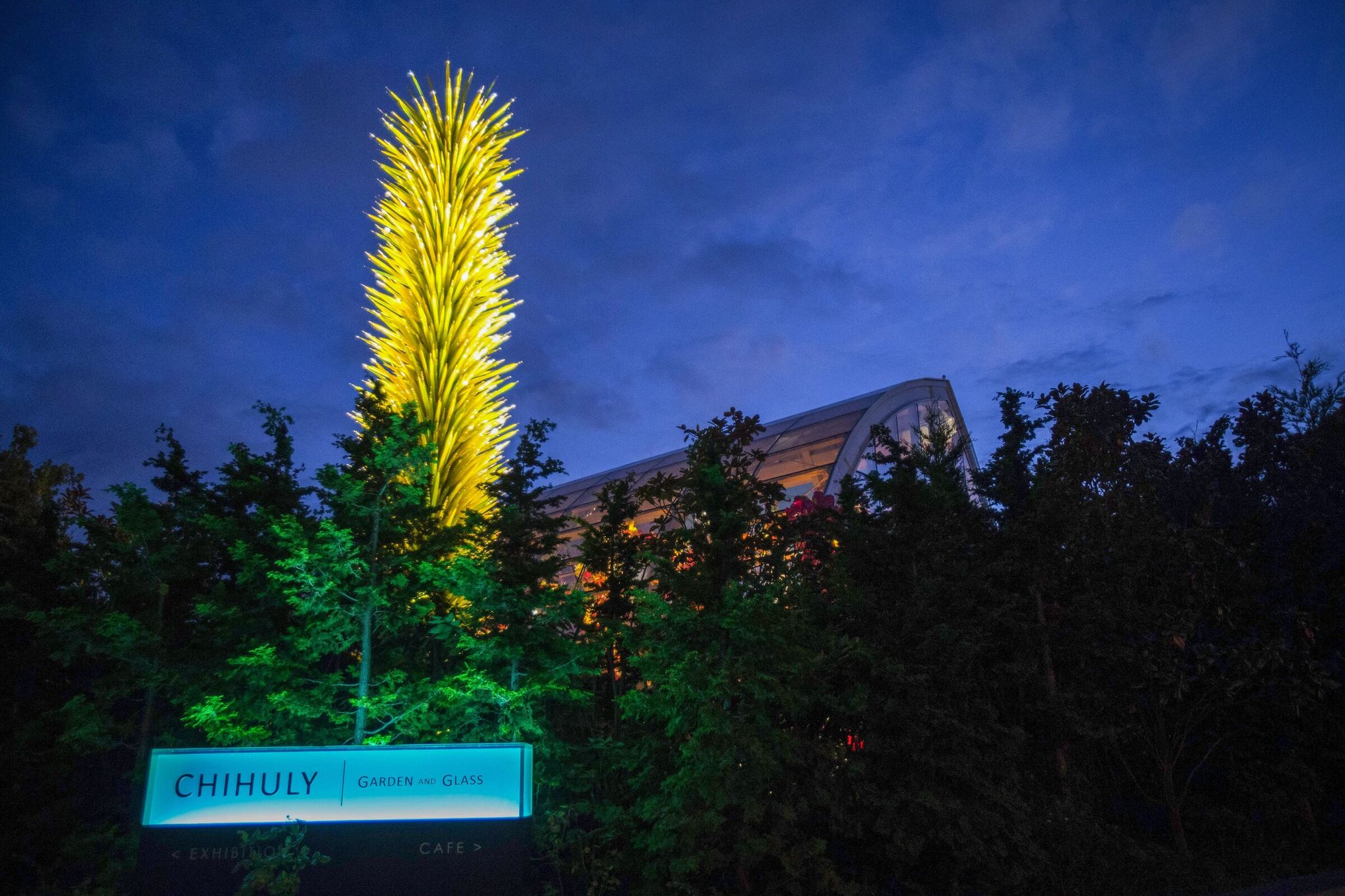
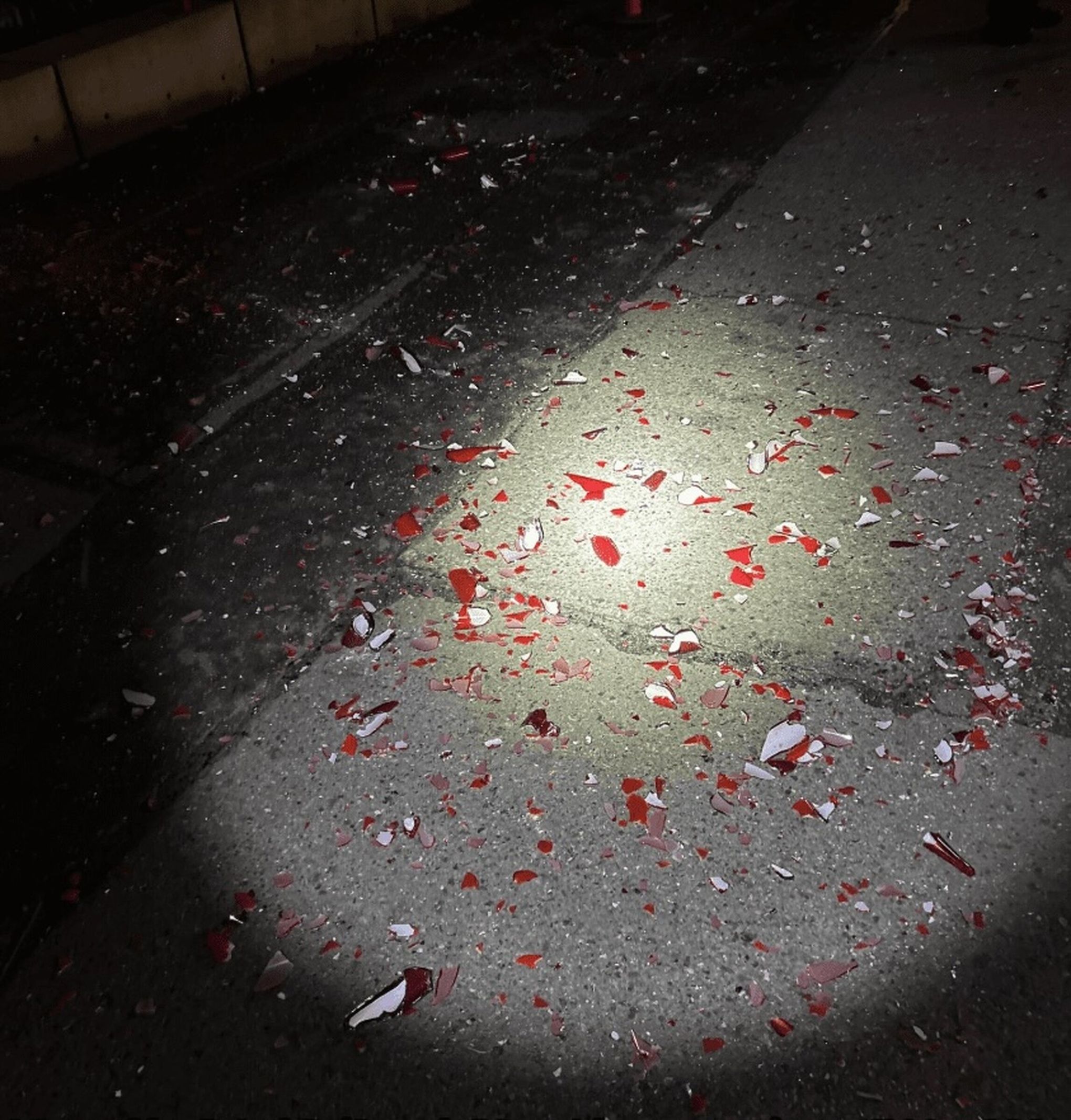
In Seattle, a vandal caused $240,000 in damage to the Chihuly glass museum and attacked a security guard. At the same time, the NBA is considering returning the SuperSonics to the city by 2028, discussing league expansion alongside Las Vegas.
Vandal Causes $240,000 in Damage at Seattle’s Chihuly Garden and Glass
An incident in Seattle shocked the cultural community and raised concerns about the security of artworks. City police arrested a 40-year-old man accused of causing more than a quarter-million dollars in damage at the Chihuly Garden and Glass museum. This act of vandalism not only inflicted material loss but also endangered the life of a museum employee, turning an ordinary property crime into one with elements of violence.
According to a police report published in The Seattle Times, the incident occurred late Monday evening. A museum security guard found an individual destroying colorful glass sculptures shaped like plants in an outdoor area of the museum grounds. The vandal’s behavior quickly escalated from destructive to aggressive: he began throwing shards of glass at the guard and then, after picking up a large shard, tried several times to strike the security officer with it. Fortunately, the guard was unharmed, having retreated and waited for police to arrive. Responding officers encountered resistance but ultimately detained the suspect. The man was taken into custody on suspicion of burglary and assault. The museum, located at Seattle Center — a well-known cultural and entertainment complex that also houses the iconic Space Needle — has not yet commented on the incident. For context: Chihuly Garden and Glass, opened in 2012, is a permanent exhibition of works by Dale Chihuly, the world-renowned glass artist whose large, colorful installations have become a hallmark of the Pacific Northwest. The $240,000 in damage is more than a number; it reflects the value of unique, painstakingly handmade works whose restoration may be extremely difficult or even impossible to return to their original state. This incident raises important questions about protecting public art, especially in open spaces accessible at night. Although the physical attack on the guard was prevented, the mere attempt to strike someone with glass indicates extremely dangerous behavior by the suspect. The event also serves as a reminder of the fragility of art and the vulnerability museums face as they balance public accessibility with the need to protect priceless collections.
Thunder Returns? NBA Prepares to Vote on Expansion Targeting Seattle and Las Vegas
Talk of bringing the legendary Seattle SuperSonics back to the NBA has entered an active phase. According to recent reports, the league is close to formally launching an expansion process, with Seattle and Las Vegas as leading candidates for new franchises as soon as the 2028–29 season.
KOMO News, citing an informed league source, reports that the NBA Board of Governors will vote at its March 24–25 meeting on whether to begin exploring teams in those two cities. The scoop was first reported by noted journalist Shams Charania on ESPN. He also noted there is momentum among team owners to approve the step, and industry experts predict expansion fees could reach an astronomical $7–10 billion per franchise. However, KOMO’s source clarified that those figures do not come from the NBA office, and final timelines have not yet been set. A historical parallel is obvious: the last time the league voted on expansion was for Charlotte in December 2002, with that club beginning play in 2004. Any expansion application will likely need to include not only financial commitments but also detailed plans for marketing, ticket sales and digital rights.
The possible return of the SuperSonics has become a hot topic among fans and local officials. Seattle has been without an NBA team since 2008, when the Sonics relocated to Oklahoma City and became the Thunder. The move was prompted by a dispute over the KeyArena lease, which owner Clay Bennett considered outdated. The arena has since undergone a major renovation and is now known as Climate Pledge Arena, home to the NHL’s Seattle Kraken and the WNBA’s Seattle Storm. Business insiders have long speculated a new basketball franchise might build its practice facility on the site of the old Northgate mall, where the Kraken Community Iceplex now sits. That land is owned by the family of Herb Simon, owner of the Indiana Pacers.
Washington state politicians are showing active interest. Governor Bob Ferguson’s office says he had an introductory phone call with NBA Commissioner Adam Silver to express support for a team’s return. “The governor grew up attending Sonics games and the Lenny Wilkens basketball camp. He recently reached out to Commissioner Adam Silver to arrange a meeting. They had a good conversation, and the governor offered his assistance,” explained his press secretary Brionna Aho. U.S. Senator from Washington Maria Cantwell, commenting on local teams’ successes in other leagues, said: “It’s been a really big year for sports in Seattle... But we want our Sonics back, and we’re glad the NBA is finally saying it will start the process of considering two expansion teams.” In her post on X she called the March expansion discussions good news and stressed that there is no city more deserving than Seattle, with its huge fan base and history.
However, a significant obstacle could stand in the way of the SuperSonics’ return: a proposed millionaire tax that has passed the state legislature and is awaiting the governor’s signature. As House Budget Committee Chair Travis Couture noted, the tax could have a “chilling effect” on attracting free agents to Washington’s existing teams by increasing the overall tax burden for athletes. “People, including me, want the Sonics back, but we don’t want to harm any path that leads to that return,” he said. Thus, state economic policy could indirectly affect Seattle’s attractiveness as a basketball market in the eyes of the league and prospective players. Despite this potential challenge, sentiment remains optimistic. Charania writes that if applications meet the required threshold, a final vote to approve expansion deals to 32 teams could occur later this year. Any decision at a given stage would require approval from 23 of the NBA’s 30 team owners. For now, everything suggests that 16 years after a painful farewell, Seattle may finally hear the long-awaited whistle signaling the start of a new basketball era.
Behind the Scenes of NBA Expansion: How Seattle and Vegas Might Build Their Teams
Rumors of NBA expansion have circulated for years, and recent reporting suggests the league may take its first official steps soon. The discussion centers on a potential return to Seattle, which lost its club in 2008, and an NBA debut in Las Vegas — one of the most promising markets. Although a final expansion vote is unlikely before July, per ESPN via CBS Sports, momentum to explore these options is building. Financial terms will be key: expansion fees are expected in the $7–10 billion range, and owners must decide whether that amount justifies diluting their share of league equity. If approved, the target launch for new teams would be the 2028–29 season, with an expansion draft as the first step in forming rosters.
While the exact rules could change, the expansion draft would generally allow existing teams to protect up to eight players but require them to leave at least one unprotected. New teams would then select from those unprotected lists, with each existing franchise limited to losing no more than one player. With two new clubs filling 15-roster spots apiece, the draft could theoretically include one pick from each current NBA team. In practice, the process is more complex because of trades: teams can offer assets (like draft picks) to steer an expansion pick toward a specific player or to avoid taking an unwanted contract.
To illustrate how such a draft might unfold, CBS Sports analysts ran a mock exercise acting as general managers for the Seattle SuperSonics and Las Vegas Villains. They used Spotrac to determine protected and unprotected players based on current contracts and projected salary-cap figures. It’s important to note that in a real 2028 expansion draft, the available players will be completely different, but the core strategic principles would remain.
In the mock draft, Seattle won the coin flip and opened by selecting Lu Dort from the Oklahoma City Thunder. Although Dort is a valuable 3-and-D player (a specialist in three-point shooting and defense), his selection was driven primarily by asset value. With existing teams protecting their top eight, finding an immediate star is difficult, so Seattle viewed Dort as a trade asset that could be swapped for valuable future draft picks. Las Vegas, picking second, took Tyus Jones from the Memphis Grizzlies — a high-analytics offensive player with injury concerns, making him a risky but potentially rewarding choice.
The draft continued with a focus on strategy and positional scarcity. Seattle selected center Wendell Carter Jr. from the Orlando Magic, betting on his ability to shoot threes — a rare skill for a big man. Las Vegas, leaning into the “entertainment city” identity, chose Tyler Herro from the Miami Heat — a flashy guard whose style could attract attention. One of the loudest picks was Zion Williamson from the New Orleans Pelicans, taken by Seattle. Despite injury history, Williamson offers a high offensive ceiling, and his contract includes protective features that mitigate risk for an expansion club.
Key lessons emerged from the exercise. First, asset value often outweighs immediate talent. For example, Rudy Gobert, one of the league’s top defenders, went unchosen because his large contract and age made him less appealing to new franchises that prefer younger players with flexible deals. Second, the expansion draft is only the beginning of team building. Afterward come the regular NBA draft, free agency and numerous trades, so new clubs must maintain financial flexibility. Third, mind games between teams matter: by anticipating an opponent’s choice, a team can either land a valuable player or lose access to an entire roster if that team’s pick “protects” its core by leaving others exposed.
In a real expansion draft, trades will play a huge role. Teams can strike agreements to avoid losing key players or to offload burdensome contracts. Also, new franchises will not receive a full salary-cap allocation; in the mock model a figure of $132.9 million was used, which affects player selection. There are additional nuances with restricted free agents: if an expansion club selects such a player, it acquires that player’s Bird rights (the rule allowing teams to exceed the salary cap to re-sign their own player), but the player loses restricted status and could sign elsewhere, adding another layer of risk.
Ultimately, the mock rosters for Seattle and Las Vegas look like mixes of young talent, established veterans such as Klay Thompson or Al Horford, and gamble picks like Bronny James chosen by Vegas largely for marketing reasons. These lineups are far from ideal and would require significant offseason work. But the experiment demonstrates that NBA expansion is not simply adding two teams; it’s a complex strategic process where financial calculations, asset management and long-term vision can matter more than immediate on-court success. If the league moves forward, fans can expect an exciting new chapter in basketball history, with Seattle potentially reclaiming its storied franchise and Vegas launching a fresh one.