Seattle Sounders’ 1–5 collapse in Vancouver left the team on the brink of falling out of the MLS playoff picture with one matchday remaining; ahead of their game against Orlando Pride, Seattle Reign highlighted the consistency of their lineup: Phoebe McClernon was the only player to start all 30 games this season, while Maddie Mercado is preparing for her 30th appearance; the Kraken completed the long-awaited trade of Shane Wright to the Nashville Predators for Matthew Wood — the club put an awkward situation with a young center behind it, but still did not land a star.
Vancouver rout leaves Seattle Sounders on brink of playoff elimination after 1–5 loss
On Sunday at BC Place in Vancouver, the Seattle Sounders suffered a crushing 1–5 defeat to the Vancouver Whitecaps, a result that could have serious consequences for the Seattle team. The hosts not only routed their opponents but also clinched first place in the MLS Western Conference, while the Sounders found themselves in a precarious position in the race for a playoff spot. The match got off to a disastrous start for the visitors: in the first minute, Bruno Caicedo crossed from the left edge of the penalty area, and Brian White headed the ball into the net for his 19th goal of the season. Eight minutes later, Edier Ocampo passed from the right flank to Ryan Gauld, who fired a first-time left-footed shot past Sounders goalkeeper Andrew Thomas. Jordan Morris had a chance to narrow the gap in the 14th minute, but his header went over the crossbar, while Dejan Joveljić tested Whitecaps keeper Yohei Takaoka in the 22nd minute with a long-range effort after an interception. White nearly scored twice in the 26th minute, but Thomas managed to save his header toward the far corner. In the 43rd minute, Gauld crossed to the far post, where Mathias Laborda headed the ball back from where it had come — straight into Thomas’s net. Just after halftime, in the 53rd minute, White scored his second goal of the game and his 20th of the season: Caicedo raced down the left flank again and sent a low cross to White, who redirected the ball into the far corner. Joveljić and Morris nearly pulled one back in the 58th minute, but Takaoka took the ball off their feet just yards from goal. Caicedo came within inches of scoring himself in the 60th minute, hitting the post. Seattle responded in the 62nd minute: Albert Rusnák played Morris through one-on-one with a defense-splitting pass, and Morris coolly slotted the ball into the far corner. However, the Whitecaps restored their four-goal lead in the 69th minute: on a counterattack, Sheikh Sabaly found Aleksandar Cvetković, and the Serbian midfielder used the outside of his foot to guide the ball past Thomas into the near corner. Hassani Dotson could have added another for the Sounders in the 84th minute, but his attempt to redirect a pass in the middle of the penalty area went straight into Takaoka’s hands. After the match, the Sounders sit ninth in the Western Conference with 43 points from 33 games (11 wins, 12 losses, 10 draws), just one point above the playoff line. A Portland Timbers win later on Sunday could knock Seattle out of the postseason picture, with just one matchday left in the regular season. Three key takeaways from the match include Rusnák recording his 15th assist of the season, tying him for third in MLS with stars such as Lionel Messi, Marco Reus and Son Heung-min — he is one assist short of his personal best, set in 2024. Morris, the club’s all-time leading scorer, netted his third goal of the season in 25 games. And, finally, “there’s still work to do”: the team remains in contention, but its fate is no longer entirely in its own hands. The match report on the official Seattle Sounders website notes that the Whitecaps secured first place in the West, while the Sounders are in a position where any slip-up in the final round could cost them their season. A few points help put the situation in context. MLS is the top soccer league in the United States and Canada, where the regular season determines the playoff qualifiers; the “playoff line” is the informal cutoff between teams that reach the postseason and those whose campaigns are over. A brace is two goals scored by one player in a match. An assist is a pass that leads to a teammate scoring; MLS tracks assists strictly, and 15 in a season is an elite playmaker’s return. A counterattack is a quick transition from defense to attack after winning the ball — the Whitecaps scored their fifth goal this way. The match statistics speak for themselves: Vancouver scored five goals, four of them from crosses and low balls sent in from the flanks, pointing to a systemic weakness in Seattle’s defense out wide. With 20 goals, White is among the league’s top scorers, while Caicedo recorded at least three goal contributions. For the Sounders, the standings are as worrying as the score: 43 points from 33 games is a modest tally, and their goal difference has taken a serious hit. The head coach and players surely spoke after the match about the need to “keep fighting,” but the fact remains: a team that had been challenging for a high finish not long ago now depends on its rivals’ results. If Portland wins its game, Seattle will fall below the playoff line, turning the final matchday into a final for the Sounders — one they must win while hoping their rivals stumble. Such scenarios have happened many times in MLS history, and the Sounders have shown before that they can escape difficult situations. But the team’s current form, after conceding five goals in a single match, raises serious questions. Fans can only wait for the outcome, which will come very soon.
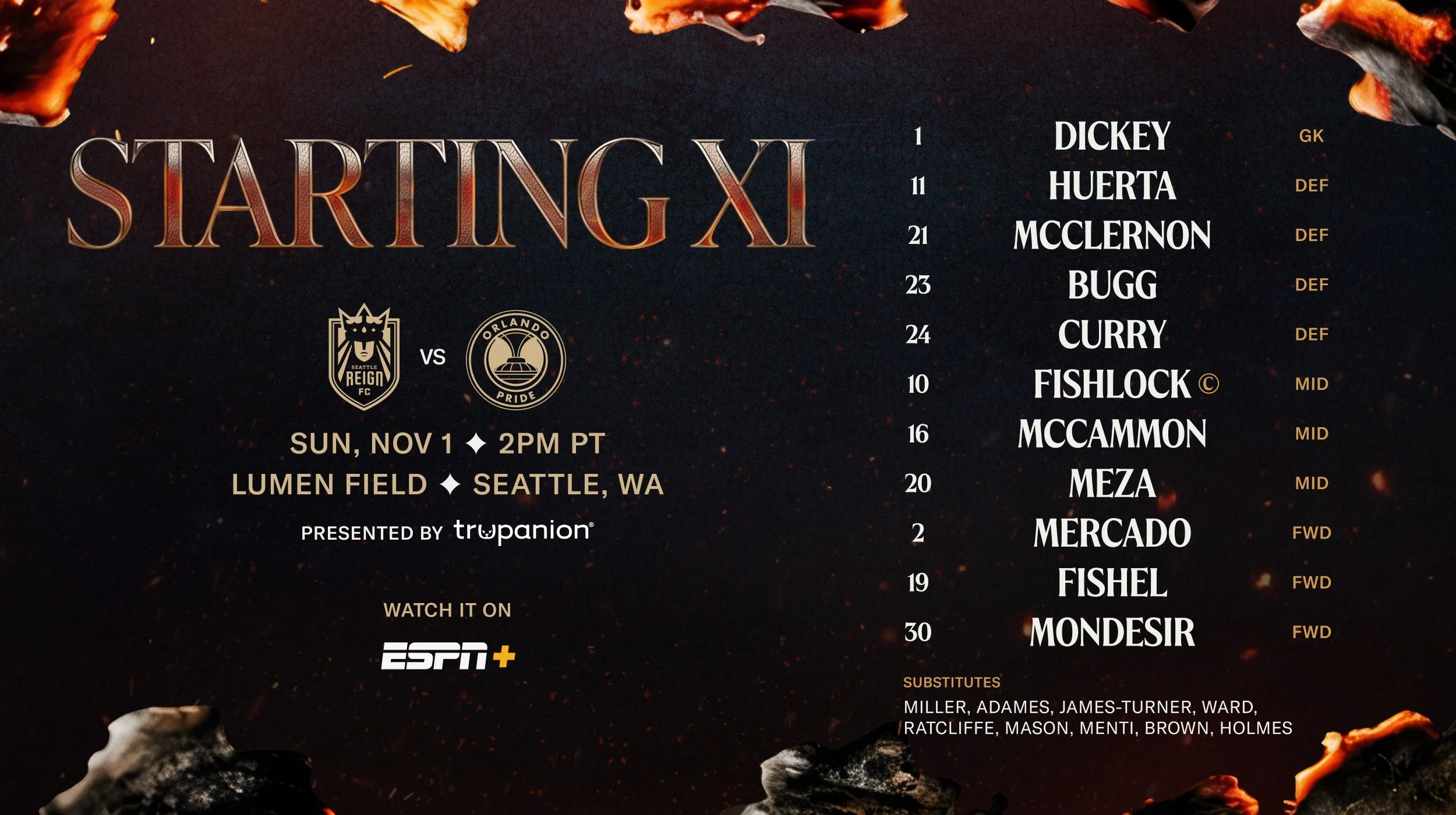
Reign head into Orlando match with one player having started all 30 games
Seattle Reign released their starting lineup for the match against Orlando Pride, and the announcement itself tells an interesting story about how uneven and grueling the team’s season has been. Two players stood out: defender Phoebe McClernon and midfielder Maddie Mercado, whose appearance records say more about their roles on the team than any words could.
The key number in the story is 30. That is how many matches Phoebe McClernon has played this season, and she remains the only Reign player to have started every single game. That kind of consistency is rare in today’s women’s soccer: a packed schedule, injuries, squad rotation and fatigue usually make it difficult for any one player to get through an entire campaign without missing a match. McClernon’s achievement makes her more than a dependable starter — she is a true mainstay of the team’s defense. The coaching staff appears to build its defensive play around her, and her presence on the field is taken for granted. Full information about the match and lineup is available on the club’s official website.
The second player in focus is Maddie Mercado. She is set to make her 30th appearance of the season, becoming the only player besides McClernon to reach that mark. It is worth clarifying that Mercado started 27 of those 30 games, coming off the bench in the other three. This shows that the team relies heavily on her, but uses her a little more flexibly than McClernon. A difference of three matches may seem minor, but over the course of a season it reflects their different roles: one player is an undisputed choice from the opening whistle, while the other is a versatile option who can start or come off the bench to make an impact.
In simple terms, the starting XI is the eleven players who take the field from the start of a match. Publishing the lineup before a game is standard procedure in soccer, but it often prompts a closer look at the statistics. The reference to 30 matches indicates a long regular season, making physical stamina and the ability to avoid injury as important as technical skill. Starting 30 games in a row is, in effect, a testament to professionalism and a level of trust from the coach that few players receive.
The main takeaway from this brief but informative report is that Reign head into their match against Orlando Pride with two players who underpin the team’s consistency. McClernon embodies reliability and steadiness; Mercado represents squad depth and flexibility. For fans, this is a sign that the club has dependable players capable of handling a full season’s workload. For opponents, it is a warning: even if things do not go to plan, Reign have players whose experience and accumulated form could prove decisive. And although the report offers no predictions or details about injuries or tactics, the numbers alone paint a picture of a team that values stamina and trusts its leaders from the first minute to the last.
Kraken trade Wright for Wood: Seattle sheds a problem but lands no star
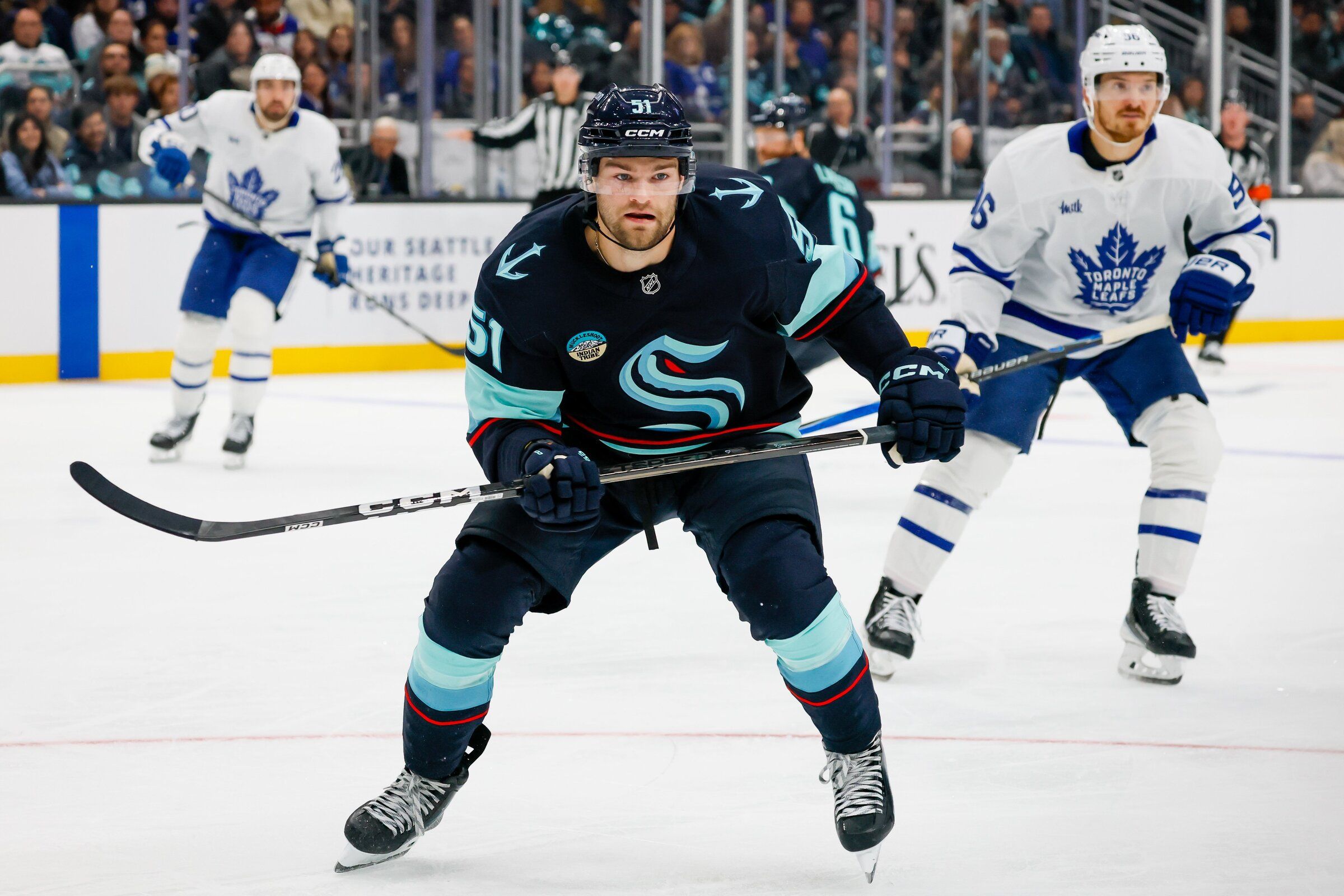
A trade that had been talked about in Seattle for nearly a year has finally happened, and it turned out to be surprisingly straightforward. The Kraken sent center Shane Wright to the Nashville Predators in exchange for young winger Matthew Wood — a simple player-for-player swap, with no draft picks or cash included. For a franchise that saw Wright as a future superstar just three years ago, this feels more like an admission of a mistake than a step forward. For the player himself, it is a chance to start over somewhere he will not be kept on the third line.
The context matters: Wright was selected fourth overall in the 2022 draft; Wood went 15th the following year. Both were considered promising prospects, but their careers took different paths. Wright had carried exceptional-player status from Hockey Canada since the age of 15 — a distinction awarded to just nine people before him in the organization’s history — and was allowed to join the OHL a year earlier than his peers. He was projected to go first overall but slipped to fourth, and since then the Kraken have never managed to find a role for him. Wood took a more modest route: two years at the University of Connecticut, then a season in Minnesota before making his NHL debut. He has one goal and three points in 14 games this season, but last season he scored 17 goals in 71 games for the Predators. For a 21-year-old forward who stands 6-foot-4 and weighs 203 pounds, that is a respectable start.
Kraken general manager Jason Botterill called Wood “a young forward who adds size and an elite shot to our group” in the club’s official announcement, highlighting his “high hockey IQ” and “offensive potential, which he demonstrated last season as an NHL rookie.” It sounds convincing, but the numbers tell a less rosy story. Wright has 39 goals in 183 career games; Wood has 18 goals and 16 assists in 91 games. Wright has nearly twice as much experience, and at this point the two are at least comparable, not interchangeable. The Kraken wanted to package Wright in a deal for an established sniper — Wood is not that player.
So why did the trade happen now? The story goes back to February, when Seattle tried to acquire Artemi Panarin from the Rangers — he eventually went to Los Angeles. In the summer, Wright’s agent, Kurt Overhardt, publicly told NHL insider Elliotte Friedman that he had had “positive conversations” with Botterill and that Botterill had “agreed to trade Shane this summer to a team in need of a young top-six center.” Friedman immediately added a caveat, however: other executives who had spoken with Seattle said the club had made clear it expected a fair return and would not give in to pressure. In other words, there were no guarantees.
Wright’s problem in Seattle was structural. When the Kraken signed center Chandler Stephenson in 2024 to a contract carrying a $6.25 million cap hit, Wright was firmly relegated to the third line. Officially, this was explained as an effort to protect the young player from too heavy a workload, but in practice his minutes were tightly limited. Last season, he averaged 13 minutes and 48 seconds of ice time per game — less than any of the Kraken’s regular forwards except true rookie Berkly Catton. Wright won just 39.7% of his faceoffs, one of the lowest rates among the league’s regular centers. At the same time, under Dan Bylsma, who had coached him in the AHL and served as a mentor, Wright had a strong season. Bylsma was fired afterward.
So what does this mean for both sides? For Nashville, it is a bet on a player once considered a future star but whose development has stalled. For the Kraken, it is a way out of an awkward situation: Wright began training camp on the third line with Catton, had three goals and an assist in 14 games, and saw his ice time rise to 14 minutes and 14 seconds, but both the club and the player’s camp continued to explore options. The good news for Seattle is that the trade was handled civilly, without public drama — against the backdrop of the situation with former Detroit captain Dylan Larkin, who was suspended without pay after refusing to play for the team, that is an achievement in itself. Another plus is that Wood is a winger, while the Kraken have an excess of centers, so he is a better positional fit.
The bad news is more serious: the Kraken still have no star. Big names are leaving their teams with alarming frequency this year, and Seattle has lost its biggest bargaining chip — a young center with a high draft pedigree who could have been packaged in a deal for a high-scoring forward. Wood is not the player who solves that problem. This is a trade of one hope for another, with both sides betting on a change of scenery. The only question is who will benefit more: the club that got tired of waiting, or the player who was just as tired of waiting.