
Despite numerous warnings of a transportation collapse during the 2026 FIFA World Cup, experts say Seattle’s road situation could be fairly manageable. Specialists estimate that road congestion will be no worse than a typical evening during a Seahawks game — the local American football team.
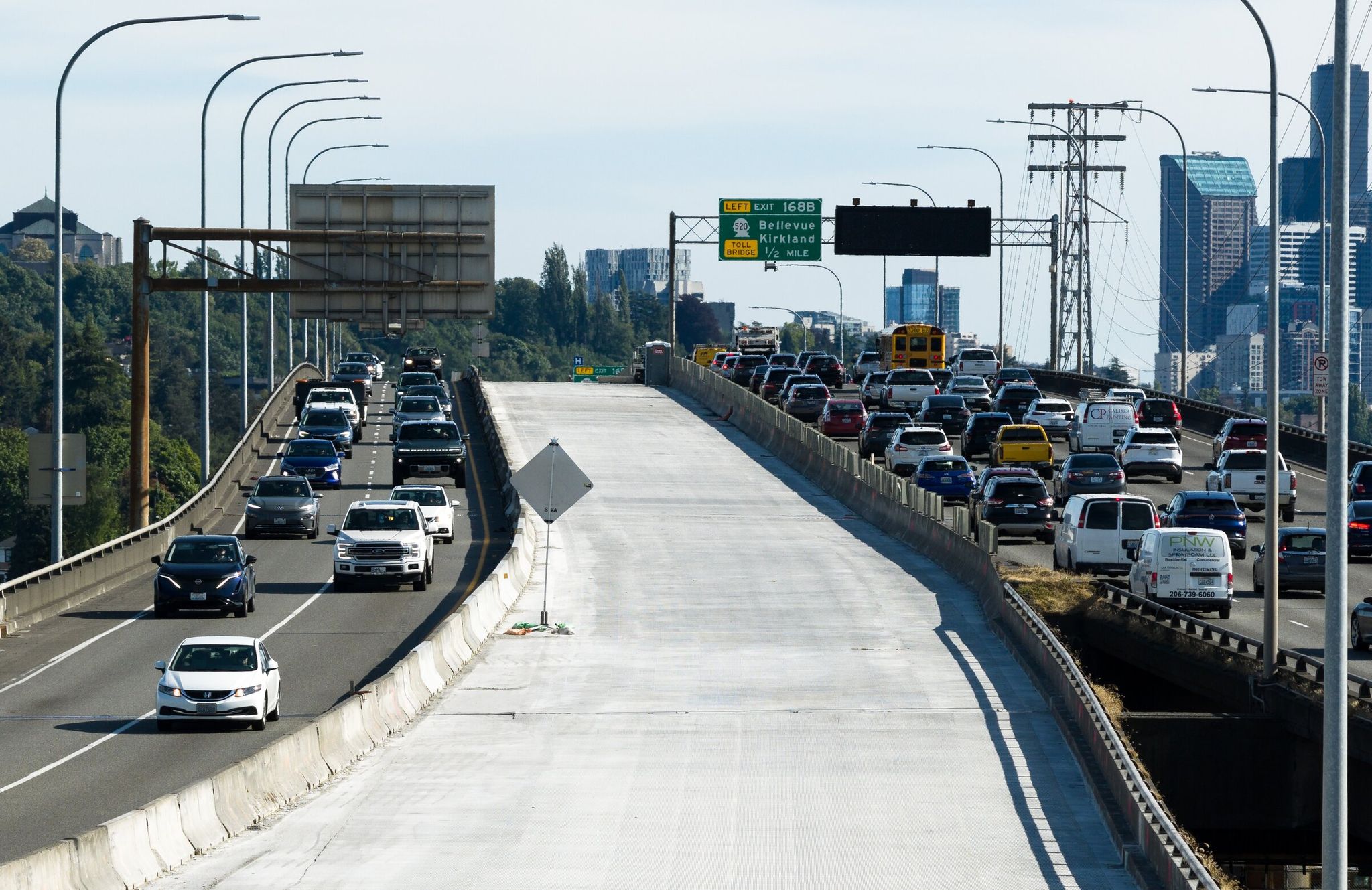
One of the main reasons for optimism is the pause in repairs on the Ship Canal Bridge in north Seattle. This key bridge on I-5, spanning the navigation canal between Lake Union and Lake Washington, is the mandatory route for nearly all vehicle traffic through the city center. Lane reductions during repairs instantly create multi-mile backups because there are no alternative detours with sufficient capacity. Work will stop for five weeks, from June 8 to July 10, restoring two additional travel lanes.
A crucial factor that could ease traffic stress is match scheduling. Four of the six games in Seattle are planned for midday, which will avoid overlapping with the usual evening rush hour. By comparison, NFL games take place in the evenings, when roads are already crowded.
Traffic-data expert Ahmed Darrat (INRIX) believes many residents and visitors will change their habits. Employers may allow remote work, and schools will already be on summer break in mid-June. In addition, international visitors are more likely to stay in downtown hotels rather than drive in from the suburbs in personal cars, as local fans often do.
Still, the Washington State Department of Transportation (WSDOT) is less optimistic. They say trips will become “significantly more complicated” even for those not attending matches. The agency won’t risk giving precise forecasts, citing too many variables: from attendance numbers to routes for official motorcades and heightened security measures.
The city is preparing for the influx of passengers by expanding public-transit options. Critical is the launch of the new East Link light rail line across Lake Washington, which will, for the first time, connect downtown Seattle with the eastern suburbs of Bellevue and Redmond via a dedicated bridge. Those suburbs are the region’s largest employers (including the headquarters of Microsoft and Amazon), and current bus routes across the SR-520 and I-90 bridges are overcrowded. The opening will cut travel time from 40 minutes by bus to 20 minutes by train. On match days, trains will run every 4–8 minutes until 1 a.m.
In addition, Sounder commuter trains will bring passengers from Everett and Lakewood directly to Lumen Field (stop at King Street Station nearby). On major-event days, including soccer matches, Sounder will run special “Stadium Express” services that deliver fans straight to the stadium from the suburbs.
However, the transportation system has vulnerabilities. Professor Yinhai Wang of the Washington Traffic Center predicts serious congestion in the city center, where roads are already overloaded. For security, much of First Avenue South next to the stadium will be closed, and taxis and ride-hail services won’t be able to approach as closely as usual. First Avenue South is a key street running along the west side of Lumen Field. Its closure blocks direct access from downtown to parking and I-5 exits, and the nearest alternative routes — Fourth Avenue and SR-519 — are already congested. As a result, this could paralyze the southern part of downtown and cause backups on I-5 from the exit to the Duwamish River bridge to the I-90 interchange.
Experts recall the “stress test” Seattle went through on February 11, 2014, during the Seahawks’ Super Bowl victory parade. Then 700,000 people took to the streets and the light rail carried more than 230,000 riders. By comparison: the 2026 World Cup expects up to 500,000 fans for a single match, requiring an order-of-magnitude greater coordination — including not only street events but movements between multiple stadiums and zones, unlike a single parade route.
The main advice for anyone planning travel on match days: don’t rush and use alternative modes of transport. “The best advice I can give is — stay in the city,” says Ahmed Darrat. “Visit local restaurants, walk around. There are lots of great places nearby to eat and have a good time.” Or, as WSDOT advises, be prepared for trips to take longer than usual.
Based on: Why Seattle’s highway traffic during World Cup might be just fine