
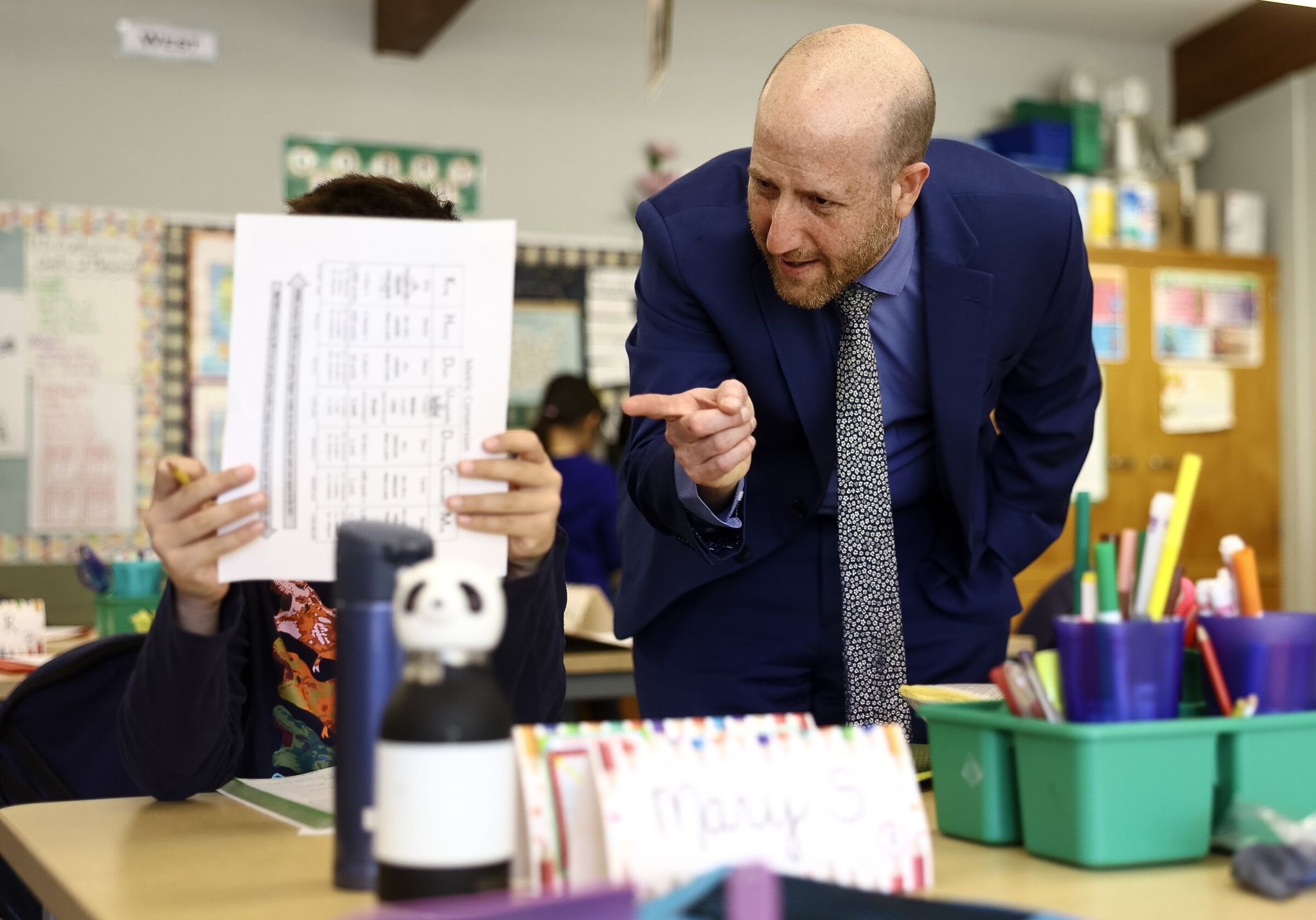
When Seattle’s new schools superintendent, Ben Shuldiner, arrived in the city from the Midwest, he already knew about the local schools’ poor reputation on social media. But instead of accepting the rumors, he conducted his own investigation, visiting 35 schools in his first month on the job. His findings were surprising even to parents.
“Overall, Seattle’s public schools are among the most effective school systems on the entire West Coast,” Shuldiner told the school board. He listed districts that Seattle had outpaced: Portland, San Francisco, Los Angeles, San Diego and even neighboring Bellevue, which took only first place. The perception of suburbs as more prestigious persists in many minds, but it’s based on long-standing differences in demographics and funding: Bellevue has a more homogeneous and affluent population, so local property taxes generate more revenue for its schools. Seattle, by contrast, has historically faced greater economic inequality and a higher share of students from low-income families, which created a reputation as a “troubled” district even though current research shows comparable academic outcomes.
According to a report from the Stanford Project on Educational Opportunity, Seattle ranks in the top 12% of all school districts in the country, including rural and suburban districts. Among the 25 largest U.S. cities, it ranks first — and by a wide margin over the second place. Seattle students’ math test results are at the 85th percentile among all districts, and reading at the 88th. For comparison: the next best large city, San Diego, shows only the 57th percentile in math and 68th in reading. Seattle even outperformed Boston, Austin and San Francisco, where many would have expected higher scores.
The study also found that Seattle schools are recovering from the pandemic faster than most. For the 2022–2025 period, the district ranks at the 88th percentile for “learning recovery” — a measure of student progress relative to grade level. In math, Seattle has nearly returned to the pre-pandemic 2019 level, though reading still lags by about a third of a school year.
On average, Seattle students are ahead of the national level by 1.25 grade levels. But the system’s biggest weakness is enormous achievement gaps. Children from low-income families lag the national average by 1.7 grades, while their peers from affluent families are ahead by 2.5 grades — a gap of 4.2 grades. Even more troubling is the gap between white and Black students: 4.6 grades. That means when white children finish 12th grade, their Black classmates are academically at the middle school level. Shuldiner described these gaps as so wide that “you could drive a truck through them.” Such a profound divide is largely rooted in historical factors: in the 20th century, Seattle actively used racially restrictive covenants banning Black people from buying homes, practiced redlining and discriminated in mortgage lending. This led to a geographic concentration of Black residents in historically disadvantaged neighborhoods where schools received fewer resources. In the 1970s a federal court ordered Seattle to forcibly desegregate schools by busing students, which triggered a large white flight to the suburbs. To this day Black families have lower average incomes and less access to resources for supplemental education.
The inequality problem isn’t unique to Seattle: in San Francisco the white-Black gap reaches 5.75 grades, and in Austin 4.9. Mike Briner, head of the local nonprofit The Math Agency, offers three main solutions: tutoring, summer schools and mentoring. He notes that Washington is one of the weaker states in supporting tutoring, even though the method has proven effective.
Another worrying trend is chronic absenteeism: nearly a quarter of Seattle students miss more than 10% of schooling time in a year, meaning they are absent for 10 or more days in a semester for any reason. That’s double the pre-pandemic level. Across Washington state the rate is even higher — 29%. The consequences of chronic absence are serious: for the student, academic falling behind and an increased risk of dropping out; for the school district, reduced state funding, since the budget is calculated based on actual attendance rather than just enrollment. Shuldiner must launch a major campaign to get children back into classrooms.
Seattle schools also face budgetary problems, and one key reason is poor forecasting of declining enrollment. As housing prices rose in Seattle, many families with children moved to the suburbs, but the district continued projects planned for a larger student population. The situation was exacerbated by a state funding reform after the Washington Supreme Court’s “McCleary” decision in 2012: the state took on the primary burden of funding schools but simultaneously limited local districts’ ability to raise additional taxes. Washington’s school funding has three levels: a basic state budget allocation, which depends on student counts; local property taxes; and federal grants. Seattle’s paradox is that although the city collects huge taxes from tech corporations, that revenue goes into the state’s general fund rather than directly to schools. The school district can levy only a limited residential property tax, strictly regulated by the state. At the same time, Seattle’s high cost of living forces schools to spend more on teacher salaries and facility rents.
Surprisingly, despite all these problems, Seattle schools remain the best among large U.S. cities. “I don’t think you get enough recognition for being such a high-performing district,” Shuldiner noted. Perhaps it’s the local culture of self-criticism and pessimism, which locals liken to Eeyore from Winnie-the-Pooh. Now that an outsider has opened the city’s eyes to its successes, it’s time to give up the defeatist mindset. Shuldiner must address not only achievement gaps and absenteeism, but also budgetary difficulties and correct administrative mistakes of the past. Most importantly — Seattle must learn to be proud that it truly works.
Based on: Seattle has the No. 1 big city school district. We should act like it