
Seattle's utility Seattle City Light, a municipal utility owned by the city and accountable to its government, has agreed to invest about $4 billion over the next 50 years. The goal is to continue operating its three hydropower dams on the Skagit River, located roughly 60 miles north of Seattle. Historically the city acquired these lands and built the dams in the early 20th century to supply power to a growing population, and the Skagit basin remains a critically important resource for electricity generation.
The long-awaited agreement was reached with Indigenous tribes, as well as state and federal agencies, after years of negotiation. It includes large new commitments for salmon assistance, ecosystem restoration and compensation for harms to Native peoples. Final approval of the document is expected from the Seattle City Council, after which it will be sent to the Federal Energy Regulatory Commission (FERC) for a new license that could be issued around 2030. That federal agency regulates hydropower projects nationwide, and its license — affirming compliance with environmental and legal standards — is legally required for the dams to continue operating.
Under the deal Seattle will allocate $979 million to create a “trap-and-haul” system to transport adult and juvenile salmon and other fish around the dams both upstream and downstream. An additional $200 million is earmarked for restoration of natural habitat throughout the Skagit basin, including projects long advocated by tribes. The utility, balancing ecological and economic responsibilities as a municipal enterprise, also commits to managing reservoir levels and river flows in ways that better protect fish, especially threatened Chinook salmon and steelhead.
For Seattle electricity customers, these commitments could lead to rate increases of about 0.5% per year from 2027 through 2032. Longer-term financial impacts are harder to predict due to uncertainty about future costs. The Skagit hydropower plants currently provide about 20% of Seattle’s electricity, helping keep local rates below the national average. However, their construction more than a century ago caused irreparable harm.
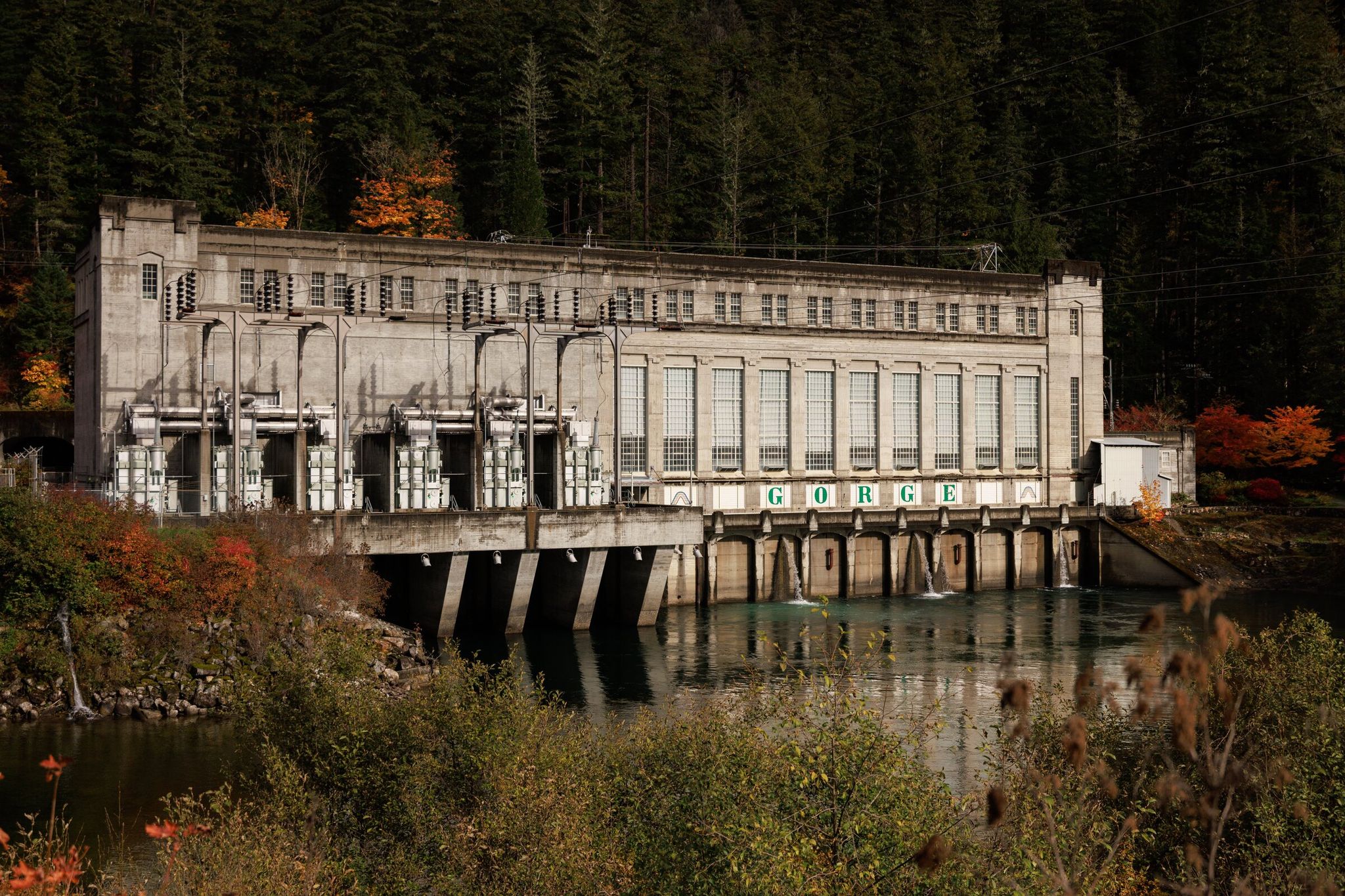
The dams inflicted deep damage on salmon populations and on the spiritual and cultural sites of Indigenous peoples whose lands lie along the Skagit. The community of Newhalem, whose modern significance is tied to tourism and water-resource management, was built directly on the site of the Upper Skagit tribe village Daxʷaliłb. The Gorge dam diverted the river through a tunnel in the mountain, draining a sacred canyon. That hydropower project encompasses the creation site for the Upper Skagit people and other culturally significant locations.
Formal talks over the dams’ future began in 2019, before the current license expires in 2025. During the process the tribes, federally recognized Indigenous nations with sovereign status, filed several lawsuits. They increased pressure on the city, demanding more action to help salmon and address a century of cultural and spiritual harms. Over that time the tribes’ treaty-guaranteed fishing opportunities — established by historical treaties with the U.S. government — have been greatly diminished.
Public outcry intensified after an Upper Skagit tribal member launched a petition with nearly 50,000 signatures calling for removal of the Gorge dam. Investigations also found that Seattle City Light misled the public about the dams’ environmental impacts. The tribes used both traditional ecological knowledge — centuries of observation and holistic understanding of ecosystems — and Western science to demonstrate the need for effective fish passage for recovery, especially in the context of climate change.
The Upper Skagit, Swinomish and Sauk-Suiattle tribes insisted on strong provisions for fish passage and habitat restoration. “As the Salmon People, restoring and maintaining the health of the Skagit River will always be our highest priority,” said tribal representatives, whose treaty rights to fish and access resources are protected by the U.S. Constitution.
Based on: Seattle City Light proposes $4 billion for Skagit River hydropower dams