
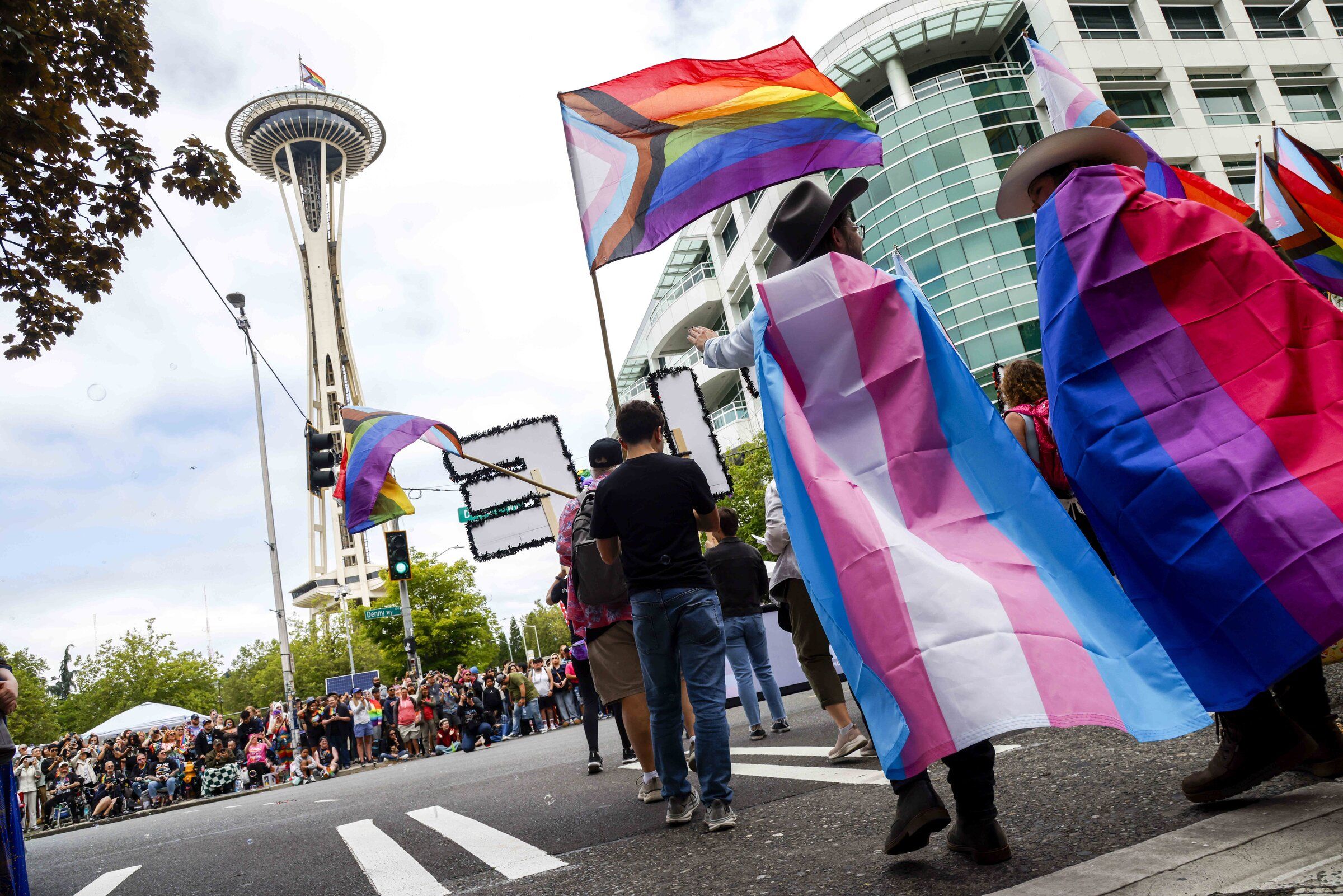
The Seattle City Council unanimously approved allocating $300,000 to local LGBTQ+ organizations. The funds will support emergency housing, food, transportation, employment assistance and other basic services for transgender residents, including people arriving from states with anti-transgender laws.
Washington is considered one of the most protective regions in the United States for transgender people because of its nondiscrimination laws, access to gender-affirming health care and relatively supportive state policies. However, many newcomers face high rents, a shortage of affordable housing, long waits for medical and social services, documentation issues and difficulties finding work. For people without savings, transportation or local connections, relocating can quickly lead to homelessness.
The decision came after more than 100 people spoke at public hearings. Michael Woodward, executive director of the nonprofit Traction, said the forced relocation of transgender people had become an “emergency civil situation” and that the need for assistance continued to grow. Traction called the funding an important first step that would provide actual shelter beds, transit passes, groceries and housing assistance.
Lambert House and Entre Hermanos are among the organizations providing such assistance in the region. Mary’s Place, YouthCare and Chief Seattle Club also work in homelessness services and housing support. The specific list of grant recipients will be determined through the city’s program.
According to Traction, since the November 2024 election, the organization has helped approximately 1,500 transgender people leave conservative states—20 times more than during the previous 18 months. A Movement Advancement Project study published in October 2025 estimated that about 400,000 transgender and nonbinary people had moved to another state after the election, while another 1.2 million had considered doing so.
Local activists say that more people are arriving in Seattle from regions that restrict the rights of transgender residents, while charitable funding for LGBTQ+ organizations is declining. Councilmember Alexis Mercedes Rinck said that under Donald Trump’s administration, many grant opportunities had disappeared, while private donors had also begun withdrawing support, placing significant strain on nonprofit organizations.
Rinck, who proposed the amendment, will work with the Seattle LGBTQ+ Commission and local leaders to identify the organizations that would benefit most from the funds. The commission advises city officials, helps establish priorities and may participate in evaluating applications, but final decisions on budget allocations are made by the mayor and City Council.
She acknowledged that $300,000 was a significant amount, but insufficient compared with the scale of the need; some participants at the public hearings called it merely “the bare minimum.” The money will come from the JumpStart Fund, which is financed primarily through a tax on large companies and used for city-approved purposes, including affordable housing, homelessness assistance and support for vulnerable groups.
Redirecting the funds does not mean that money will automatically be taken from the Northgate Commons affordable housing project. It involves redirecting funds that have not yet been allocated or making a budget adjustment that must be approved by the relevant Seattle authorities. Under the amendment, Northgate Commons will be able to complete construction even after its funding is reduced.
The funding is included in a midyear supplemental budget that Mayor Katie Wilson still needs to sign. The LGBTQ+ Commission previously asked the mayor to declare a state of emergency over the situation facing transgender rights, but she declined while acknowledging the need for action. With more than 500 anti-transgender bills introduced across the United States this year, activists are urging the city to distribute the funds as soon as possible; Rinck expects to identify the recipients within a week.
Based on: City Council approves $300K to aid trans community