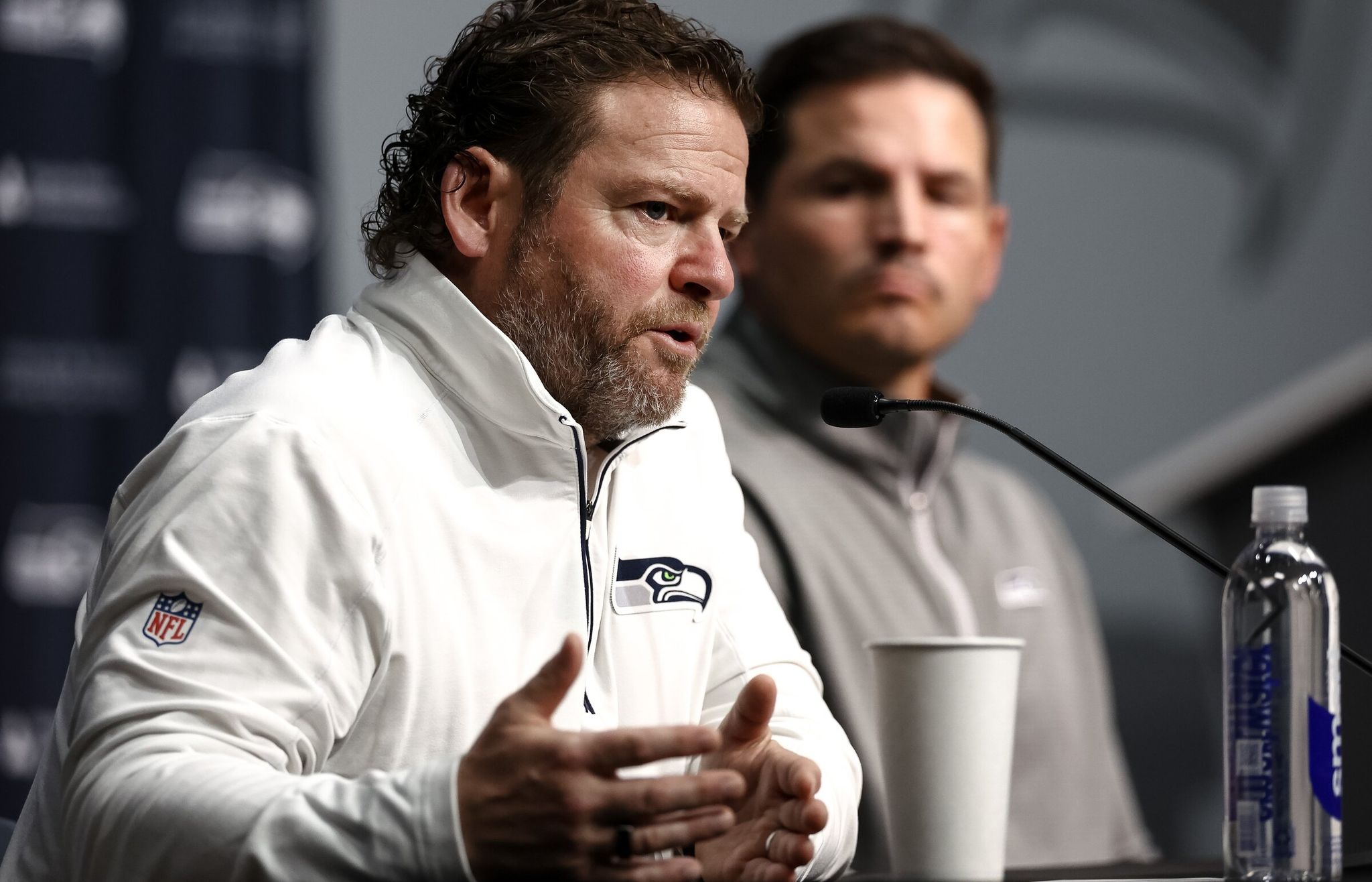
In Seattle news: teens with guns terrorized a driver on a highway, municipal utility City Light is proposing a record 20% electricity rate increase over two years, and the Seattle Seahawks announced front-office changes after key executives left for the Minnesota Vikings.
In Seattle, teens with guns terrorized a driver on a highway
Early one morning in downtown Seattle, an incident occurred that could have ended tragically. A group of minors, riding in a minivan, pointed firearms at another driver in the middle of the road. The situation became so dangerous that the victim had to break traffic laws to escape: he ran a red light while the pursuers continued the chase.
According to Seattle police, the incident happened at about 3 a.m. A 20-year-old driver was behind the wheel when a white minivan, reportedly a Dodge, suddenly pulled up near the Dexter Avenue exit toward Denny Way. Two passengers in the van allegedly leaned out and pointed guns at the driver while vehicles were stopped at a light. The victim tried to flee, but the minivan followed for a while before turning onto Denny Way. Fortunately, no one was injured and no shots were fired.
Police responded quickly to the call. Officers located and stopped the suspicious minivan. Five people were inside. Ultimately three boys and one girl were arrested; their ages were 14, 15 and two 17-year-olds. They face charges of assault and unlawful possession of a firearm. As KIRO 7 News reports, all the juveniles were taken to the Judge Patricia H. Clark Children and Family Justice Center. In addition, an 18-year-old man was taken to the King County Jail — he is also charged with assault.
The case raises troubling questions about rising youth-involved crime in the city. That a group of teenagers, including 14-year-olds, could move around the city at night with firearms points to serious gaps in safety and control. It’s important to note that unlawful possession of a firearm in the U.S. means these individuals had no legal right to carry weapons — either because of age, lack of a permit, or a disqualifying record. Also, in legal terms, assault does not necessarily require physical contact: threatening someone with a weapon, as in this incident, is considered assault. It’s not yet clear whether the guns were fake or real, but the fact the driver risked running a red light to escape shows how aggressive the group’s behavior was.
This incident fits a broader pattern of youth-involved crime in Seattle, where several similar cases have occurred recently. Investigators will likely try to determine how the teens obtained the weapons and whether they were connected to a larger criminal network. For residents, it’s another reminder that even a brief stop at a nighttime traffic light can turn into a serious threat.
Seattle electricity to rise to record levels: why bills will increase 20% over two years
Seattle residents are bracing for the largest jump in electricity prices in recent memory. Municipal utility Seattle City Light has proposed raising rates by 9.5% in each of the next two years. For a typical household, that translates to about $10 more per month — not huge by itself, but a significant burden amid rising costs across the board. City Light CEO Kirsty Granger acknowledges that $10 is a lot, especially given rising prices for other goods and services, but says the increase is unavoidable and is based on two years of analysis and forecasting. The independent City Light oversight board has supported the move. Still, some Seattle City Council members expressed concern, calling it another hit to residents’ wallets. Councilmember Rob Saka noted at Wednesday’s meeting that it’s impossible to ignore how this decision will affect people’s daily lives.
Previously, Seattle customers were used to much smaller increases — around 4–5% per year. By comparison, customers of private utility Puget Sound Energy have already seen an 8.6% increase since 2023. The sharp rise reflects a combination of factors: higher costs, deferred capital projects, rising demand, and extreme weather. For years City Light deliberately deferred infrastructure upgrades to keep rates low, but that is no longer feasible. “This proposal was prepared over two years and based on extensive analysis and forecasting,” Granger told The Seattle Times.
In the 2010s, economic growth and population increases in Seattle were offset by gains in energy efficiency, especially in new construction. The city became so effective at saving energy that the utility worried consumption wouldn’t cover operating costs. Recently, however, the picture has changed dramatically. Mass electrification of buildings and transportation has driven a steep increase in demand, and the easy efficiency gains have been exhausted. Extreme cold and heat, plus widespread use of air conditioning, have pushed peak demand to a new level. Forecasts indicate consumption could double by 2045, and City Light would need more than 3,500 new megawatts — roughly twice what the entire city currently uses.
Seattle’s hydroelectric plants and purchases from the Bonneville Power Administration on the Columbia River will no longer be sufficient to cover the shortfall. Without adding new capacity, the city could face more than 20 days by 2045 when demand exceeds supply, whereas the industry standard is no more than one such day every ten years. Because of restrictions on fossil fuels, City Light must build or purchase energy from wind, solar, nuclear, or geothermal sources — all much more expensive than power from existing dams. Drought, which has reduced reservoir levels, has made generation less predictable.
The utility also faces steep inflation for critical materials and an urgent need for capital repairs. A $3 billion program is already underway to replace old underground cables and modernize the grid. Another $4 billion will go to a hydro project on the Skagit River. One or two new substations are expected to be built, each possibly costing more than $200 million. A growing headache is demand from data centers, which already use 5% of the city’s electricity. Despite a one-year moratorium on building new large data centers, their needs will grow. The city is developing policies that would require data centers to cover grid upgrades and the cost of new energy so those expenses don’t fall on ordinary residents. Finding that new energy is difficult, as the region is competing fiercely for clean resources amid a severe shortage of transmission capacity.
To soften the blow for low-income households, City Light proposes expanding its discount program. Anyone earning less than 60% of the area median income (roughly $69,000 a year for one person) would be eligible for a discount, adding more than 30,000 new participants. If the City Council does not approve the rate increases, Leo Lam of the City Light oversight board warns the worst-case scenario is widespread power outages. “The biggest risk is we run out of power,” he summarizes.
Seahawks front-office restructuring: personnel moves after key executives left
The Seattle Seahawks announced six promotions in their front office, a direct consequence of two senior staff members departing for the Minnesota Vikings. The reorganization followed the departure of assistant general manager Nolan Ticeley, who left to become the general manager of the Vikings. Following Ticeley, vice president of player personnel Trent Kirschner and pro scout Azzam Kapadia also went to Minnesota — all three had been involved at various times in building the roster that led the Seahawks to a Super Bowl victory in February last year. As noted in The Seattle Times, the vacant roles will be filled by long-serving employees within the organization.
In the new structure, key assistant general manager roles went to Matt Berry and Willy Schneider. Berry has worked with the Seahawks since 2008, rising from regional scout to vice president of player acquisition. Willy Schneider, nephew of football operations president John Schneider, has worked in pro scouting since 2014. Other promotions include Aaron Heinlein (director of player personnel), Armani Perez (director of pro personnel), Jason Barnes (director of college scouting), and Patrick Ward (vice president of research and analytics). John Schneider said in a statement that he is pleased to promote from within to preserve culture and continuity in personnel operations.
It is noteworthy that Willy Schneider, promoted to assistant general manager, is related to John Schneider — this suggests the club intends to continue trusting long-standing internal personnel. Promoting internal staff rather than hiring externally after the departure of key figures is common practice in the NFL. It helps minimize disruption to established internal relationships and preserves strategic continuity. However, the loss of three experienced executives raises the question of whether it will reduce effectiveness during the upcoming draft and contract negotiations, especially given the departing staff’s unique experience in building a championship roster.
The main takeaway from this restructuring is that Seahawks leadership is betting on stability and loyalty, avoiding a disruptive shakeup in management during critical preparations for the new season. For fans and analysts, it signals confidence in the organization’s internal reserves, though it leaves open whether the new front-office team can match their predecessors’ effectiveness in balancing the salary cap and finding talent.