
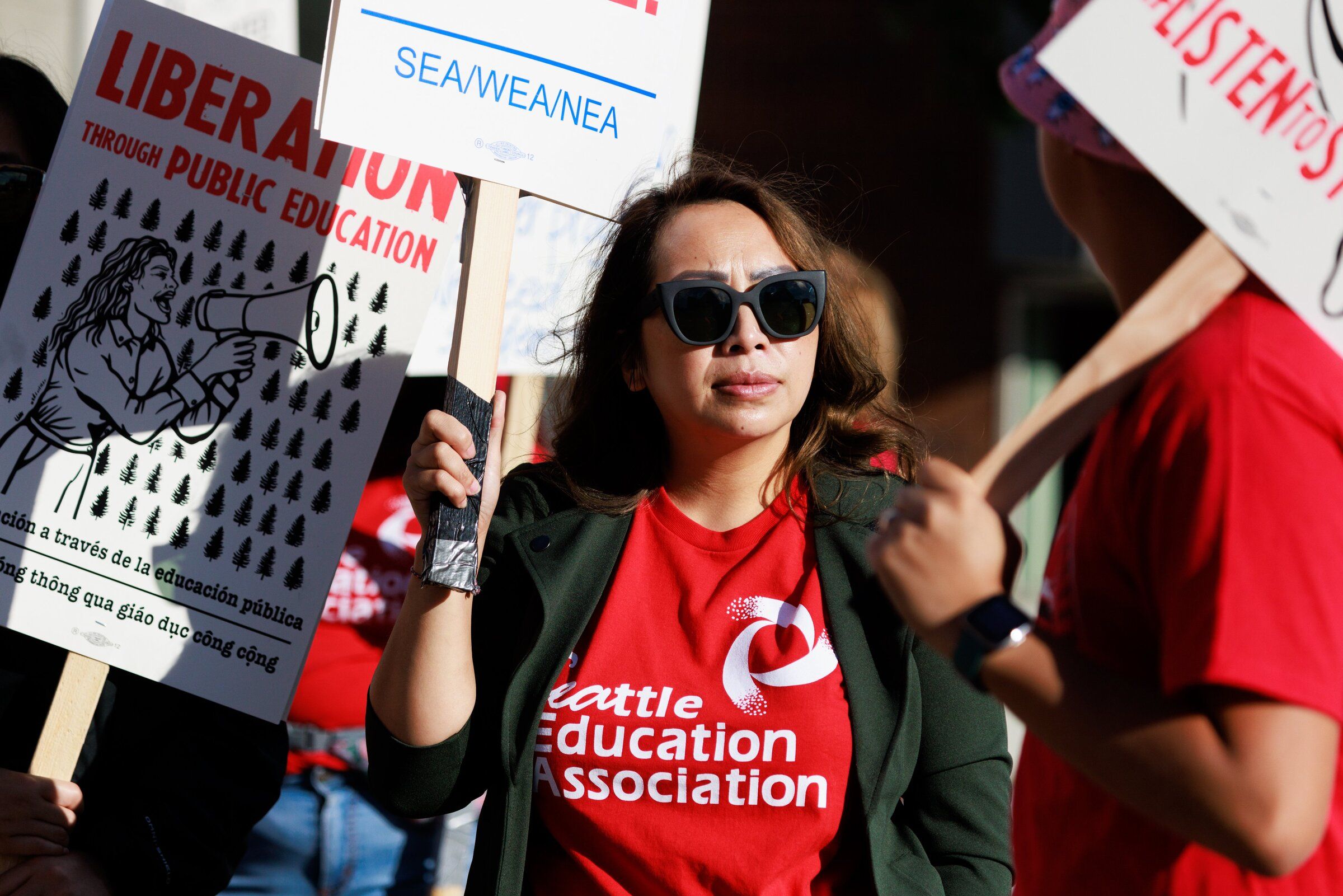
Seattle Public Schools and the Seattle Education Association, the union representing about 6,000 teachers, instructional assistants, secretaries, counselors and other employees, are continuing to negotiate a new contract. The current agreement expires Aug. 31, and classes are scheduled to begin Sept. 2, leaving the two sides little time.
On Aug. 26, union members will vote on a tentative agreement or authorization to strike. Under Washington state rules, the union must complete legally required bargaining and mediation procedures before calling a strike. Authorities may also go to court if a strike violates established requirements, though its legality depends on the specific circumstances.
A similar situation occurred in 2022, when a teachers’ strike delayed the start of the school year by five days. If the current negotiations end without an agreement, a strike would likely begin Sept. 2. In that case, schools could close, leaving families to arrange child care on their own. Missed school days are generally made up by extending the school year or changing the academic calendar. Teachers typically do not receive pay for strike days, although the union may provide participants with separate financial assistance.
According to union Vice President Davina Diaz, the main disagreements concern educators’ working hours and salaries. Teachers want more time to prepare lessons and collaborate with colleagues, rather than attend additional meetings and complete reports on student outcomes. The union also says employees do not always understand how the data they collect are used or where they can access it for lesson planning.
The negotiations are taking place amid a budget deficit of about $100 million at Seattle Public Schools. Several factors contributed to the shortfall: enrollment declined after the pandemic, and state funding depends heavily on the number of students. At the same time, salaries, health care costs and the cost of maintaining school buildings have increased. Special education programs have added further pressure: federal funding covers only part of the expenses, while state funding does not always fully reimburse them. The district also retained more employees and programs than its reduced revenues could support, while temporary federal pandemic aid has ended.
New district Superintendent Ben Shuldiner is seeking to cut expenses; the proposed budget for the 2026–27 school year calls for at least $20 million in savings. The union, meanwhile, is seeking relatively modest raises: 1% to 3% for certificated employees and 3% to 5% for others, in addition to the cost-of-living adjustment required by law. In 2022, teachers secured a 7% raise.
In addition to salaries and working hours, the two sides are discussing class sizes, students’ physical, social and mental health support, special education, and rules governing the installation of surveillance cameras in schools. The district and union also establish benefits and many working conditions through the collective bargaining agreement. The Seattle Education Association represents employees and can use negotiations, public demonstrations and strikes, while the district approves the budget and signs the agreement.
Washington state sets educational standards, the funding formula and special education requirements, but it generally does not directly determine the salary of each Seattle Public Schools teacher. Federal law, meanwhile, requires the district to provide appropriate services to students with disabilities. The district must organize and fund that support within the law and its available resources, making it one of the most difficult issues in the current negotiations.
Diaz said the bargaining team is prepared to meet every day, including weekends, and that the union has already trained some members in picket-line procedures in case of a strike. Shuldiner expressed optimism, noting that the district and union remain in constant contact, including on weekends. He said the two sides are working to reach an agreement that benefits students, supports employees, remains financially responsible and allows schools to begin the school year successfully.
Based on: Seattle teachers union still negotiating as school year looms